

The Iran War Proves the U.S. Air Force Needs All Three — An Upgraded F-22, the F-35 at Scale, and the F-47 Before the Next War Starts
The ongoing U.S.-Israeli campaign against Iran serves the obvious purpose of degrading Iranian capabilities and preventing the regime from restarting its nuclear program, but it also serves another purpose: it effectively functions as a real-world stress test for how modern U.S. airpower actually performs against defended airspace over time.
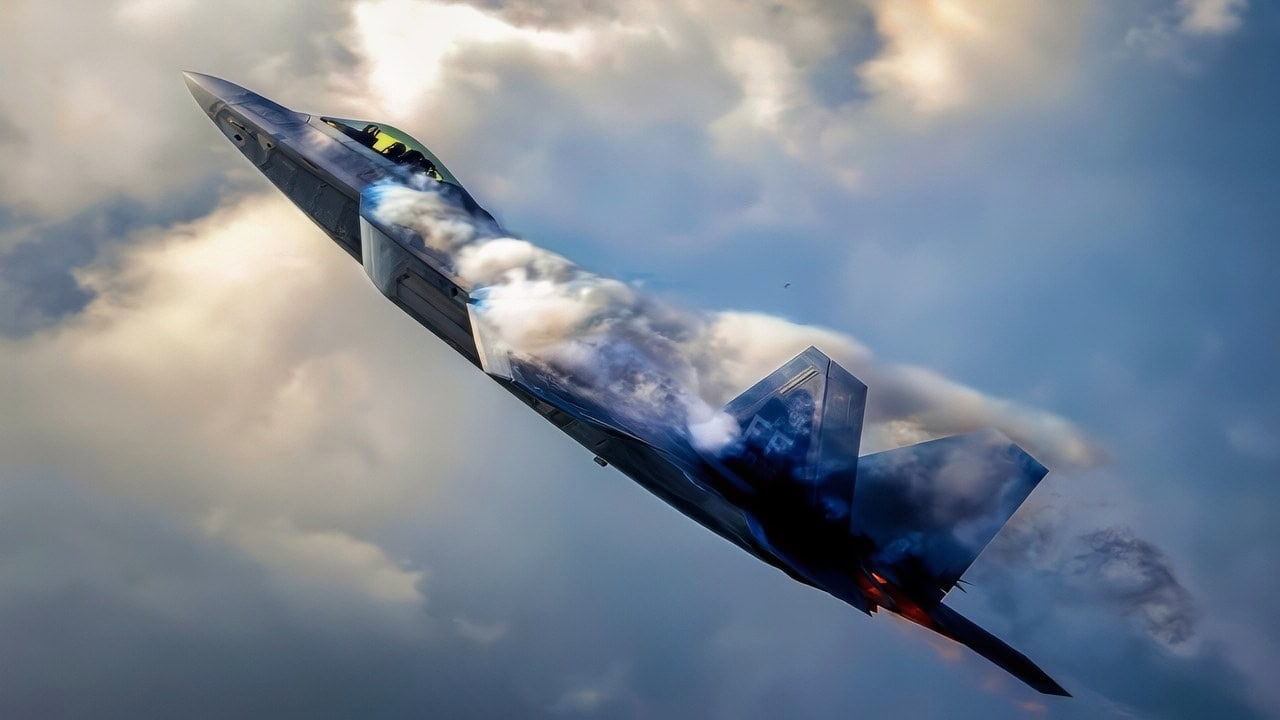
An F-22 Raptor performs an aerial demonstration at Naval Air Station Oceana, Virginia, Sept. 19, 2025. Rapid changes in angle of attack create visible vapor around the aircraft, providing a clear view of its aerodynamic performance. This demonstration highlights the F-22’s advanced maneuvering capabilities, showcasing its speed, agility, and thrust-vectoring performance. (U.S. Air Force photo by Staff Sgt. Lauren Cobin)
The early phases of the conflict were predictable: stealth aircraft penetrated contested airspace, standoff weapons struck fixed targets, and then sorties that followed expanded the campaign and allowed for devastating strikes against Iranian missile infrastructure.
But what has unfolded in recent weeks has exposed a complicated reality: sustained operations are placing pressure on American precision munitions stockpiles. The risks facing non-stealth aircraft operating in the region are very clear as well.
On April 3, a U.S. F-15E was shot down over Iran, proving that survivability remains a central concern even for advanced fourth-generation platforms.
At the same time, heavy U.S. use of Tomahawk cruise missiles has reportedly delayed deliveries to allies – and with 850 Tomahawk missiles used in a month, it’s clear that sustained operations are putting pressure on U.S. supply chains.
That’s not to say, of course, that existing U.S. platforms are incapable of dealing crippling blows to a regime that has already been stripped of what’s left of its air force and navy. But at the same time, the U.S. Air Force is preparing for the future with a planned future fighter structure that includes upgraded versions of existing aircraft, and entirely new platforms intended to function as a family of systems.
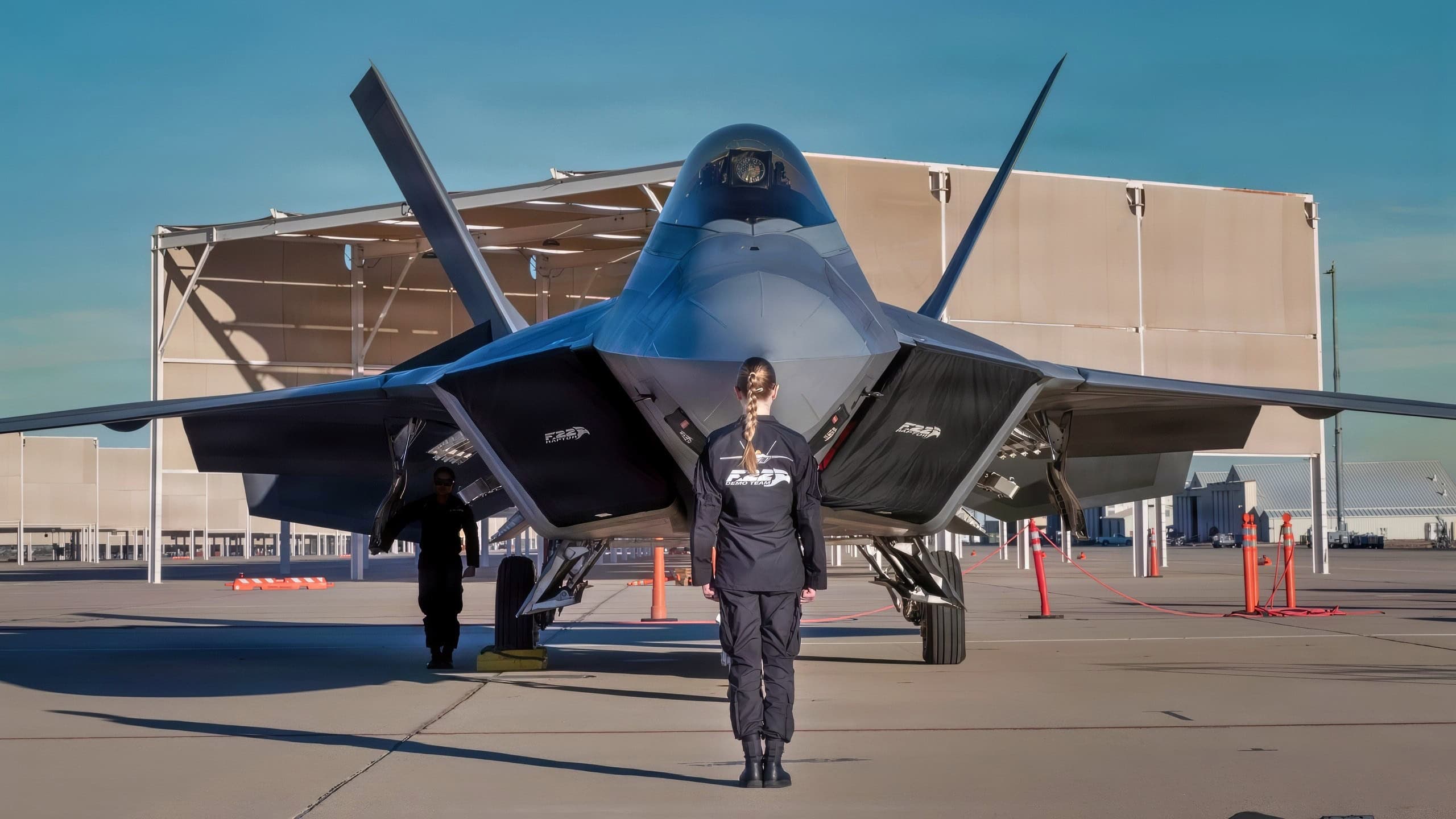
Maintainers assigned to the U.S. Air Force F-22 Raptor Demonstration Team perform preflight inspections on an F-22 during the Heritage Flight Training Course at Davis-Monthan Air Force Base, Arizona, Feb. 26, 2026. The team consists of 14 specialized Airmen who maintain and support the Raptor’s mission of providing undisputed air superiority. (U.S. Air Force Photo by Senior Airman Jhade Herrera)
The service is not betting on a single new platform – it is waiting for an upgraded F-22 to sustain air dominance in the near term, a fully realized fleet of fifth-generation F-35s to provide scalable stealth strike sensing capabilities, and the F-47 Next Generation Air Dominance aircraft and platform to take over the mission in the 2030s. The Iran war proves why all three of these aircraft are essenhgtial.
The F-22 and What’s To Come
The Lockheed Martin F-22 Raptor was designed at the height of the Cold War to defeat advanced Soviet fighters and operate inside heavily defended airspace. A product of the Advanced Tactical Fighter program, it combined stealth shaping, supercruise, high-end maneuverability, and integrated avionics into a single platform built specifically for air superiority.
That role has not gone away. If anything, operations over Iran reinforce it. Before strike packages can operate repeatedly over defended territory, the air picture must be controlled, enemy aircraft deterred or destroyed, and vulnerable assets protected.
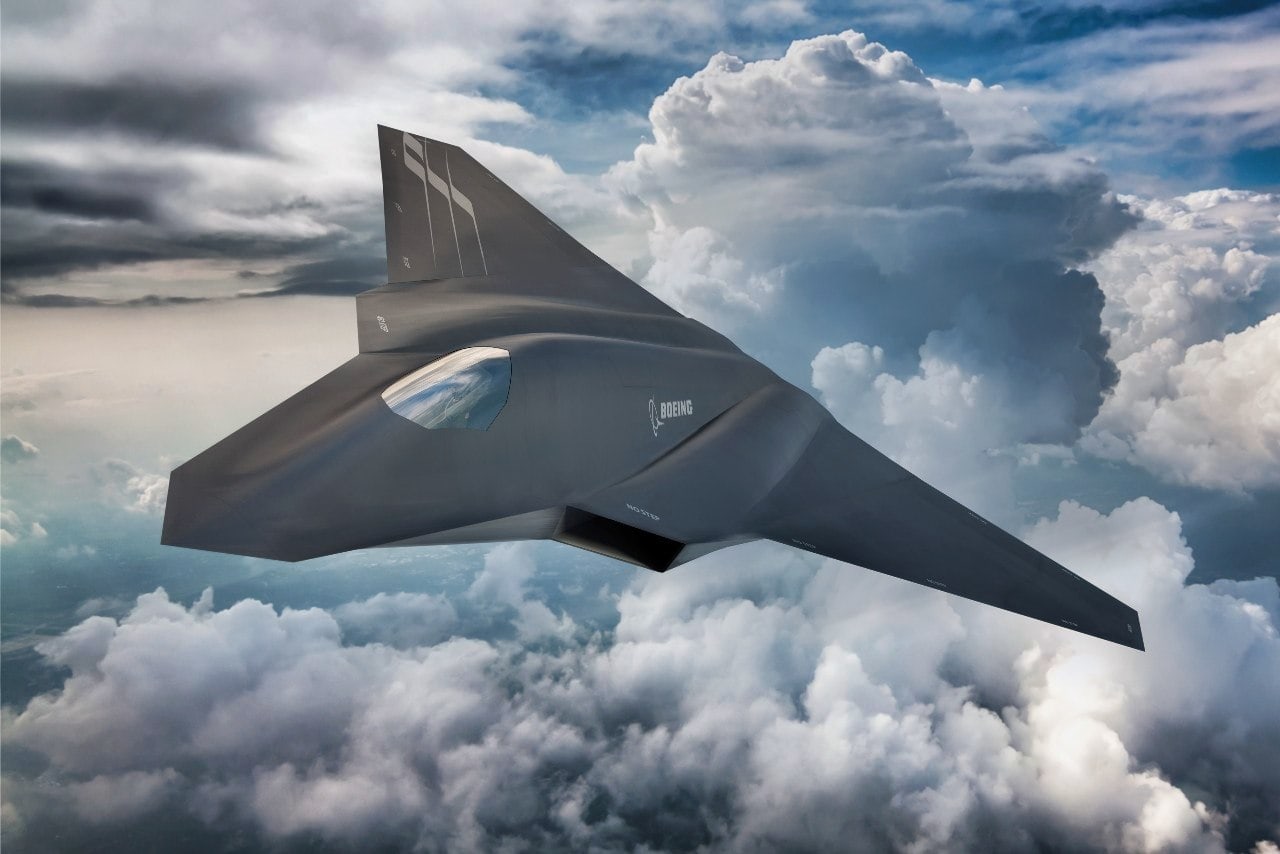
NGAD Fighter from Boeing.
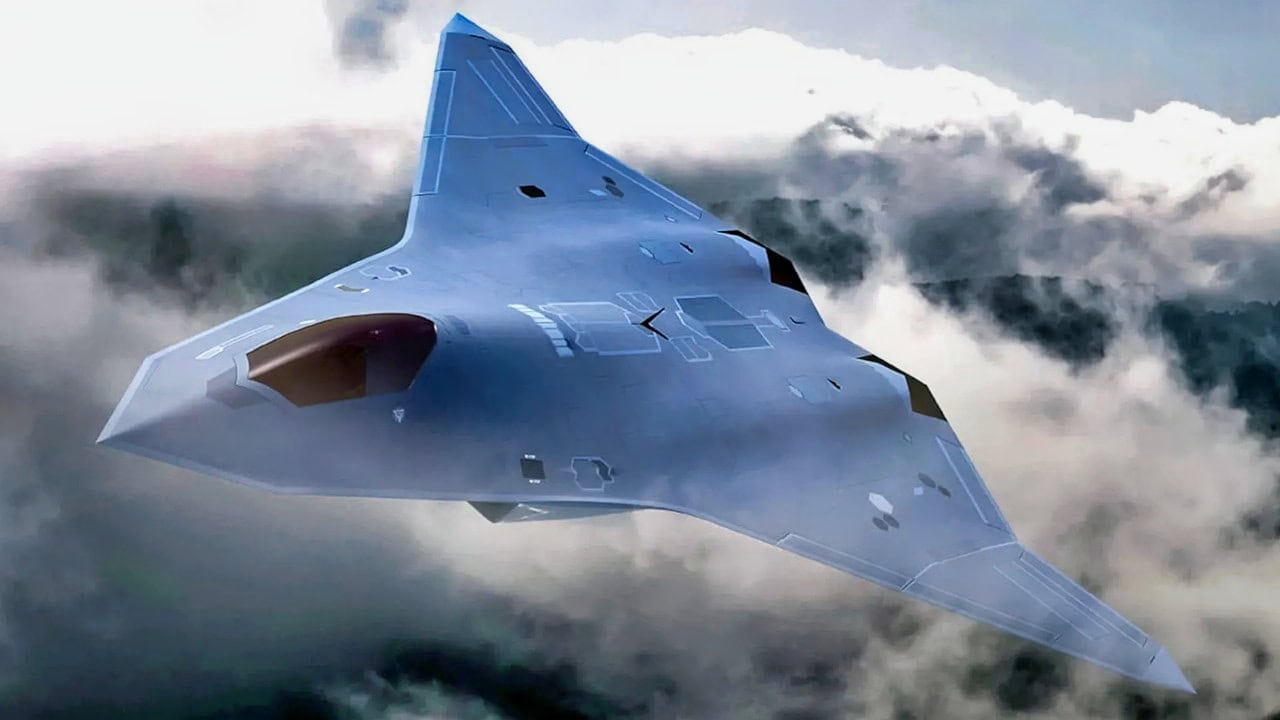
NGAD Fighter. Image Credit: Creative Commons.
That is still fundamentally an F-22 mission. But the fleet’s limitations are as important as its strengths. The Air Force operates roughly 180 F-22s, with around 140 combat-coded – a number that has long constrained how widely the aircraft can be deployed. That scarcity is pushing the service toward extending the platform’s relevance through upgrades rather than replacing it immediately.
Work is ongoing on what is being informally described as a “Raptor 2.0.” Lockheed Martin has proposed concepts that include stealth-compatible external fuel tanks designed to extend range without significantly increasing radar signature, as well as underwing infrared search-and-track (IRST) pods to improve passive detection capabilities.
These changes address the fact that range and persistence have become increasingly important even in Middle Eastern operations, and would be decisive in a larger Indo-Pacific conflict.
The F-35 As A Scalable Platform
The F-35 is the workhorse the Air Force relies on at scale. Developed under the Joint Strike Fighter program, the F-35 was designed to provide stealth strike, intelligence gathering, electronic warfare support, and sensor fusion in a single platform that could be fielded in large numbers across multiple services and allied nations.
In a conflict like what we’re seeing unfold in Iran, that scale matters. Sustained operations require aircraft that can repeatedly penetrate defended airspace and identify targets, while coordinating across a networked battlespace.
The Air Force plans to acquire more than 1,700 F-35As – a force size that dwarfs the F-22 fleet and reflects its central role in current and future operations.
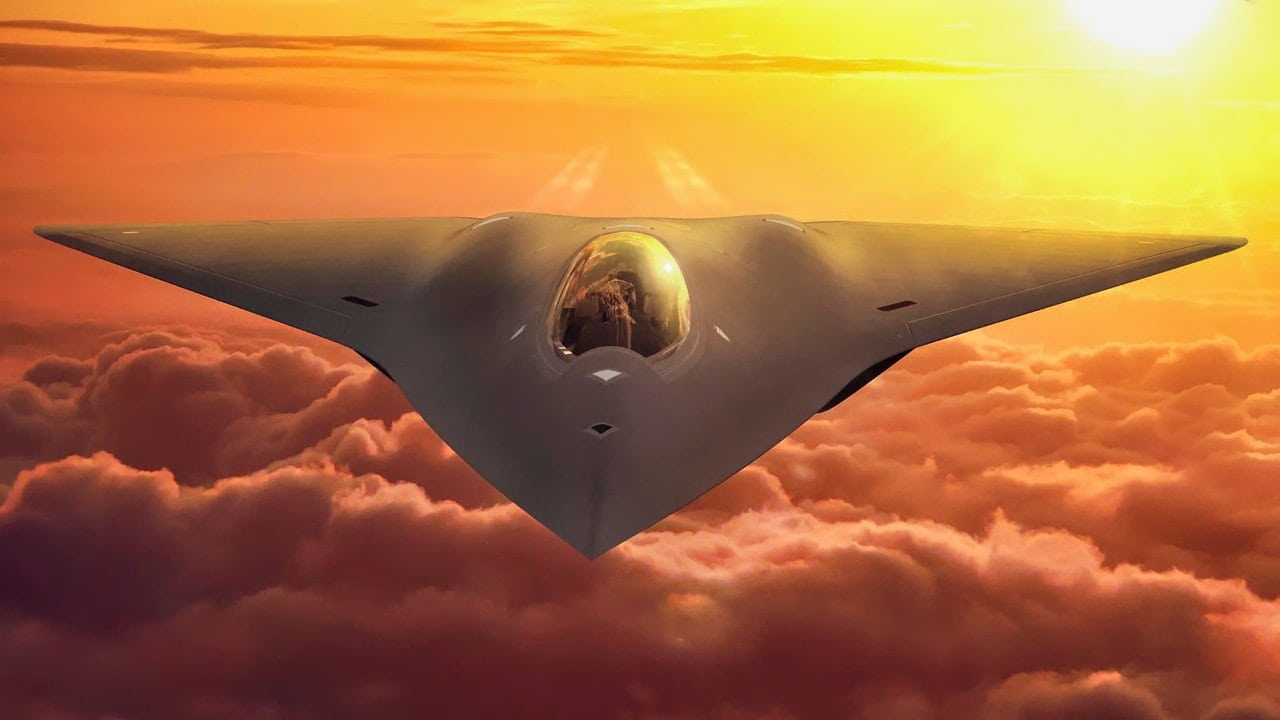
NGAD Fighter via Lockheed Martin.
But the program’s long-running development issues complicate that picture. The Technology Refresh 3 (TR-3) upgrade, which provides the computing backbone for the more advanced Block 4 configuration, has experienced repeated delays.
The U.S. Government Accountability Office reported in 2025 that TR-3 was a key driver behind late aircraft deliveries and ongoing testing challenges. Full operational testing of TR-3-equipped aircraft continues to slip.
Block 4 is not, by any means, a marginal upgrade either – so this really matters.
It is intended to add new weapons, improved sensors, and expanded mission capabilities. Until those upgrades are fully fielded, the Air Force is operating a platform that has not yet reached its intended level of capability.
The F-35 in its current configuration is exactly the kind of aircraft needed for sustained operations over defended territory – though, with the U.S. military having achieved air dominance, other, non-stealthy platforms have been used extensively in the current conflict.
The F-47 Is An Advanced F-22 At Scale
The F-22 and F-35 define the current force, but the Air Force’s long-term focus is on the Boeing F-47 NGAD, the crewed platform at the center of the Next Generation Air Dominance Program.
On March 21, 2025, the Air Force awarded Boeing the Engineering and Manufacturing Development contract for the aircraft, formally designating it the F-47.
The F-47 is intended to address the core limitation of the F-22: not necessarily its capability (though this is obviously part of it), but its scale.
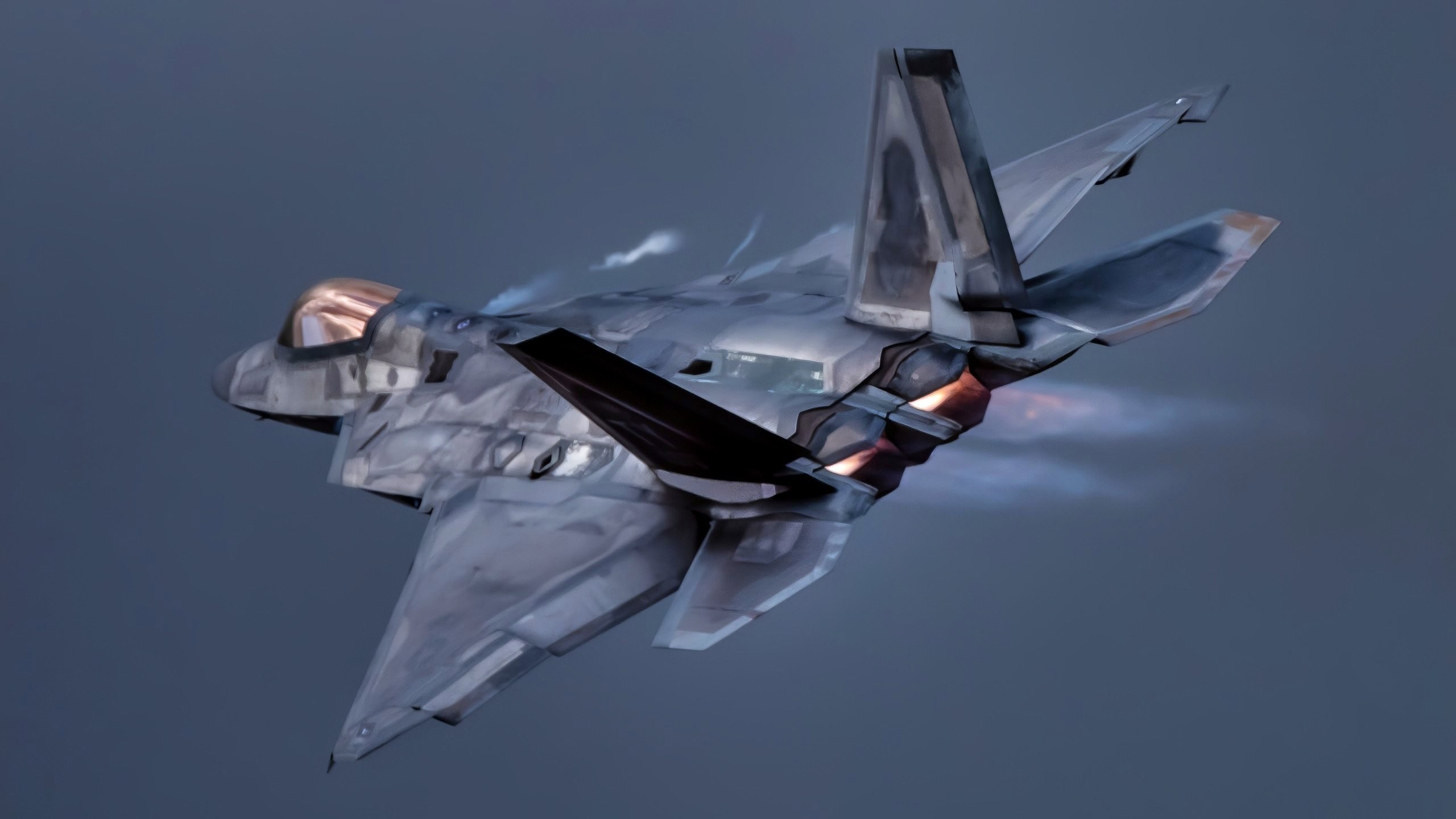
U.S. Air Force Maj. Josh Gunderson, F-22 Raptor Demonstration Team commander and pilot, flies a practice demo at Joint Base Langley-Eustis, Va., Dec. 6, 2019. Representing Air Combat Command, the F-22 Demo Team travels to air shows all across the world showcase the performance and capabilities of the world’s premier 5th-generation fighter. (U.S. Air Force photo by 2nd Lt. Sam Eckholm)
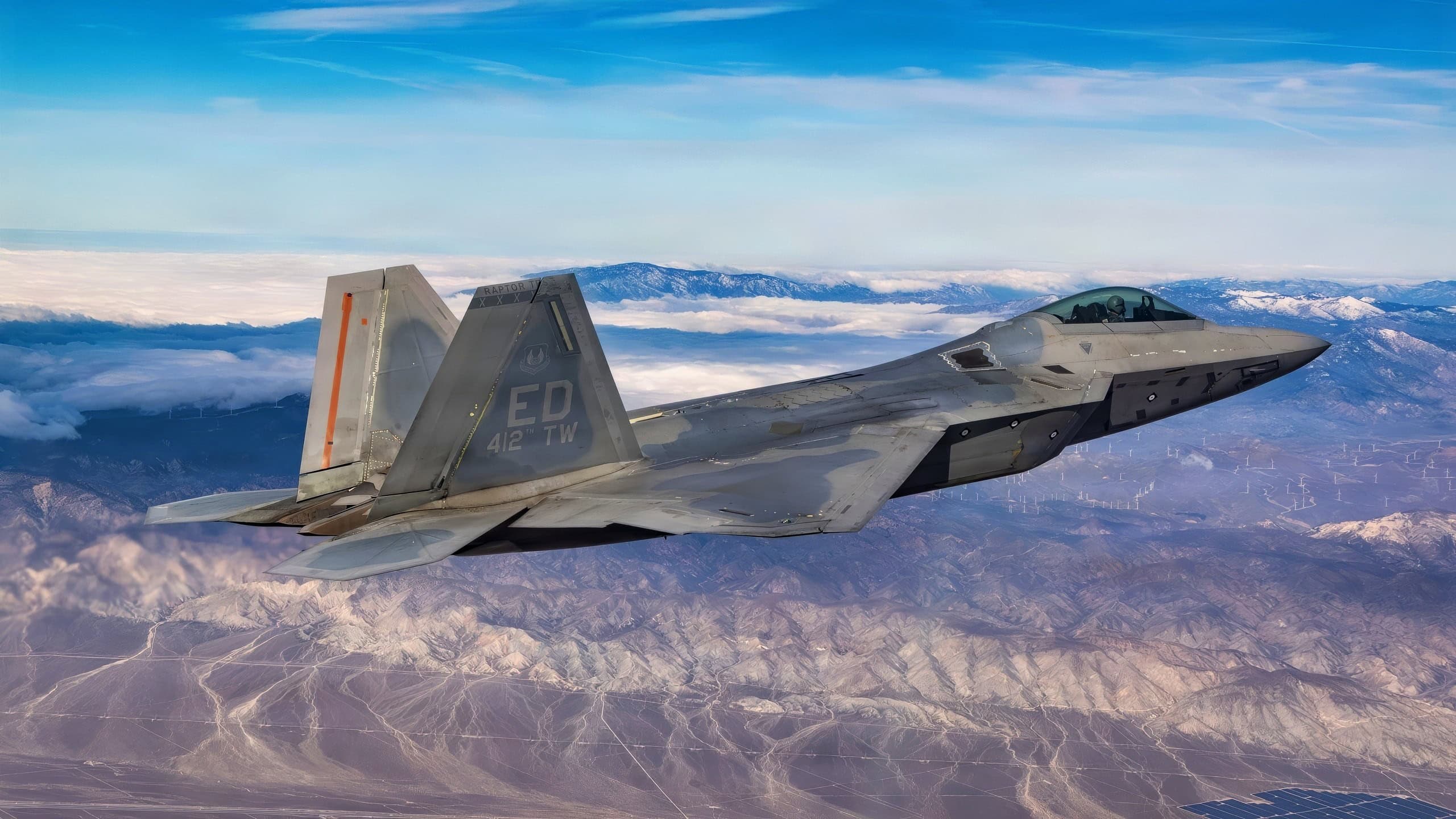
An F-22 Raptor assigned to the 411th Flight Test Squadron, Air Dominance Combined Test Force, soars over the Mojave Desert ahead of conducting high angle-of-attack maneuvers on Feb. 26, 2026. High AoA is a highly specialized set of combat aircraft maneuvers that are performed by experienced pilots and test pilots. Edwards AFB is one of the few places in North America where aviators can learn and become certified in this unique state of flying. (Courtesy photo)
Air Force Chief of Staff Gen. David Allvin has said that the service expects to field more F-47s than it did F-22s, alongside offering improvements in range and stealth. Those factors will be critical for sustaining operations over long distances and extended periods.
Equally important is how the aircraft is designed to operate. The F-47 will form part of a broader system that includes Collaborative Combat Aircraft, uncrewed platforms designed to operate alongside crewed fighters and expand their reach and survivability.
But the F-47 is not an immediate solution. While it’s still unclear when exactly NGAD will enter operational service, the program is widely expected to deliver capability in the late 2020s to early 2030s. That means the Air Force must rely on its existing fleet – and upgrades to it – for any near-term conflict, including in Iran.
What Iran Actually Proves About U.S. Airpower
The most important lesson from the Iran war is not that the United States needs a single new aircraft. It is that modern air campaigns require a combination of capabilities, and that mix shifts as air dominance is established.
In the opening phase of the conflict, stealth platforms penetrated defended airspace and struck high-value targets. But once Iranian air defenses were degraded, operations expanded to include non-stealth aircraft conducting follow-on and repeat sorties.
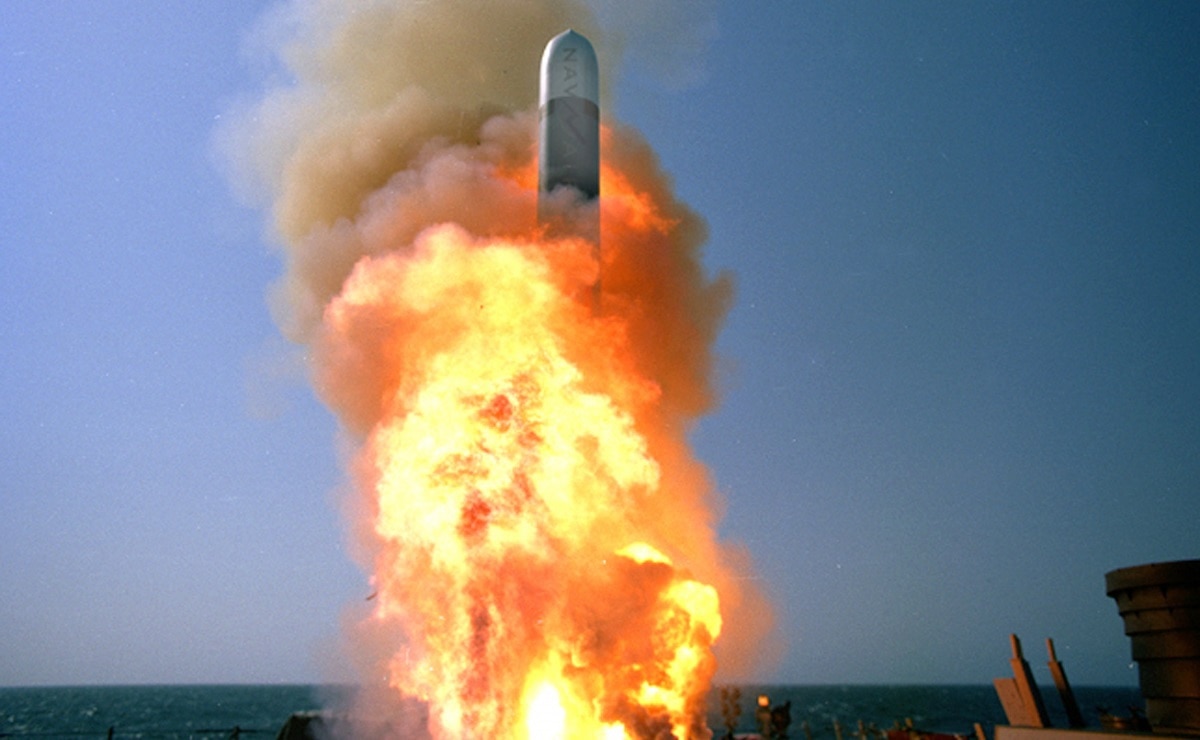
At sea aboard USS Stethem (DDG 63) Ð A Tactical Tomahawk Cruise Missile launches from the guided missile destroyer USS Stethem (DDG 63) during a live-warhead test. The missile traveled 760 nautical miles to successfully impact itÕs intended target on San Clemente Island, part of the Naval Air Systems Command (NAVAIR) test range in Southern California. The Tactical Tomahawk is the next generation of Tomahawk cruise missile, adds the capability to reprogram the missile while in-flight to strike any of 15 preprogrammed alternate targets, or redirect the missile to any Global Positioning System (GPS) target coordinates.
As the campaign progressed, the U.S. increasingly relied on conventional strike methods, including gravity bombs.
But heavy use of Tomahawk cruise missiles poses a problem for the U.S. in terms of its inventories – and if future conflicts require such extensive use, stockpiles not only need to be replenished, but firepower must also be increased.
Iran shows how the U.S. manages sustained air campaigns today – but future conflicts, particularly against peer competitors, are likely to involve denser air defense and greater risk, making stealth aircraft and next-generation systems essential from start to finish and not just in the opening phase.
About the Author: Jack Buckby
Jack Buckby is a British researcher and analyst specializing in defense and national security, based in New York. His work focuses on military capability, procurement, and strategic competition, producing and editing analysis for policy and defense audiences. He brings extensive editorial experience, with a career output spanning over 1,000 articles at 19FortyFive and National Security Journal, and has previously authored books and papers on extremism and deradicalization.