
The first batch of female naval carrier-based aircraft pilot trainees completes solo landing assessment.
Bohai Bay, clouds flying and waves rolling. Recently, the first batch of female flight trainees for naval carrier-based aircraft all passed their daytime landing solo assessments. This marks an important step forward in the training of female flight personnel for naval carrier-based aircraft, further improving the construction of the naval aviation talent echelon.
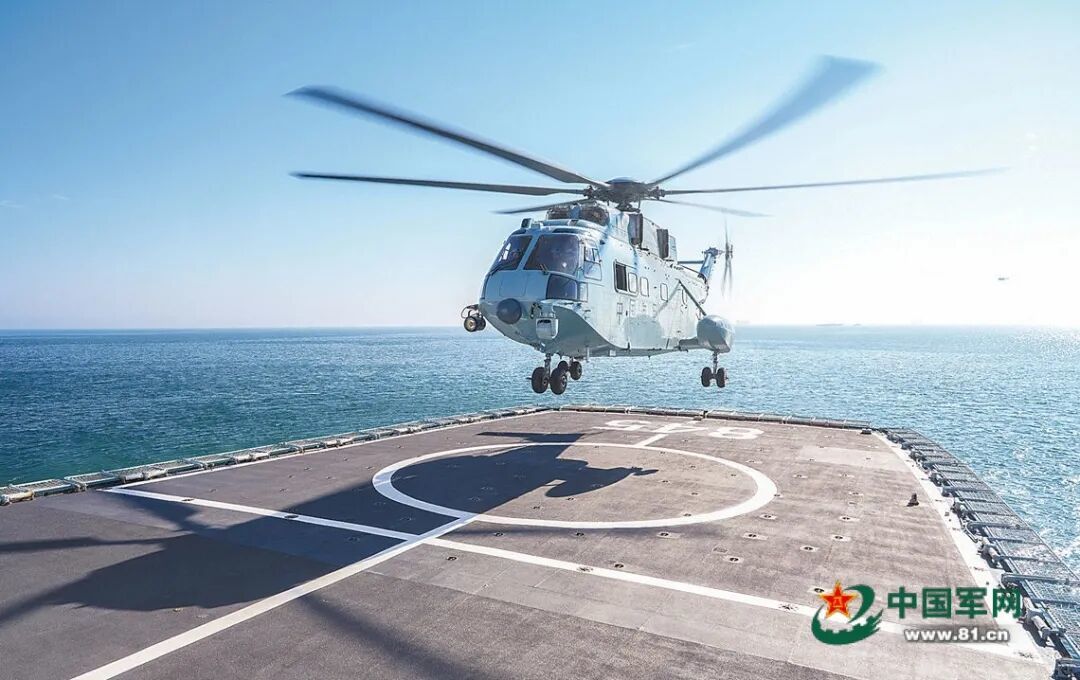
“Take off!” At around 10 a.m., as the tower issued the command, female flight trainee Han Meng steadily pushed the throttle, and the fighter jet lifted off the ground. The sea was windy and the waves high, causing the aircraft to jolt violently. Inside the cockpit, Han Meng made slight adjustments to the total distance with her left hand, while her right hand gently rested on the control stick, precisely correcting the heading.
The fighter jet flew low over the sea, with the strong airflow generated by the rotor stirring up water mist, plowing a white trail across the azure waves, which was quickly swallowed by the surging waves. As she entered the landing phase, the ship swayed with the waves, and the deck rose and fell unpredictably. Han Meng closely monitored the changes in the ship's wake, carefully comparing altitude and speed, feeling the feedback from the control stick at her fingertips. As the instructor's command came through, Han Meng seized the brief window of stability, decisively reduced the throttle and released the total distance, allowing the helicopter to lightly touch down on the ship with nearly zero overload, completing a “three-point” landing in one smooth motion.
“When landing, it felt as if there was an invisible 'high wall' in front of me, and the psychological pressure surged.” After stepping down from the aircraft, Han Meng could hardly contain her excitement. The turbulent sea, the rising and falling deck, and the disturbed wake all tested her precision in control and psychological resilience; every slight adjustment of the control surfaces and every degree of heading correction required extensive practice.
Solo landing is a critical juncture in the growth of carrier-based aircraft pilots and serves as a “qualification certificate” for real combat in the skies and seas. The leaders of the training unit introduced that during the landing training for the first batch of female flight trainees, they implemented a training model of “instructor-led flying, layered progression, and gradual solo flights,” fully tapping into the calm, meticulous, and gentle control characteristics of the female flight trainees, while simultaneously strengthening weak areas such as attitude perception, instrument interpretation, and deviation correction. The training plan was tailored to each individual and subject, with strict oversight throughout the entire process from ground simulation to airborne execution and debriefing. After each flight, instructors would promptly lead the trainees to retrieve flight data, replay the control trajectory second by second, and analyze the deviations in actions, attributing causes and formulating strategies for immediate correction. Through a closed-loop training of “fly once, evaluate once, improve once,” the carrier-based aircraft coordination capabilities of the first batch of female flight trainees have steadily improved.
On-site, the reporter observed that after the first female flight trainee successfully landed, several fighter jets, under the precise coordination of the instructor, took off and landed in an orderly manner, with all the first batch of female flight trainees successfully completing their assessments. Next, they will successively undertake training assessments for formation flying, night landings, and other high-difficulty subjects.
By | Jia Yizhen, Qian Xiaohu
Source: PLA Daily
The first batch of female carrier-based aircraft pilots successfully completed their daytime landing solo assessment in Bohai Bay. This milestone marks a significant advancement in the training of female naval pilots. The training program was meticulously structured, focusing on individual needs and included challenging conditions. Future training will involve more complex maneuvers such as formation flying and night landings.
- First batch of female carrier-based aircraft pilots completed solo landing assessment.
- Training involved a structured approach with tailored plans for each pilot.
- Successful landings were conducted under challenging conditions at sea.
- Next steps include advanced training in formation flying and night landings.