
The Israeli Iron Dome System in the UAE in 2026 Reveals the Gulf Air Defense Gap Against Iran
 Ahmed Al-Rashid
Israel's Iron Dome System in the UAE in 2026 Reveals a Gap in Gulf Air Defense Against Iran
On July 5, 2026, the Jerusalem Post reported that Israel sent an Iron Dome battery along with dozens of Israeli soldiers to the United Arab Emirates during the recent war with Iran, and that the system participated in intercepting dozens of missiles launched towards the Gulf state. This news is not a minor technical detail in a busy war record, but a window into a deeper question: why does a country that possesses THAAD and Patriot systems, along with American and Western radar layers, need an Israeli short-range battery in a moment of danger?
What Actually Happened
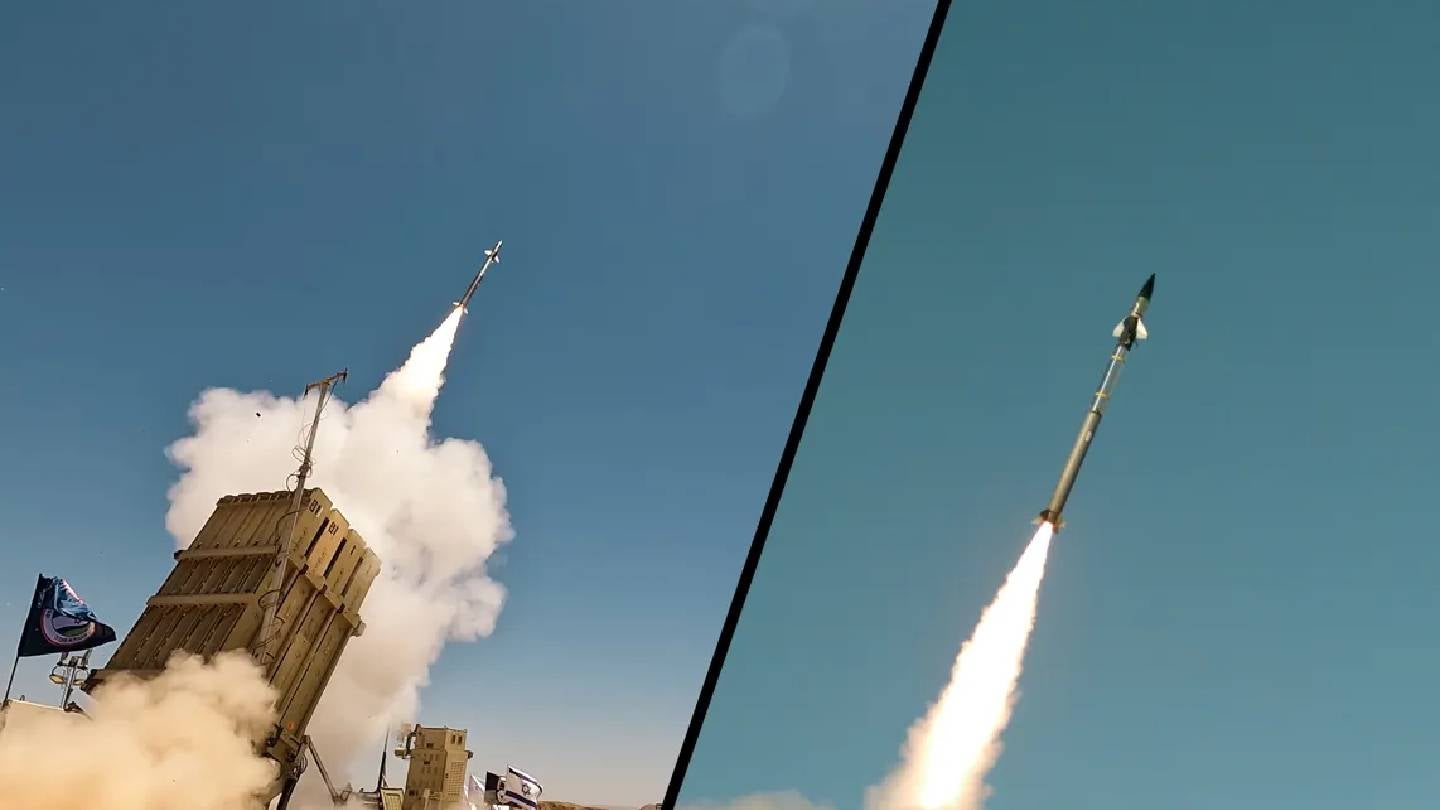
According to the report, the decision to send the battery came after a call between Israeli Prime Minister Benjamin Netanyahu and UAE President Sheikh Mohammed bin Zayed. Axios had published in April that Netanyahu ordered the deployment of an Iron Dome battery with interceptor missiles and several dozen Israeli operators at an early stage of the conflict with Iran. The new aspect in the confirmation by Israeli Transportation Minister Miri Regev is not just the political acknowledgment, but the transition of the operation from the realm of leaks to a reality that can be analytically built upon.
From a military perspective, we are witnessing an unusual external use of a system originally designed to protect Israeli cities and facilities from short-range missiles, shells, and artillery munitions. The Iron Dome operates with the Tamir missile, and RTX notes that the missile is designed to intercept threats launched from a range of approximately 4 to 70 kilometers, with an electro-optical seeker, guidance fins, and a proximity warhead. This is not a system against medium or long-range ballistic missiles, but a close layer to protect sensitive points when threats penetrate higher layers or when the threats are smaller, cheaper, and more numerous.
A Gap Between Purchasing Weapons and Operating a Combat Network
The UAE has spent years on a multi-layered air defense system. It has Patriot systems and was the first Arab country to operationalize THAAD, as well as building close relationships with the United States, France, South Korea, and Israel. On paper, this appears to be a mature network. However, any officer who has served in the region knows that owning batteries is one thing, and operating them within a complex air and missile battle is another.
The issue here is not that the UAE lacks capabilities. On the contrary, the UAE is one of the most serious Gulf armies in terms of training and professionalism compared to its neighbors. However, it faces a structural problem in the entire Gulf air defense: the density of the Iranian threat, the multiplicity of attack vectors, and the differences in interception layers make any single national network less than necessary. Iran does not need to destroy every battery; it is sufficient for it to overwhelm the system with large numbers of missiles, drones, and loitering munitions until gaps in coverage, ammunition, or fire management appear.
Thus, the Iron Dome battery in the UAE appears as a tactical addition but carries significant political meaning. Practically, Israel did not just send a piece of iron; it sent operators, operational experience, and a mindset built on years of fighting under heavy barrages. This is the part that does not show up in defense exhibition displays: software, rules of engagement, decision speed, and linking radar to the launcher and control center under real pressure.
Why Iron Dome and Not Just THAAD or Patriot
THAAD is designed to intercept ballistic missiles at a high terminal phase, and Patriot is more flexible but costly and is typically used against higher-value threats. The Iron Dome fills a relatively close layer against short-range missiles and drones, as well as some munitions that do not always warrant spending a heavier missile on them. If Iran used a mix of ballistic missiles, cruise missiles, and drones, the battle was not a one-to-one missile engagement, but a battle of interception economics.
Here lies the difference between air defense as a purchase and air defense as a daily calculation. The Tamir missile is cheaper than upper-layer missiles, but it is not cheap if used in large quantities. The more the barrages increase, the question becomes not only whether we can intercept, but how many days we can continue before missile stocks become the real constraint. In my estimation, this is the most important lesson for the UAE, Saudi Arabia, and Qatar: money buys systems, but it does not automatically buy depth of ammunition nor create a shared interception doctrine.
A Political Impact Beyond Normalization
It is easy to read the operation as a fruit of the Abraham Accords. This is partially true, but it is not sufficient. The UAE did not ask Israel for a diplomatic symbol; it asked for defensive capability in a time of war. And Israel, despite the sensitivity of sending its soldiers to an Arab country, agreed because the threat from Iran has become common to a degree that surpasses political niceties. This moment reveals that security cooperation between Abu Dhabi and Tel Aviv has moved from closed-door meetings to the operational ground.
However, this cooperation comes at a political cost. Arab public opinion does not see the Iron Dome as a neutral industrial product; it sees it as part of the Israeli military establishment that has used force in Gaza, Lebanon, and Syria. Therefore, Gulf governments will often prefer silence or technical language rather than public acknowledgment. Nevertheless, at the moment missiles fall, language retreats in the face of necessity. As we say in the military, no one asks about the color of the helmet when the bombardment begins.
For Iran, the message is troubling. If Israel is able to transfer an interception layer to the Gulf quickly, it means that any Iranian attack on the UAE, American bases, or energy infrastructure may face a broader network of national boundaries. But the message is not entirely deterrent. Iran will also learn where the battery operates, what types of threats it has been given, and how to disrupt this layer in a subsequent round.
The Greater Gulf Lesson
What has occurred puts Gulf countries in front of an uncomfortable question: do they want luxurious national systems or a real regional network? For years, we have been talking about unified Gulf air defense, but political disagreements, sovereignty sensitivities, and varying suppliers have made the idea slower than the threat. Iran does not wait for coordination committees. Its drones and missiles do not need a passport to cross the Gulf.
If we look at the capability triangle that I always refer to, we will see that the UAE has a high degree of equipment, and it has better training than most of its neighbors, but it still suffers like others in the joint institution aspect. The network that combines THAAD, Patriot, Iron Dome, and American, Israeli, and local radars needs a political operating law before it needs a data cable. Who has the right to fire? Who prioritizes an oil facility over an airbase? Who pays for the interceptor missile if it protects another country's city? These questions are tedious in conferences, but they are deadly in war.
Sending the Iron Dome to the UAE did not make Abu Dhabi defensively independent; rather, it politely proved the opposite. Gulf security after the recent Iranian war has become more dependent on an undeclared network that includes Washington, Tel Aviv, and Gulf capitals. This may be necessary in the short term, but it creates the same old contradiction: countries that want sovereign independence and buy the latest weapons, then discover at the first heavy barrage that they need operators, allies, and political decisions from outside their borders. In the Middle East, weapons that do not come with a clear command system remain half-capacity, no matter how shiny they appear in the military display.
On July 5, 2026, Israel deployed an Iron Dome battery to the United Arab Emirates to intercept missiles during the conflict with Iran. This deployment involved dozens of Israeli soldiers and was initiated following a call between Israeli Prime Minister Benjamin Netanyahu and UAE President Mohammed bin Zayed. The Iron Dome system successfully intercepted missiles targeting the UAE, highlighting the need for enhanced air defense capabilities in the region.
- Israel deployed an Iron Dome battery to the UAE on July 5, 2026.
- The deployment was made during a conflict with Iran.
- The Iron Dome system intercepted missiles aimed at the UAE.
- The decision to send the battery followed a call between Israeli PM Netanyahu and UAE President Mohammed bin Zayed.
- The UAE has invested in multi-layered air defense systems but faces challenges against Iranian threats.