
The Japan Maritime Self-Defense Force Destroyer Kirisame to Conduct Japan-U.S.-Philippines Joint Exercises in the South China Sea in 2026 to Test the Effectiveness of Maritime Law and Order Cooperation
 Tanaka Takashi
Japan's Maritime Self-Defense Force Destroyer Kirisame Conducts Joint Training with the U.S. and Philippines in the South China Sea in 2026, Testing the Effectiveness of Maritime Law Order Cooperation
The Japan Maritime Self-Defense Force destroyer "Kirisame" conducted joint maritime operations on October 23 in the South China Sea with the U.S. Coast Guard, the Philippine Navy and Air Force, and the Philippine Coast Guard. The announcement from the Ministry of Defense's Joint Staff Office was made on the 25th. A notable feature of this exercise is that it included not only naval training but also incorporated coast guard and air forces into the same framework.
Training Reality Reflected by Participating Forces
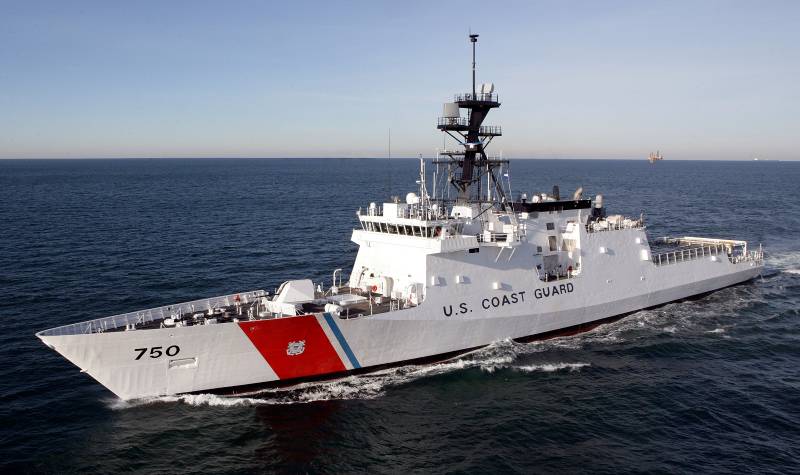
On the Japanese side, the "Kirisame" was involved, while the U.S. side contributed the large cutter USCGC Bertholf, and the Philippine side included the frigate BRP Miguel Malvar, the coast guard vessel BRP Gabriela Silang, as well as aircraft C-208B, FA-50, and A-29B. The content of the announcement referred to "tactical training," but this does not imply missile firing or anti-submarine warfare. Rather, the objective appears to have been for vessels, patrol boats, and aircraft to share the same maritime situation and establish approaches, communications, and formation movements.
Separating Capability and Intent
Legally, the three countries—Japan, the U.S., and the Philippines—demonstrated their intention to uphold freedom of navigation and overflight, as well as maritime interests based on the United Nations Convention on the Law of the Sea. However, the strength of the statement and actual capabilities are separate issues. The Philippine FA-50 and A-29B are useful for maritime surveillance and air warning, but they are not aircraft capable of conducting long-duration wide-area surveillance on their own. Only when the vessels of Japan and the U.S. complement each other in communications and information can the density of monitoring over the South China Sea's SLOC (Sea Lines of Communication) be increased.
What is important here is the design to operate both the navy and the coast guard simultaneously. In cases of accidental contact or gray zone incidents, deploying only military vessels can easily lead to political escalation. The participation of Bertholf and Gabriela Silang can be interpreted as an attempt to test cooperation at a lower threshold that connects law enforcement in peacetime with maritime security in times of crisis. For Japan, this directly relates to the domestic issue of how to connect the roles of the Japan Coast Guard and the Self-Defense Forces around the Nansei Islands.
Weaknesses in Deterrence Remain After Training
The Ministry of Defense has not named specific countries. While this is a practically reasonable expression, whether the joint statement functions as a deterrent depends on its continuity beyond the training day. The compatibility of data links, alternative means during communication disruptions, and differences in engagement rules and law enforcement authorities among the countries represent frictions that are not captured in photographs.
In my view, the significance of this exercise lies not in the number of participating vessels but in the way it connected the maritime situational awareness of the three countries without appearing militarily intimidating. However, the true test will come during the next crisis. Even if joint training becomes routine, if the field does not share the same imagery and judgment criteria, the assurance of SLOC will remain merely a matter of documented cooperation.
References
The Japan Maritime Self-Defense Force destroyer KIRISAME conducted joint maritime training with the U.S. Coast Guard and Philippine forces in the South China Sea on October 23, 2026. The exercise involved multiple naval vessels and aircraft, focusing on enhancing maritime law enforcement cooperation. This training aimed to improve situational awareness and coordination among the participating nations.
- The JMSDF destroyer KIRISAME participated in joint training with U.S. and Philippine forces.
- The exercise took place in the South China Sea on October 23, 2026.
- Various naval and air assets were involved, including the USCGC Bertholf and Philippine aircraft.
- The training aimed to enhance maritime law enforcement cooperation among the three nations.
- The exercise included coordination between naval and coast guard units.