
Summary and Key Points: Isaac Seitz, a strategic intelligence analyst and defense columnist, evaluates the shifting role of the FGM-148 Javelin in the 2026 conflict environment.
-Manufactured by Lockheed Martin and Raytheon, the Javelin utilizes a tandem-charge HEAT warhead and an Infrared Imaging Seeker to achieve lethal top-attack capabilities.
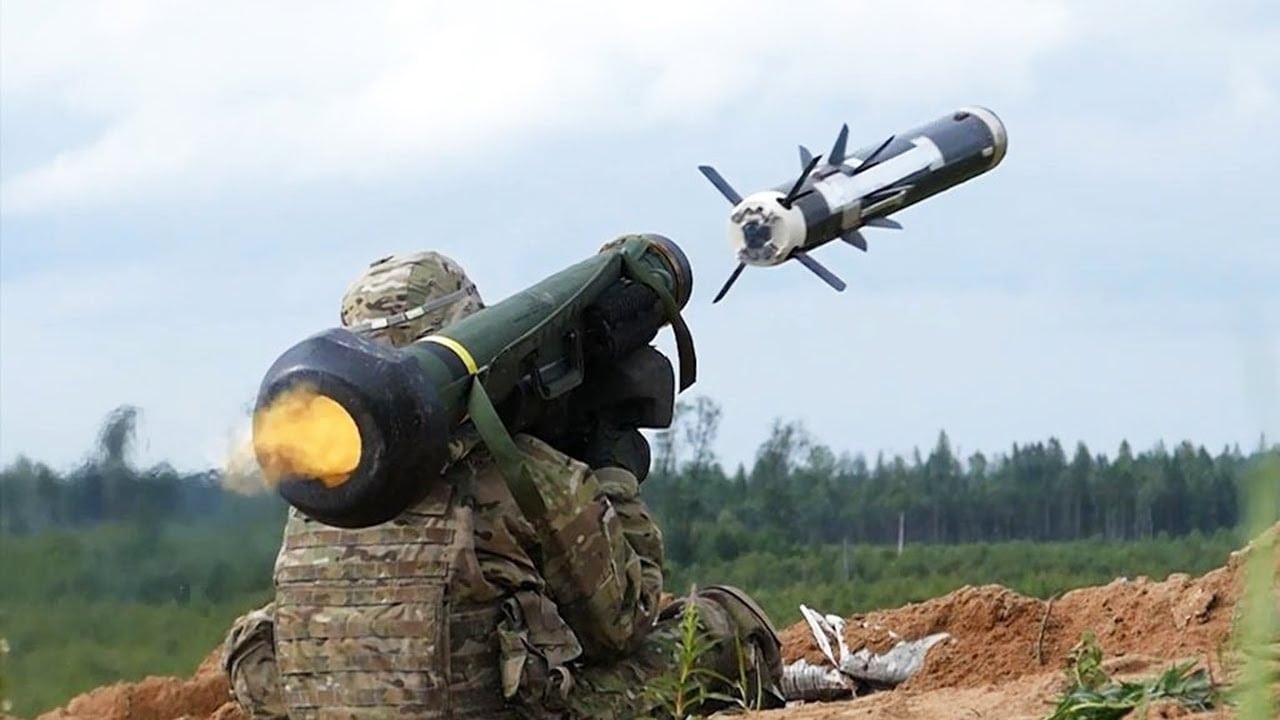
Javelin anti-tank missile. Image Credit: YouTube Screenshot.
-This 19FortyFive report analyzes how the proliferation of low-cost FPV drones has eclipsed the Javelin’s media presence, while exploring the industrial “bottleneck” of producing only 4,000 units annually against a battlefield demand of 500 missiles per day, ensuring the system remains a high-value, albeit scarce, asset.
$200k vs. $500: Analyzing the Economic Shift from Javelins to FPV Drones in 2026
The FGM Javelin is widely considered to be one of the greatest man-portable anti-tank guided missiles (ATGMs) in operational service. Jointly manufactured by Lockheed Martin and Raytheon, the Javelin uses advanced guidance systems and flight controls to achieve top-attack fire-and-forget capabilities, making it especially deadly against tanks. The system earned extensive coverage from its use in Ukraine as article after article wrote about Javelins burning Russian tanks in mass.
However, today one rarely ever hears about the Javelin. Footage of the system is scarce at this point, and no one discusses it outside of fanatical pro-Ukrainian circles on X. So, what happened to the Javelin? Did Ukraine run out of these missiles? Did Russia learn how to counter these missiles, or did drones completely replace the system?
What Happened to the Javelin?
There are several reasons why the Javelin fell out of public discourse. Mainstream news outlets vaunted the Javelin as a symbol of Ukrainian resistance and one of the best systems in the war. This was never the case. Don’t get me wrong, the Javelin is a great system, but it is not a perfect system.
In the best conditions, the missile is a highly reliable system, with Army testing showing that upgraded Spiral 2 missiles reliably hit their targets, with only one near miss and one miss out of 22 test firings.
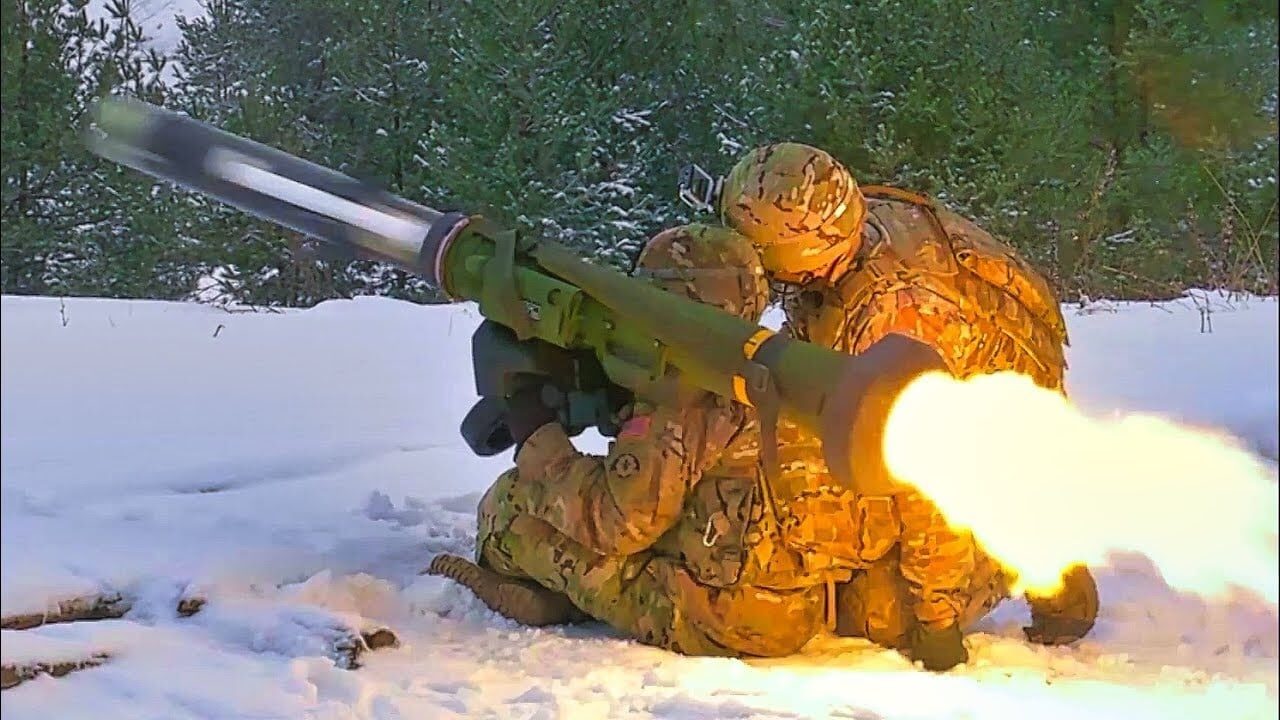
Javelin anti-tank missile. Image Credit: Creative Commons
Despite the manufacturer marketing the Javelin as a simple system to use, the truth is that the missile requires extensive training to use effectively, something Ukraine sorely lacks. As early as 2022, the Washington Post published an article highlighting insufficient training and the lack of user manuals available to Ukrainian troops. These issues lead to misfires and missiles missing their targets.
Issues with training can be solved later down the line. However, by the time insufficient training was addressed, the issue of supply began to surface. At the outset of the war, the West slowly came to realize that arms production in the U.S. and Europe had to ramp up significantly to sustain Ukraine.
At the start of the war, Lockheed Martin and Raytheon produced around 2,100 Javelin systems a year, but after 2022, the companies planned to ramp up production to 4,000.
According to reports, however, Ukraine needs around 500 Javelins per day to adequately push back the Russians, meaning Lockheed’s ramped-up production would sustain Ukraine for only eight days (assuming all new-production Javelins are sent to Ukraine ahead of Lockheed’s numerous other customers).
After 2022, Ukraine’s missile stockpile had depleted significantly, and although it still received regular deliveries, its scarcity meant the Javelin fell out of the public eye in the years that followed.
Not Enough Bang for its Buck
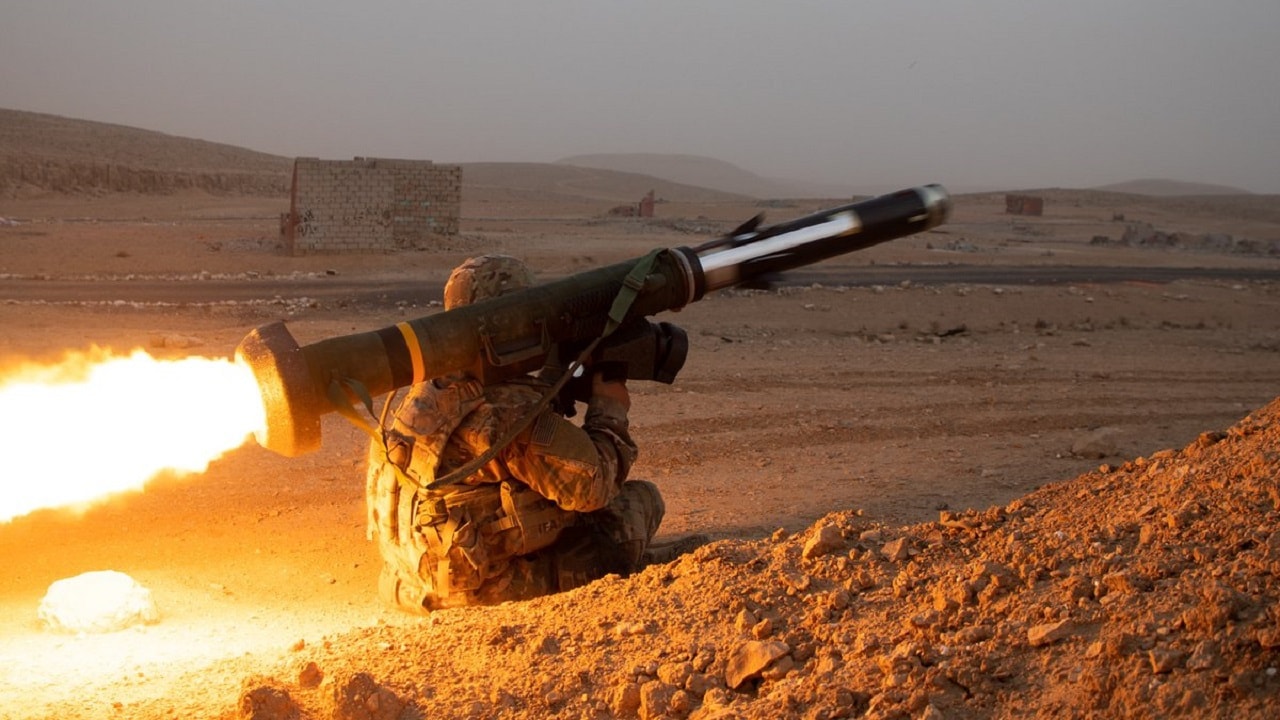
Image of Javelin anti-tank missile. Image Credit: Creative Commons.
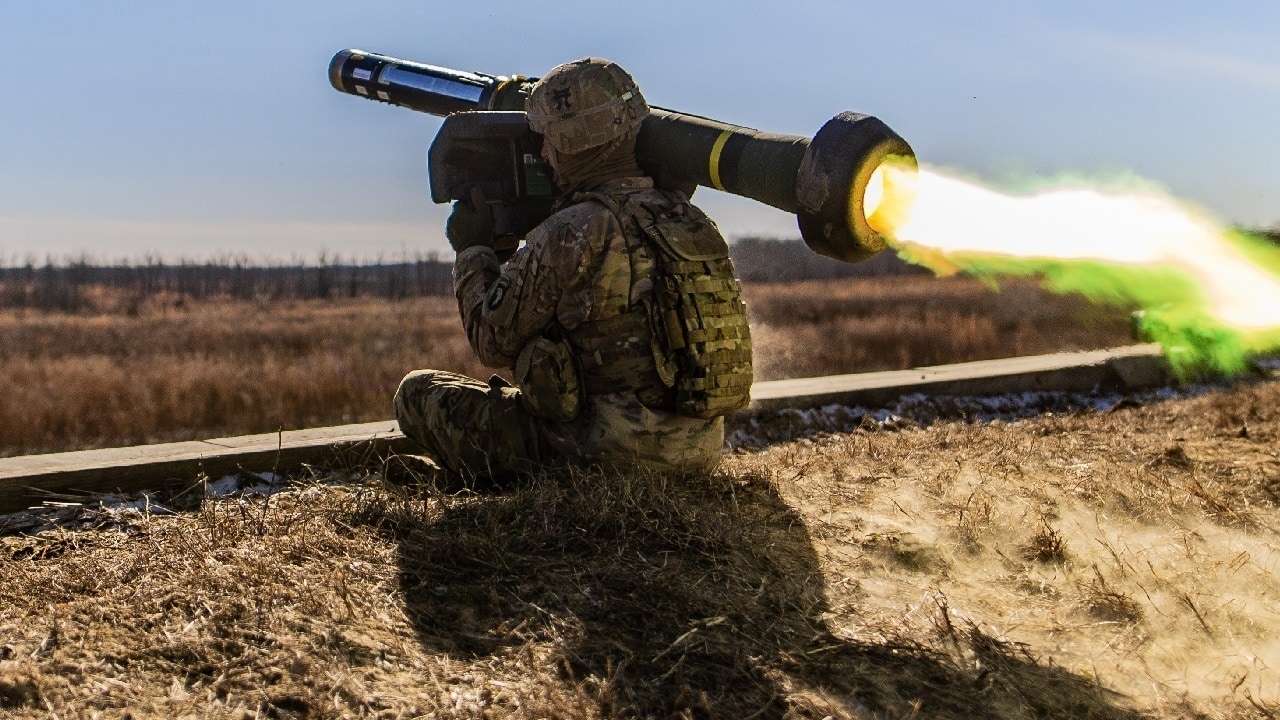
1st Lt. Ryan Rogers assigned to 3rd Battalion, 187th Infantry Regiment, 3rd Brigade Combat Team, 101st Airborne Division (Air Assault), fires the Javelin shoulder-fired anti-tank missile during platoon live fire exercise at Fort Campbell, Ky. Jan. 30, 2019. (U.S. Army Photo by Capt. Justin Wright)
Like many other systems in the Ukrainian war, Ukraine found that small, cheap drones could fulfil the same basic function as a Javelin at a fraction of the cost. The price of a full system with a single missile and launcher can range from $178,000 to $249,700.
A drone piloted by an experienced operator can achieve roughly the same top attack capabilities without putting its user at risk and at a fraction of the cost. Kamikaze drones quickly became the backbone of Ukraine’s anti-tank capabilities due to their greater versatility compared to American ATGMs. The operation did not require training from NATO instructors to use them; drones could be easily manufactured in large numbers and used for both anti-armor and anti-infantry roles.
Today, Javelins are still delivered and used by Ukraine, but they no longer capture headlines as they once did. This is, again, thanks to the proliferation of cheap drones, which offer roughly the same capabilities at a fraction of the cost.
In response to the drone threat, both sides began adding anti-drone armor and nets to their tanks and IFVs, which, for the Russians, helped to make them more protected against top-attack munitions. The Javelin is one of many weapon systems that cheap drones have replaced. Even other drone systems, such as the Bayraktar and Switchblade, were replaced by FPVs due to their lower cost and greater versatility.
How the Javelin Works
At its core, the Javelin system is built around two primary components: a disposable missile tube that houses the missile, and a reusable Command Launch Unit (CLU) that provides all optics, sensors, and electronic controls.
The CLU includes both day-vision optics and thermal imaging, allowing soldiers to identify and track targets in any light or weather conditions. It also serves as a surveillance device independent of missile firing.
The missile uses an infrared imaging seeker to autonomously home in on its target after launch. This fire-and-forget guidance dramatically increases operator survivability because soldiers do not need to remain exposed after firing, unlike with earlier wire-guided systems.
The Javelin’s lethality stems from its tandem-charge high-explosive anti-tank (HEAT) warhead, designed to defeat the explosive reactive armor (ERA) commonly used on modern main battle tanks. The initial charge triggers and neutralizes the ERA, allowing the main charge to penetrate the underlying armor, which has been rated as exceeding 760 mm of rolled homogeneous armor equivalency. The missile can engage targets using either a top-attack trajectory or a direct-attack mode.
In the top-attack profile, the missile climbs to about 150 meters before diving onto the upper surfaces of tanks, where armor is typically thinnest. In direct-attack mode, which maintains a much flatter trajectory of around 60 meters, the system is effective against bunkers, buildings, light vehicles, and even low-flying helicopters.
About the Author: Isaac Seitz
Isaac Seitz, a Defense Columnist, graduated from Patrick Henry College’s Strategic Intelligence and National Security program. He has also studied Russian at Middlebury Language Schools and has worked as an intelligence Analyst in the private sector.