
The JNIM Strikes Niamey a Second Time in 2026 — the AES Loses Its Air Sanctuary
 Marie Dubois
JNIM Strikes Niamey for the Second Time in 2026 — AES Loses Its Air Sanctuary
Niamey, Thursday morning, just after dawn prayer. The first explosions around Diori Hamani International Airport were initially thought to be an accident, but the gunfire confirmed otherwise: the Nigerien capital had just been hit at the most sensitive point of its military apparatus.
According to the Nigerien Ministry of Defense, the attack killed thirteen people on the government side, including eleven members of the defense and security forces and two civilians. Twenty-two assailants were reportedly shot dead, four were injured, and about twenty suspects were arrested. The Group for Support of Islam and Muslims (JNIM), the Sahelian branch of al-Qaeda, claimed responsibility for the operation against the airport and the nearby military base. The toll remains as reported by the authorities; as is often the case in the Sahel, it will take time to know how many men actually participated in the assault and how many managed to disperse into the nearby neighborhoods.
A Civil, Military, and Political Site All at Once
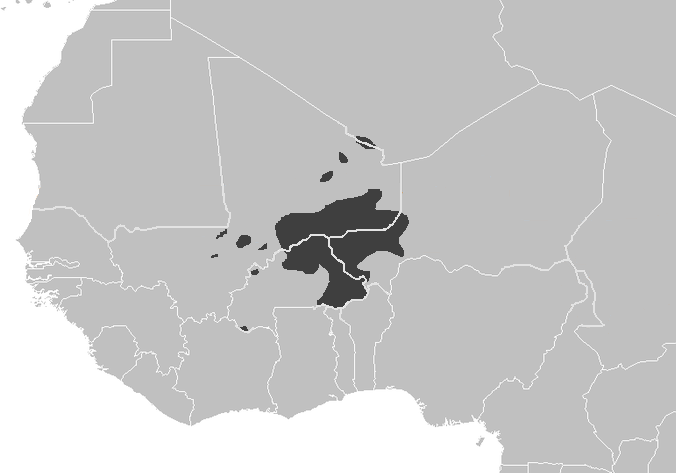
Diori Hamani is not just the air gateway to Niamey. The complex also houses Air Base 101, drone infrastructure, surveillance means, military aircraft, and elements related to the command of the Alliance of Sahel States (AES), the bloc formed by Niger, Mali, and Burkina Faso. It is precisely this mix that makes the target attractive: hitting the airport means striking both the symbol of the state, its air depth, and its new sovereign narrative.
The detail reported by the BBC about the seized weapons — RPG-7 rocket launchers, AK rifles, explosives, grenades, communication means, and ammunition — suggests a team prepared for a short penetration action, not a lasting takeover of ground. From experience, this type of assault does not need to hold the runway for twenty-four hours to produce its effect. A few hours are enough if the planes are blocked, if residents see the smoke from the peripheral neighborhoods, and if the government has to explain why the most protected perimeter in the country has been approached again.
The Second Breach in Less Than Five Months
The most serious point is not just the attack in June. It is its repetition. On January 29, an operation claimed by the Sahel Province of the Islamic State (ISSP) had already targeted the same complex, injuring four soldiers according to Nigerien authorities and causing significant damage. This time, the claim comes from JNIM. In less than five months, the two major competing jihadist poles in the Sahel have thus struck, or attempted to strike, the same strategic knot in Niamey.
This is new at this scale. Sahelian armed groups have long favored road axes, isolated posts, poorly supplied garrisons, and villages where the state only intermittently held sway. Here, they come looking for an urban target, close to the political heart of Niger. AP cites analysts who see in this sequence an extension of operations towards cities and symbolic centers, following the jihadist pressures observed around Bamako and the fuel blockade in Mali. The Sahel is no longer just a war of rural margins; it is becoming a war of urban depth.
The Tactical Problem Around Base 101
Topography matters. The airport is located in the southeast of Niamey, in an area where neighborhoods, fences, access roads, and open grounds create several layers of security, but also several blind spots. Authorities had, according to AFP as reported by the BBC, demolished nearby neighborhoods in the name of terrorist risk, extended the perimeter fence, and installed more than 350 cameras. This did not prevent the attack.
A camera sees; it does not prohibit movement. A fence slows down; it does not replace a depth of human intelligence. If assailants can approach with RPGs, explosives, and communications, the problem is not limited to the last gate. It starts earlier, in the hosting networks, fuel purchases, reconnaissance, local relays, and the ability of cells to cross the city without attracting attention. This is where the Nigerien junta will have the most difficulty: the security of an air base is not only won with cameras but with a network of trust in the surrounding neighborhoods.
JNIM and ISSP Respond in Front of the Capital
RFI cites Héni Nsaibia, an analyst at ACLED, who states that the attack illustrates the parallel expansion of JNIM and ISSP, in a context of rivalry for regional dominance. This competition is often described as ideological; on the ground, it is also operational. Each group wants to show that it can reach a target that the other has hit, or that it can do better. In Niamey, this means that prestigious infrastructures become scenes of competition.
For the AES, the message is harsh. Niger, Mali, and Burkina Faso have built their discourse on military reassertion after the failure of Western partners. They have replaced French cooperation with a more sovereign, more Russian, more vertical architecture. However, the heart of this architecture, in Niamey, has now been struck twice in one year. The junta can blame France or external powers, as it has done again without public evidence. But the immediate military effect is elsewhere: JNIM forces Niamey to divert men, vehicles, and attention towards the protection of the capital.
The Invisible Cost for Operations in the Sahel
An air base serves to look far. Drones, light aircraft, helicopters, command links: all of this gives depth to an army that must monitor Tillabéri, Tahoua, the Malian border, and the approaches to Burkina Faso. If Base 101 must protect itself like a besieged garrison, its offensive function diminishes. Pilots take off less confidently, technical teams work under pressure, logistical convoys become more cautious, and every alert immobilizes units that should be patrolling elsewhere.
This is exactly what jihadist groups seek. They do not need to control Niamey. They must convince the power that Niamey is no longer safe. The difference may seem small on a map; it is enormous in an operations room.
What to Watch Now
The next indicator will not just be a new claim statement. It will be necessary to see if Nigerien forces launch massive sweeps in the southeast neighborhoods, if military flights decrease from Base 101, and if jihadist groups attempt to replicate the model against other urban sites: fuel depots, gendarmerie barracks, telecom nodes, or border infrastructures.
The operational lesson is clear. After January, Niamey knew that its airport was in the crosshairs. After June, it must admit that the reinforced perimeter was not enough. The most immediate danger is not a conquest of the capital, a scenario still unlikely. It is a series of short, well-documented, and politically costly attacks, capable of wearing down the AES where it promised to be the strongest: in the protection of its own command center.
Sources
- RFI, June 19, 2026, JNIM claim and official Nigerien toll.
- BBC, June 19, 2026, details on losses, seized weapons, and security measures around the airport.
- Associated Press, June 19, 2026, analysis of the extension of jihadist attacks towards urban Sahelian centers.
JNIM launched an attack on Niamey on June 19, 2026, targeting the Diori Hamani International Airport and a nearby military base, resulting in 13 government personnel killed and 22 attackers killed. This marks the second assault on this strategic location within five months, indicating a shift in jihadist tactics towards urban centers in the Sahel.
- JNIM attacked Niamey, killing 13 government personnel and injuring others.
- 22 attackers were killed, and 20 suspects were arrested.
- The attack targeted the Diori Hamani International Airport and a military base.
- This is the second attack on the same location within five months.
- The incident highlights the evolving threat of jihadist groups in urban areas of the Sahel.