
Ukraine's TrophyLab with 115 Russian Systems Highlights Europe's Procurement Problem 2026
 Dr. Klaus Weber
Ukraine's TrophyLab with 115 Russian Systems Highlights Europe's Procurement Problem 2026
115 captured Russian systems and more than 225 technical studies initially sound like news from the world of intelligence. In fact, the Ukrainian platform TrophyLab, which became known on June 22, is a much more precise test for Europe's defense policy: Can the continent translate tactical knowledge from the war into industrial capability, or will it remain in the role of the paying observer?
According to the Ukrainian Ministry of Defense, TrophyLab catalogs captured Russian equipment in 79 categories. Approved governments, defense companies, and research institutions gain access to blueprints, component analyses, laboratory reports, and technical evaluations. Among the mentioned items are a Kinzhal hypersonic missile and a T-90M battle tank. This is not a PR gimmick. It is an institutionalized form of battlefield reconnaissance.
From Spoils to European Learning Curve
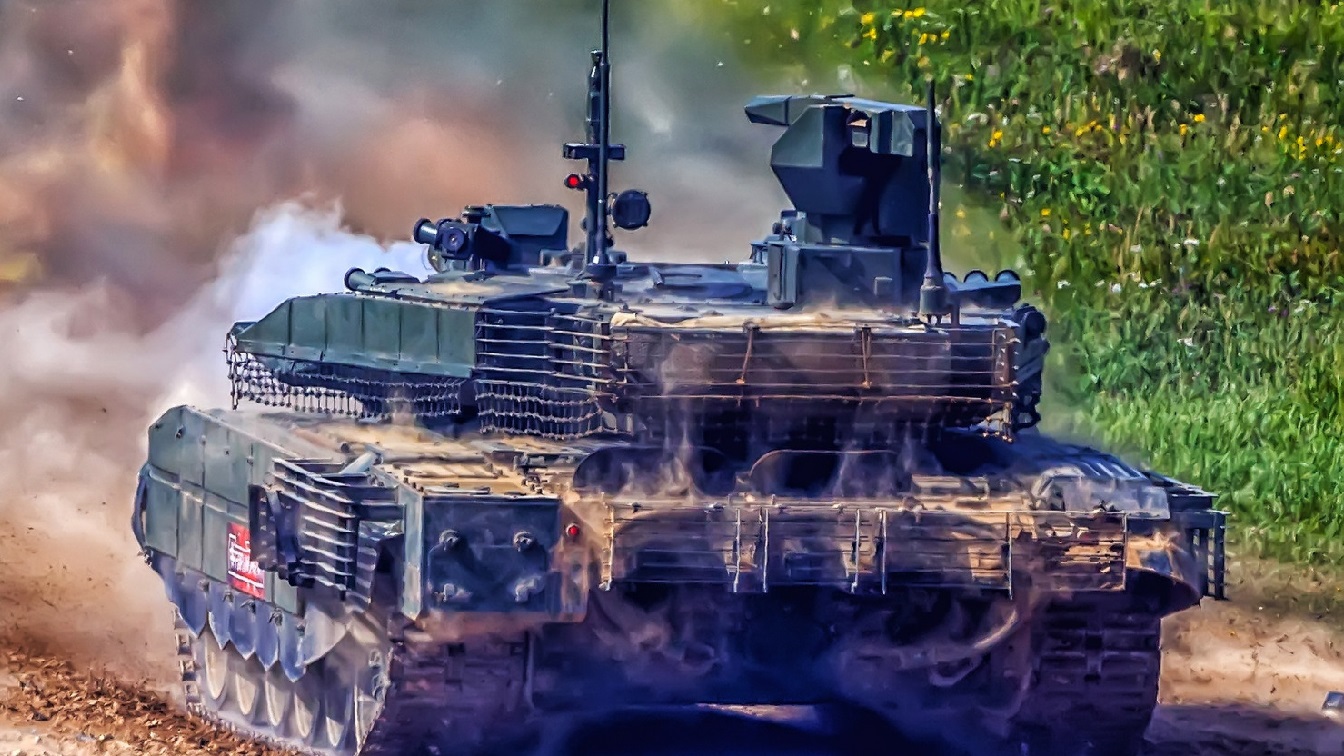
For European armed forces, the T-90M is not interesting because it is a wonder tank. What is interesting are its sensors, protection systems, communication components, thermal imaging devices, and the actual quality of Russian serial production under sanctions pressure. This is where the value of TrophyLab lies: It replaces speculation with examinable hardware. Those who want to know which Russian components still contain Western microelectronics, which protection concepts fail against drone attacks, and which countermeasures Ukrainian units actually use gain a point of access.
This fits into a broader Ukrainian strategy. Kyiv has already shared drone videos to train allied AI systems and supported startups for deep strike capabilities with Germany under the Brave Germany initiative. TrophyLab makes this process more systematic. From a Ukrainian perspective, this is smart: Sharing knowledge binds partners more closely to one's own war economy. From a European perspective, it is uncomfortable: The continent gains access to knowledge but not automatically to the production structures that turn this knowledge into new capabilities.
The PURL Barrier Remains
The contrast to NATO procurement could hardly be clearer. Just a few days before the TrophyLab announcement, Italy confirmed that it would not participate in the Prioritised Ukraine Requirements List (PURL) mechanism. PURL finances the purchase of American weapons, which are then sent to Ukraine. According to NATO, nearly six billion dollars have already been pledged; the focus is on air defense. Even more importantly is the scale: PURL financed about 70 percent of all Patriot missiles for Ukrainian batteries and 90 percent of the ammunition for other air defense systems.
This is the core of the European problem. TrophyLab is about learning, analysis, and industrial adaptation. PURL is about availability this morning. Ukraine needs both, but Europe primarily delivers the latter through American production lines. Germany, the Netherlands, Canada, and Sweden contribute to the mechanism; Italy refuses. Politically, Rome is easy to criticize for this. Institutionally, the criticism is less comfortable, as Italy openly shows what many governments only do quietly: They accept higher NATO target numbers but try to limit the actual procurement burden fiscally and politically.
5 Percent is Not Industrial Policy
The new NATO logic of 3.5 percent for hard defense and 1.5 percent for security-related infrastructure exacerbates this ambivalence. The definition of defense spending is broad enough to include coast guard, cyber, space, research, and certain interior ministry shares, as long as they are militarily usable. This is not illegitimate. But it invites political accounting. Italy has already shown in 2025 how the increase from about 1.5 to 2 percent was partially achieved by reclassifying tax police, coast guard, cyber, and space.
If Rome now speaks of 2.8 percent while simultaneously treating PURL, SAFE loans, and the EU exemption clause for additional defense spending only hesitantly, this is not an Italian special case. It is the European pattern in concentrated form: The share of gross domestic product is rising faster than the willingness to set hard industrial priorities. A percentage figure does not buy Patriot missiles, no 155mm shells, and no secured supply chains for infrared sensors.
For Germany, this diagnosis is particularly uncomfortable. Berlin will want to use TrophyLab data, German companies will analyze Russian components, and the Federal Ministry of Defense will translate the lessons into future requirements. Yet, when the same federal government has to negotiate acute air defense again over American systems and PURL-like financing mechanisms, the concept of European sovereignty remains analytically hollow. Knowledge is not autonomy as long as critical production is located elsewhere.
What TrophyLab Can and Cannot Achieve
TrophyLab can achieve three things. First, it shortens the path between frontline observation and European laboratories. Second, it forces defense companies to understand Russian capabilities not from brochures but from destroyed or captured systems. Third, it makes Ukraine a provider of security policy insights, not just a recipient of aid.
But TrophyLab cannot achieve three things. It does not create munitions factories. It does not replace joint European procurement contracts. And it does not overcome the fragmentation between national industries, EU funds, NATO mechanisms, and American export controls. A French company, a German research institute, and a Polish procurement office can analyze the same Russian component and still create three different programs from it.
The crucial question is not whether Europe learns from the war. The question is whether it is institutionally capable of jointly procuring what it has learned.
The Real Lesson for 2026
The practical value of TrophyLab is high. For electronic warfare, drone defense, protection systems, and anti-tank capabilities, the platform can reveal real Russian vulnerabilities. Yet, precisely for this reason, Europe should not misunderstand it as a symbol of autonomy already achieved. A database of 115 Russian systems is a start, not a substitute for production capacity.
European defense policy thus faces a paradox. Without Ukrainian battlefield knowledge, Europe's industry would learn more slowly, abstractly, and expensively. With this knowledge, it learns faster, but it immediately encounters the same old limits: national budgets, fragmented procurement, American key technologies, and political fear of unpopular defense spending. TrophyLab shows that Europe gains access to the reality of war. Whether this leads to European capability does not depend on Kyiv's database but on the budget committees, procurement offices, and factory halls of the member states.
Ukraine's TrophyLab cataloged 115 captured Russian systems, including the T-90M tank and Kinzhal missile, providing technical analyses to approved entities. This initiative aims to enhance European defense capabilities by translating battlefield knowledge into industrial capacity. However, Italy's refusal to participate in the PURL funding mechanism highlights ongoing challenges in European defense procurement.
- Ukraine's TrophyLab has cataloged 115 captured Russian systems.
- The platform provides access to blueprints and technical analyses for approved governments and companies.
- The T-90M tank and Kinzhal missile are among the analyzed equipment.
- TrophyLab aims to enhance European defense capabilities through shared knowledge.
- Italy has opted out of the PURL mechanism for funding military aid to Ukraine.