
The Joint Arms Fund Between the UAE and Israel Redefines the Gulf Security Map
 S.W
S.WThe Joint Arms Fund Between the UAE and Israel Redefines the Gulf Security Map
On August 6, 2026, a current and a former U.S. official confirmed to Middle East Eye that the United Arab Emirates and Israel have established a joint fund for acquiring and developing new weapon systems. The agreement, which was made during Israeli Prime Minister Benjamin Netanyahu's visit to the UAE amid the war with Iran, marks the culmination of a process that began with the Abraham Accords in 2020, but is now shifting from political normalization to operational military integration.
From a military perspective, this is not just a business deal. When Israel deploys Iron Dome batteries and personnel in the UAE to operate them during the war — as confirmed by U.S. Ambassador Mike Huckabee last May — you are talking about real defensive integration, not just technical cooperation. The joint fund is the logical next step.
Fund Details: From Air Defense to Drone Systems
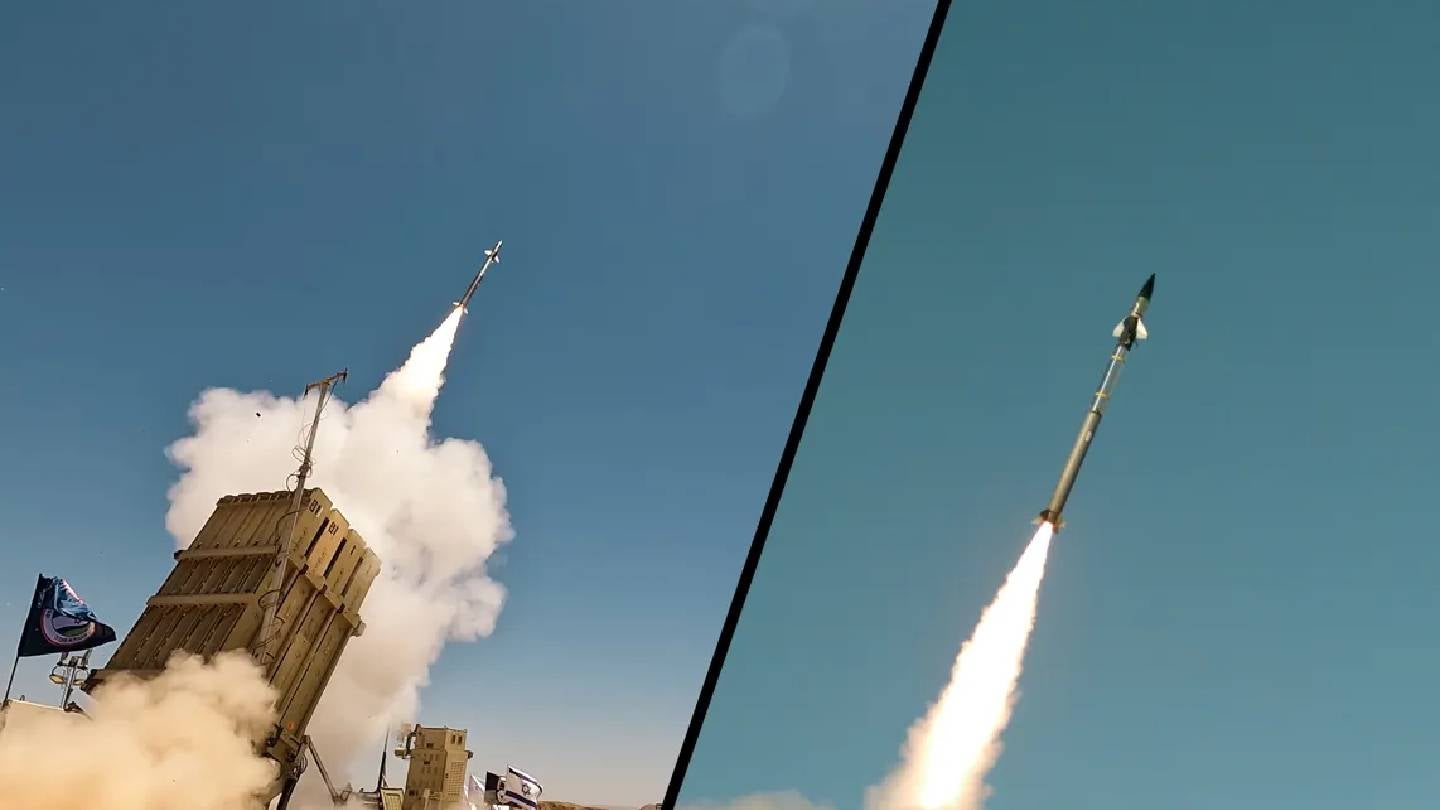
According to sources reported by Middle East Eye, the fund's priority is focused on Counter-Unmanned Aerial Systems (C-UAS) and air defense systems. The former U.S. official explained that "significant amounts" have been allocated to the fund, and that purchases will likely exceed the scope of air defense.
The available details indicate:
- Joint acquisition and development of weapon systems
- Emirati funding for the development of Israeli air defense technologies
- Initial focus on Counter-Unmanned Aerial Systems (C-UAS)
- Potential expansion to include other categories of weapons
This comes after the Emirati defense company EDGE acquired a 30% stake in the Israeli company Third Eye Systems, which specializes in integrating artificial intelligence with drones, in June 2025. The new fund represents a significant escalation in the size and quality of this partnership.
Why Now? The Shock of 3000 Drones
Any military personnel who has served in the region knows that security calculations only change after real shocks, not after intelligence reports. The shock here came when Iran targeted the UAE with about 3000 drones and missiles during the war — a number that far exceeds what any defense planner anticipated two years ago.
Practically, the UAE faced a classic defensive dilemma: Patriot and THAAD systems are effective against ballistic missiles, but they are unreasonably expensive against drones that cost a few thousand dollars. The cost of a single Patriot interceptor exceeds $3 million. If you calculate the operational cost of intercepting 3000 targets, you will understand why Counter-Unmanned Aerial Systems have become the fund's top priority.
The Equation of Money and Technology
Yoel Guzansky, a senior researcher at the Institute for National Security Studies in Tel Aviv, accurately summarized the equation: "Israel will need Emirati money. We have the technology, but we lack the resources. The UAE has the resources, but it lacks the technology."
The UAE's defense spending is estimated at around $27 billion in 2026, which is about 5% of its GDP. Abu Dhabi alone controls nearly $2 trillion among its sovereign funds. Bloomberg reported in May that Abu Dhabi Crown Prince Sheikh Khalid bin Mohammed Al Nahyan discussed with the CEO of Mubadala Investment Company the creation of an investment vehicle focused on the defense sector.
Bernard Haykel, a professor of Near Eastern Studies at Princeton University, adds another dimension: "American funds are threatened, so why not turn to the UAE? Israel needs to diversify."
In my view, this diagnosis is correct but incomplete. The issue is not just about diversifying Israeli funding sources. The issue is that the UAE sees the military relationship with Israel as a leverage point against Iran that it does not have with any other party. As Firas Maqsad, managing director for the Middle East at the Eurasia Group, says: "The Emiratis' way to pressure the Iranians is their relationship with Israel."
The Gulf Disintegration: Two Diverging Security Paths
Here lies the bigger story that deserves attention. While the UAE bets on Israel as a strategic security partner, Saudi Arabia is taking a completely different path.
Last May, Reuters reported that Pakistan sent 8000 troops, a squadron of fighter jets, and a Chinese air defense system to the kingdom under a mutual defense agreement. Riyadh is also deepening its relationships with Turkey and Egypt, in an attempt to build a traditional Sunni alliance as an alternative to the now-uncertain American security umbrella.
The divergence between the two paths is not theoretical but operational. Saudi Arabia supports Pakistani mediation to end the war with Iran. The UAE, according to multiple reports, is trying to obstruct these negotiations and is pressuring Washington to continue military operations. The gap is no longer just a difference of opinion. It is a disintegration of the Gulf security structure that was based on the assumption of a strategically unified Gulf Cooperation Council.
Task Force Talon Synapse: The Parallel Technological Dimension
In a parallel development, U.S. Central Command (CENTCOM) announced on August 5 the establishment of "Task Force Talon Synapse," the first bilateral military task force for artificial intelligence between the United States and the UAE. The force, which will become operational within weeks, will accelerate the adoption of artificial intelligence in defense missions in the Middle East.
Admiral Brad Cooper, CENTCOM commander, described it as a "historic milestone" in working with "one of our most capable partners in the region." But in reality, what we are seeing are multiple layers of partnership: an American-Emirati layer in artificial intelligence, an Emirati-Israeli layer in weapon systems, and a Saudi-Pakistani-Turkish layer in traditional military deployment. The Gulf security landscape has become an abstract painting that does not fit any traditional analytical framework.
The Political Cost of Public Partnership
There is a paradox that cannot be ignored. Netanyahu's office issued an official statement regarding the visit to the UAE. Abu Dhabi responded with a rare and public denial. This contradiction reflects the sensitivity of the relationship within the Arab world, where normalization with Israel still carries a political cost that even the UAE cannot completely ignore.
At the same time, other Gulf countries are watching. Diplomatic sources tell Middle East Eye that all Gulf states expect to increase their defense spending in response to Iranian attacks. But the way in which this money is spent — and with whom it is spent — will redefine the region for the next two decades.
In the end, what we are witnessing is not just an investment fund for armaments. It is a strategic repositioning of a Gulf state that has decided that its national security is no longer tied to Arab consensus or a shrinking American security umbrella, but to a direct alliance with the strongest military in the region outside the traditional Arab framework. The question that remains unanswered is: What will happen to the Gulf as a single security system when each of its members reaches a different conclusion about who their true ally is?
The United Arab Emirates and Israel established a joint arms fund on August 6, 2026, to acquire and develop new weapon systems, focusing on air defense and counter-drone capabilities. This partnership marks a significant shift from political normalization to military integration, with substantial funding allocated for these initiatives. The UAE's defense spending is projected to reach $27 billion in 2026, reflecting its commitment to enhancing military capabilities in response to regional threats.
- The UAE and Israel established a joint arms fund for new weapon systems.
- The fund prioritizes air defense and counter-drone systems.
- The partnership is a significant shift from political normalization to military integration.
- The UAE's defense spending is projected at $27 billion in 2026.
- The establishment of a dual military task force for AI between the U.S. and UAE was announced.