
The Joint China-Russia Maritime Exercise 2026: Submarine Cooperation and the Japan Maritime Self-Defense Force's Anti-Submarine Burden
 Tanaka Takashi
The Submarine Cooperation and Anti-Submarine Load of the Japan Maritime Self-Defense Force Demonstrated by China-Russia Maritime Joint Exercise 2026
[Yokosuka] The first thing that caught my attention in the China-Russia "Maritime Joint Exercise 2026," which reportedly concluded on July 13, was not the flashy anti-ship strikes, but rather a statement indicating that some forces would transition to joint cruising in the Pacific after the exercise. The vessels did not return to port but smoothly transitioned from training to operations that are closer to real-world scenarios. This continuity is a change that the Japan Maritime Self-Defense Force must not overlook from the Nansei Islands to the Sea of Japan.
The Mixed Surface and Underwater Forces Indicated by Participating Units
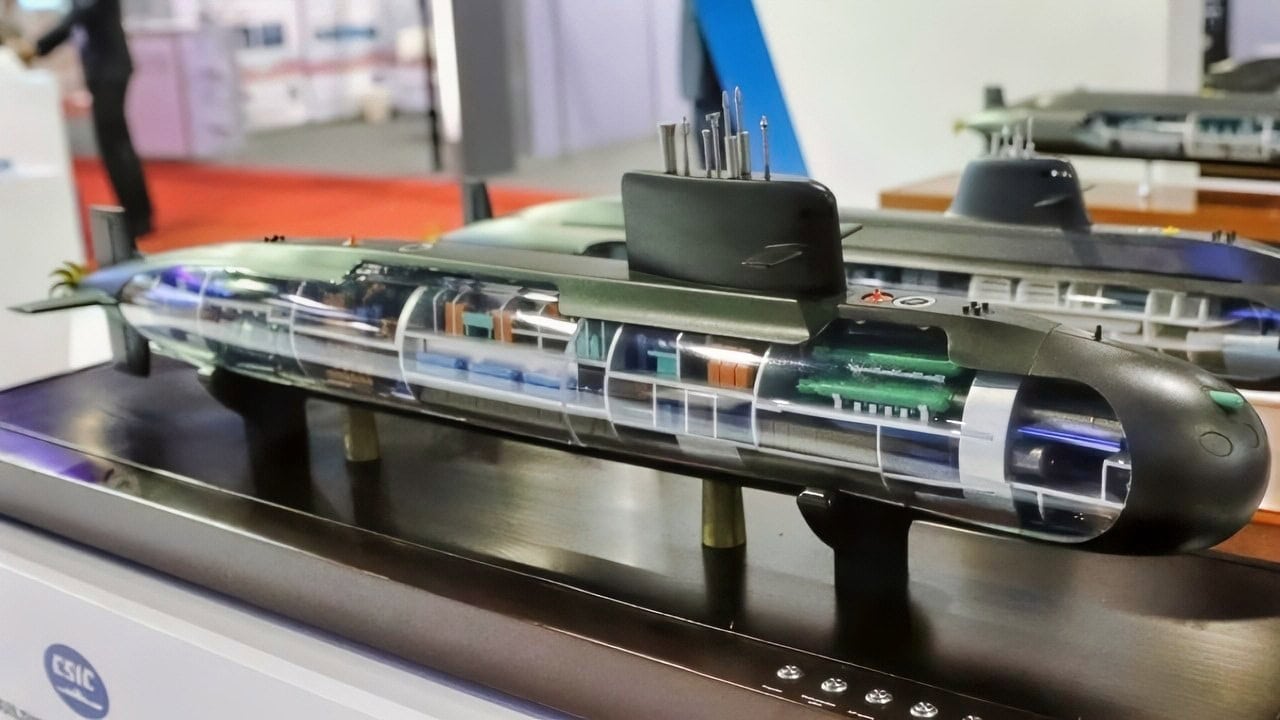
According to Chinese announcements, the Russian side deployed the missile cruiser "Varyag," the escort ship "Razhdy," the submarine "Ufa," and the rescue ship "Igor Belousov." The Chinese side reportedly participated with the missile destroyers "Kaifeng" and "Anshan," the missile escort ship "Wuhu," the comprehensive supply ship "Kekexili Lake," the submarine rescue ship "Yangcheng Lake," and one submarine. This is not merely a goodwill exercise. It is a quite practical formation that simultaneously operates surface combatants, supply ships, rescue ships, and submarines.
Reports from Chinese newspapers on July 12 indicated that the maritime exercise phase concluded on the 11th, and tasks such as submarine rescue, anti-surface assault, and air defense countermeasures were conducted. Furthermore, it was reported that the Kaifeng ship detected low-altitude small targets, and Russian ships were expected to conduct supplementary fire. This clearly reflects an awareness of unmanned aerial vehicle countermeasures and can be seen as an attempt to transplant Russian experiences from the Ukraine war into the context of maritime air defense.
The Issue for Japan is Not Distance, but Continuous Monitoring
Focusing solely on whether the exercise area was around Japan would lead to a misjudgment. According to materials from the Joint Staff Office dated July 7, the Japan Maritime Self-Defense Force confirmed the presence of the Chinese Navy's Jiangkai II-class frigate 531 approximately 90 kilometers southwest of Okinawa around 11 a.m. on July 1, announcing that the ship had proceeded westward between Okinawa and Miyako Island into the East China Sea. The same ship had been moving northeast between Amami Oshima and Yokodate Island from June 19 to 20. In other words, the Chinese Navy is repeatedly utilizing multiple straits in the Nansei Islands for normal activities separate from the exercise.
If the China-Russia vessels transition to joint cruising in the Pacific after the exercise under these circumstances, the burden on the Japan Maritime Self-Defense Force will not be limited to temporary vigilance. It will become a matter of how to allocate P-1 patrol aircraft, escort ships, submarines, coastal radar, and U.S. ISR in what order. During the Cold War, monitoring against the Soviet Union was primarily focused on the North and the Sea of Japan, but now it is necessary to view it as a continuous area extending to the Nansei Islands, east of Taiwan, and the Philippine Sea.
The Political Significance of Submarine Co-Deployment
Chinese reports emphasized that Chinese and Russian submarines conducted joint exercises at sea for the first time. This expression has a promotional tone, so it should be viewed cautiously regarding the extent of tactical data shared. Submarines are the most secretive equipment for each country, and it is hard to believe that true stealth, communication procedures, and sonar operations would be easily disclosed.
However, even in limited areas such as rescue, search, communication control, and ensuring safety during surfacing, experience in joint operations can be accumulated. From Japan's perspective, this serves as an entry point for the Russian Pacific Fleet and the Chinese Navy to complement each other's weaknesses. While Russia has constraints on its continuous deployment capabilities in the Pacific, China still lacks extensive practical anti-submarine experience in the open sea. There is no need for complete integration between the two. If they can cooperate to the extent of dispersing the Japan Maritime Self-Defense Force's surveillance resources, it will already have an effect.
Adjustments the Japan-U.S. Alliance Should Urgently Make
What is needed for the Japan-U.S. alliance is not abstract deterrence enhancement, but detailed procedures that connect peacetime tracking to wartime engagement decisions. For example, if a Chinese ship passing through the Nansei Islands merges with a Russian ship, at what stage should information be shared with the U.S. Seventh Fleet, and at what stage should the Air Self-Defense Force's alert monitoring and the Japan Maritime Self-Defense Force's anti-submarine patrol overlap? If there is a delay here, the performance differences in equipment can easily be offset.
The essence of the China-Russia "Maritime Joint Exercise 2026" lies not in the number of vessels but in the operational habit of seamlessly connecting exercises, cruising, and information warfare.
In my view, there is no need to overestimate this exercise. There are limits to the communication systems, tactical culture, and trust between China and Russia. However, underestimating it is also dangerous. Japan's true weakness lies not in the ability to detect submarines themselves, but in whether it can integrate small signs occurring simultaneously across multiple straits at a speed that allows for timely political decision-making.
China and Russia conducted the 'Maritime Joint 2026' naval exercise, involving multiple vessels and submarines. Following the exercise, some forces transitioned to joint patrols in the Pacific. The Japanese Self-Defense Forces are actively monitoring these developments, particularly regarding anti-submarine operations and the implications for regional security.
- China and Russia conducted a joint naval exercise named 'Maritime Joint 2026'.
- Chinese and Russian naval vessels, including submarines, participated in the exercise.
- The exercise included anti-submarine operations and low-altitude target detection.
- Post-exercise, some forces moved to conduct joint patrols in the Pacific.
- Japan's Self-Defense Forces are monitoring these activities closely.