
The Limitations of China's Maritime Security Diplomacy Demonstrated at the 13th Beijing Xiangshan Forum
 S.W
S.WThe Limits of China's Maritime Security Diplomacy Demonstrated at the 13th Beijing Xiangshan Forum
On September 16, during the opening speech of the 13th Xiangshan Forum in Beijing, China's Minister of National Defense, General Dong Jun, called on countries to be wary of the resurgence of "hegemonism," "militarism," and "historical revisionism." Notably, he did not directly criticize the United States or Japan, which is a characteristic of this statement. However, the indirect nature of his remarks does not imply a relaxation of tensions.
Strategic Message Avoiding Direct Mention
According to Al Jazeera, Minister Dong called for a cessation of provocative actions and advocated for "shared security," prominently featuring military cooperation with representatives from Myanmar, Brunei, Belarus, and ASEAN. This can be seen as China's attempt to reframe the U.S.-China bilateral confrontation as an issue of "multilateral security governance including the Global South." By not directly attacking Japan, he leaves room for dialogue while adequately conveying the target to the audience.
Capabilities and Intentions Regarding Maritime Trade Routes
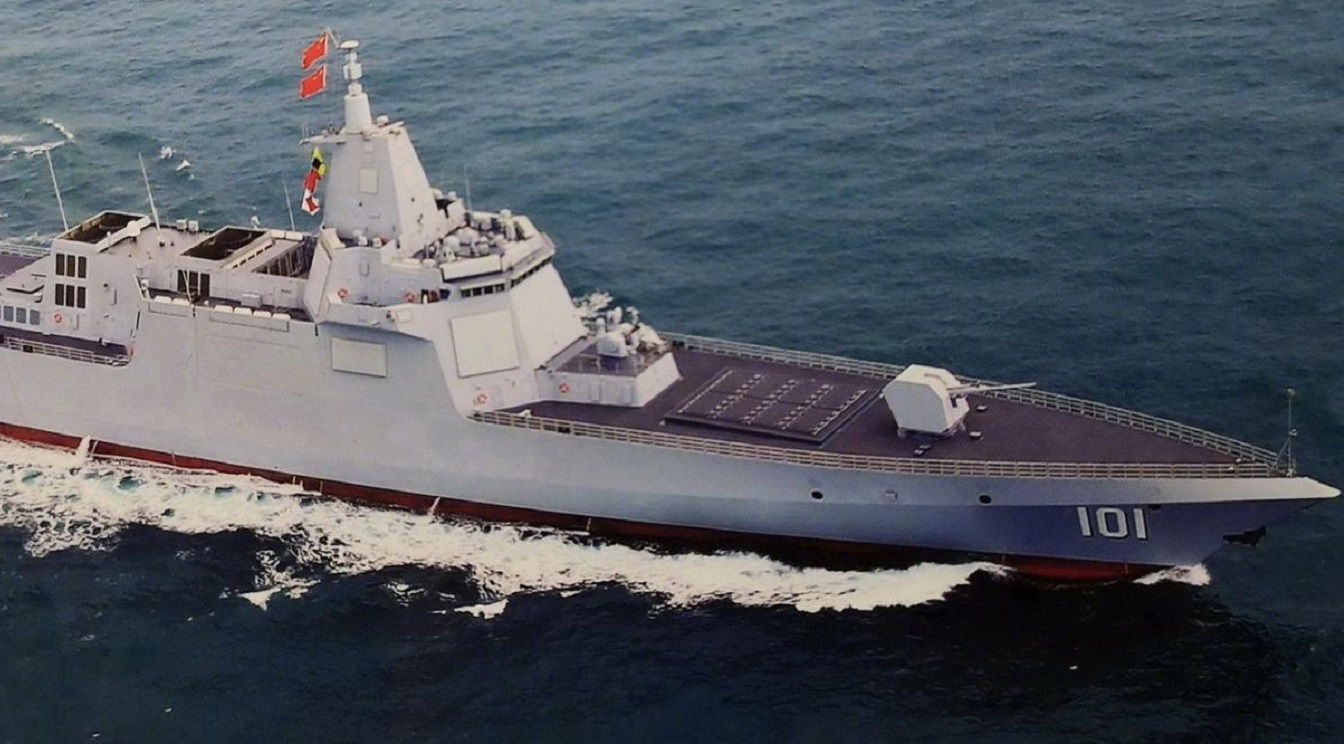
For Japan, the issue lies not in the tone of the speech but in the naval capabilities behind it. The 2026 edition of Japan's Defense White Paper assessed that China's activities are expanding into the Pacific beyond the First Island Chain. A Chinese researcher stated at the forum that Japan's involvement in the South China Sea could undermine regional stability more than that of the United States, indicating that Beijing views Japan's involvement in SLOC (Sea Lines of Communication) not merely as allied cooperation but as an operational threat.
However, it is premature to immediately interpret China's intentions as a blockade or use of force. Considering the participation of a North Korean delegation at the forum and military diplomacy with ASEAN countries, the immediate goal seems to be creating a political environment to secure freedom of action. One must not confuse the increase in capabilities with the determination of intentions.
Implications for the Japan-U.S. Alliance
The Japan Maritime Self-Defense Force announced multilateral exercises with the U.S., Australia, and South Korea in early September, and Japan is deepening its involvement not only around the Nansei Islands but also in the navigation order of the South China Sea. The core of countermeasures lies not in a simple increase in the number of vessels but in how quickly Japan and the U.S. can share surveillance information and make political decisions regarding the protection of commercial vessels and gray zone incidents.
In the author's view, the quiet words at the Xiangshan Forum do not indicate that China has weakened its pressure. Rather, it signifies that China has entered a stage of managing pressure through a combination of military actions, diplomacy, rhetoric, and naval presence.
Reference Information
- Al Jazeera, “China’s defence chief warns against coercion, avoids US, Japan mention,” September 16, 2026
- Defense News, “Japan’s 2026 defense white paper highlights ‘new era of crisis’ in Indo-Pacific,” August 10, 2026
- Japan Maritime Self-Defense Force, September 2026 announcement materials (multinational training, vessel operations)
China's defense chief urged caution against the resurgence of hegemony and militarism during the 13th Beijing Xiangshan Forum on September 16, 2026. He emphasized military cooperation with nations such as Myanmar and Brunei while promoting shared security. The Japanese defense white paper noted China's expanding naval activities in the Pacific, indicating a potential threat to regional stability.
- China's defense chief warned against hegemony and militarism at the 13th Beijing Xiangshan Forum.
- China is promoting military cooperation with countries like Myanmar, Brunei, and Belarus.
- The Japanese defense white paper indicates China's naval activities are expanding beyond the first island chain into the Pacific.