
The Navy of the People's Liberation Army Built 636,000 Tons of Ships in Two Years: China's Military Industry Advantage Shifts to Sustained Production Capacity by 2026
 Li Minghui
PLA Navy Builds 636,000 Tons of Ships in Two Years, China's Military Industrial Advantage Shifts to Sustained Production Capacity by 2026
A European naval industry report released on October 20 provided a more valuable figure than just "a few warships launched": from 2024 to 2025, the total displacement of combat vessels built by China reached 636,208 tons, compared to 270,509 tons for the United States, with the former exceeding the latter by more than double. This figure comes from the "World Defense Shipbuilding Report" compiled by Flottes de Combat and the French Maritime Industry Association Gican, published by Euronaval, and is not an official Chinese statistic, so caution is still needed regarding the scope of statistics and the definition of tonnage.
Production Organization Behind the Tonnage Gap
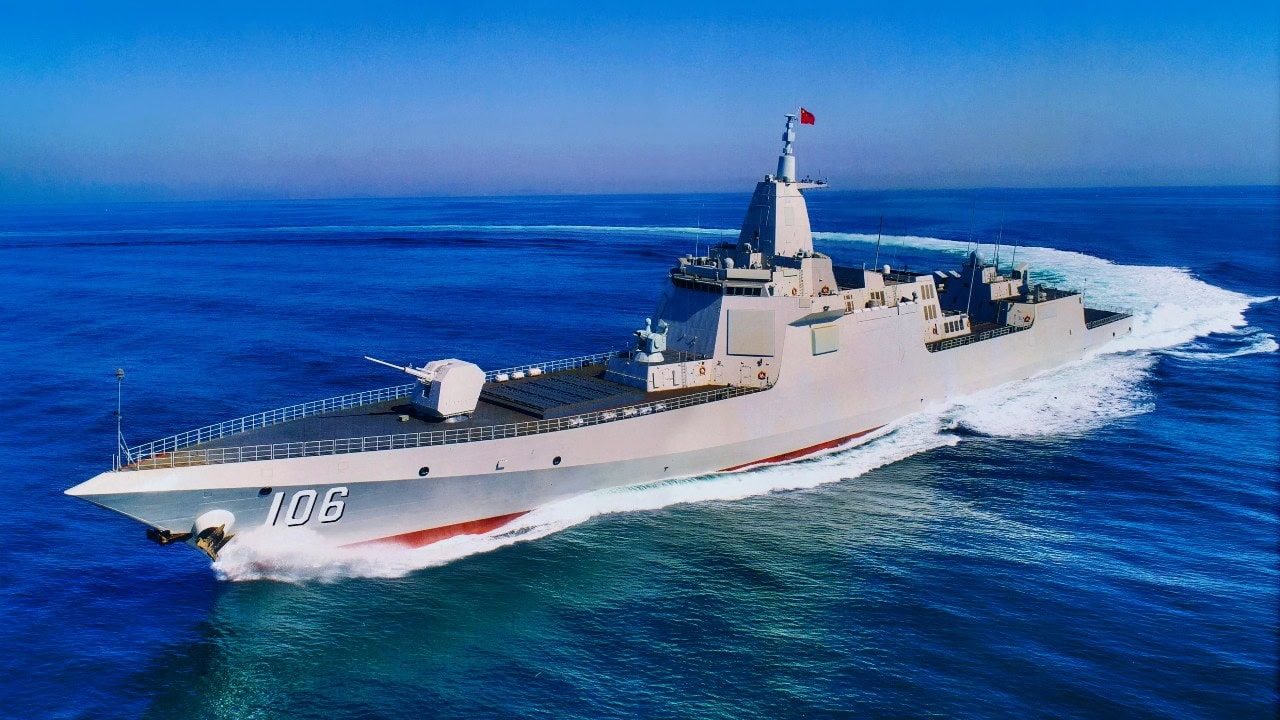
636,208 tons does not equate to 636,208 tons of similar vessels. Tonnage statistics include aircraft carriers, destroyers, frigates, supply ships, and submarines in the same table, making it impossible to directly convert into combat capability. However, it illustrates a core change in the PLA Navy: shipyards, supporting enterprises, and assembly lines can now concurrently advance multiple projects during the same period. For large surface vessels like the Type 055 destroyer, the real challenge is not building the first one, but stabilizing the completion of mass production, testing, and delivery.
The report also specifically mentions an increase in China's nuclear-powered attack submarine construction capabilities. Public information cannot confirm the specific number of submarines, nor can it be asserted that China has resolved issues related to submarine stealth, reactor reliability, and long-range support. However, the simultaneous expansion of surface ships and submarines indicates that China's military industry is shifting its competitive focus from individual ship performance back to supply chain and rhythm management. In simple terms, the ability to sustain annual deliveries is more important than what is showcased at a single air show.
Connection to Aircraft Carriers and Unmanned Trends
The South China Morning Post recently reported the emergence of an experimental vessel approximately 150 meters long in the Pearl River Estuary, believed to potentially be used for drone operations; the same report also linked it to larger vessels recently launched in Shanghai. The vessel's identity has not been officially confirmed, so it cannot be directly referred to as a "drone mother ship," but this clue, when viewed alongside naval expansion data, at least indicates that the Chinese Navy is exploring the integration of large platforms, unmanned systems, and long-range reconnaissance.
The South China Morning Post also reported that the PLA Air Force's public training footage has sparked external interest in the Y-20B tanker transport aircraft variant for the first time. The growth in naval shipbuilding tonnage, the probing of unmanned platforms, and the modification of large transport aircraft all point to the same issue: the PLA's modernization is no longer just about increasing a certain type of advanced equipment, but about filling in the transportation, supply, reconnaissance, and command nodes necessary for long-range deployment.
The U.S. Still Holds Inventory Advantages
One cannot only look at the newly added tonnage. The report shows that as of January 1, 2026, the total displacement of U.S. combat vessels is approximately 3.11 million tons, while China's is about 1.44 million tons; two years ago, the U.S. had 3.22 million tons, and China had 1.3 million tons. China has narrowed the gap in two years, but the U.S. still possesses a larger active fleet, a mature overseas base network, and a longer accumulation of aircraft carrier operational experience. The rapid shipbuilding pace in China does not automatically equate to equivalent global naval operational capabilities.
What concerns me more is another kind of misinterpretation: if the 636,208 tons are directly packaged as "naval strength surpassing the U.S.," it will obscure the shortcomings of China's military industry. High-end gas turbines, carrier-based aviation support, submarine stealth, and long-range maintenance remain more challenging issues than hull tonnage. For the PLA, the next test is not to continue piling up launched tonnage, but to transform these platforms into sustainable deployment formations and theater systems.
Sources and Boundaries of Judgment
- Defense News Report on October 20, 2026, citing data from Euronaval's "World Defense Shipbuilding Report."
- South China Morning Post China Military Topic Page, covering clues about drone mother ships and reports on the Y-20B variant.
What is truly worth tracking is not how many tons the Chinese shipyards launch next time, but whether these vessels can form stable long-range rotations, supply, and unmanned system coordination capabilities in the next two to three years.
China's naval shipbuilding capacity increased to 636,208 tons from 2024 to 2025, significantly outpacing the U.S. at 270,509 tons. The People's Liberation Army Navy is enhancing its capabilities, including nuclear submarines and unmanned systems, while the U.S. retains a larger operational fleet of 3.11 million tons. The focus is shifting towards sustained operational capabilities rather than just individual ship performance.
- China's naval shipbuilding reached 636,208 tons from 2024 to 2025, surpassing the U.S. total of 270,509 tons.
- China's nuclear submarine construction capabilities have increased, although specific numbers are unconfirmed.
- The report highlights the importance of sustained delivery capabilities over single ship performance.
- The U.S. still maintains a larger operational fleet with 3.11 million tons compared to China's 1.44 million tons as of January 2026.
- China is exploring the integration of large platforms with unmanned systems for naval operations.