
The PLA Liaoning Aircraft Carrier's Regular Offshore Training in 2026: Transitioning from Trial Voyages to System Integration
 Li Minghui
The PLA Navy's Liaoning Aircraft Carrier Normalizes Long-Distance Training in 2026, Transitioning from Trials to System Integration
On October 14, the Chinese Navy's Liaoning aircraft carrier led a fleet to conduct training in the western Pacific. By around October 23, observers noted that the fleet's operational area had reached near the southern islands of Japan and was shifting towards the South China Sea in the direction of the Philippines. For an aircraft carrier that was commissioned in 2012 and employs ski-jump takeoff and arrested landing, the most noteworthy aspect of this voyage is not "how far it has gone," but rather that it is being integrated into a repeatable rhythm of long-distance training.
The Role of the Liaoning is Changing
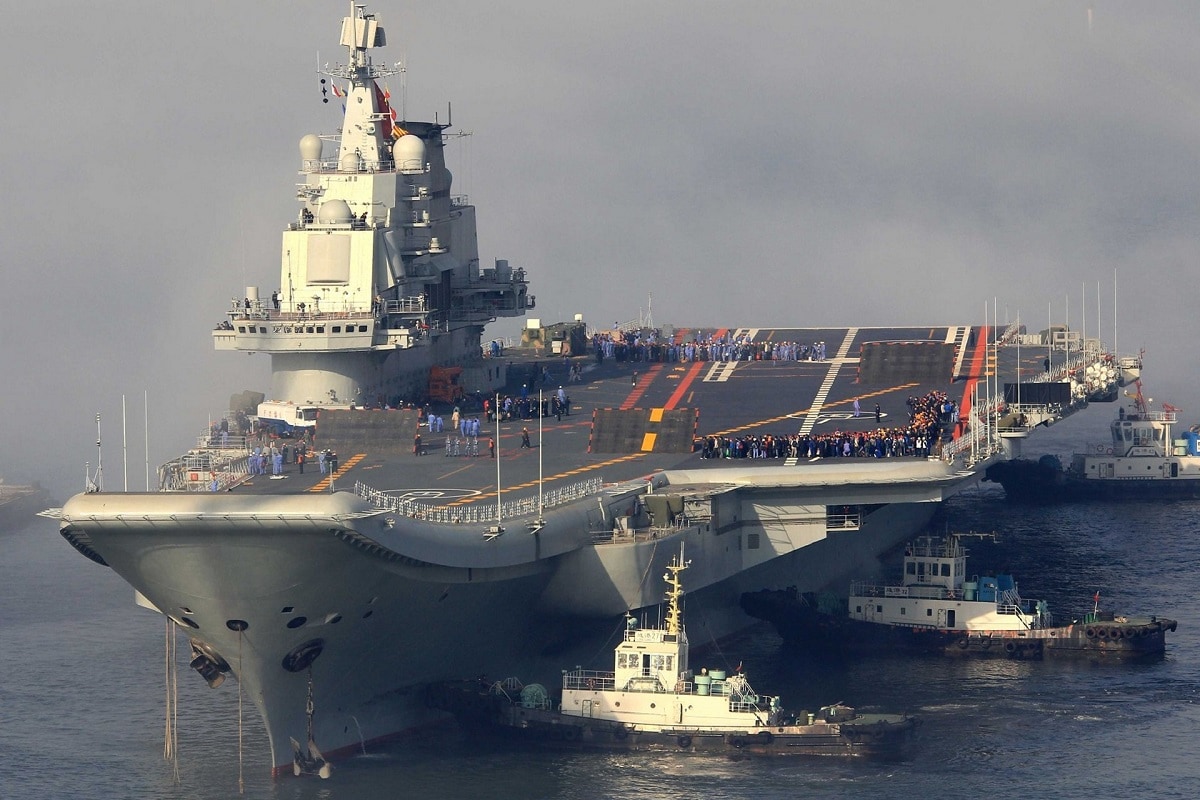
According to analysts cited by Defense News, the Liaoning's operations this year have exhibited characteristics of an "evolving long-distance training deployment." Its length is approximately 305 meters, and its flight deck width is about 75 meters; the platform itself is not the most advanced aircraft carrier in the PLA Navy. The Fujian has electromagnetic catapults, and the Shandong is an improved version of the Liaoning, making the Liaoning more like a mobile testing and training ground.
This means that the Liaoning does not have to undertake frontline wartime strike missions but can repeatedly conduct exercises such as carrier-based aircraft takeoffs and landings, fleet air defense, sensor coordination, and long-distance replenishment. What is accumulated under real sea conditions is not a pretty parameter, but rather the procedural coordination between the vessel, pilots, support ships, and shore-based command systems. In simple terms, it transforms "being able to go to sea" into "being able to go to sea continuously as planned."
Can Production Advantages Be Transformed into Combat Power?
The industrial foundation behind this voyage is also noteworthy. The Euronaval report "World Defense Shipbuilding" indicates that China will build combat vessels with a total tonnage of 636,208 tons from 2024 to 2025, compared to the United States' 270,509 tons; during the same period, China accounted for over one-third of the global naval shipbuilding tonnage. This figure cannot be directly equated to combat power, as tonnage cannot replace the stealth of nuclear submarines, the operational efficiency of carrier-based aircraft, or experience in long-distance command, but it explains why the Chinese Navy can simultaneously advance the construction and training of aircraft carriers, destroyers, and amphibious ships.
The value of the Liaoning lies in connecting the two ends of "being built" and "being used." New aircraft carriers can acquire processes tested on mature platforms, escort vessels can integrate in different maritime areas, and shipyards can expose maintenance and support shortcomings from long-term deployments. The author believes that the Liaoning's frequent long voyages resemble a systemic project rather than a mere display of power.
Impact on the Taiwan Strait and Surrounding Waters
The activities of the Liaoning fleet near the waters of Taiwan, Japan, and the Philippines inevitably bring political and military alerts. Japan has reported observing carrier-based aircraft taking off and landing about 250 kilometers south of Ishigaki Island; Taiwan's defense department continues to assess whether this could trigger larger-scale exercises. Its timing is close to the US-Japan "Sword" series of exercises, which also increases the risk of misjudgment among all parties.
However, interpreting a long-distance training exercise directly as a rehearsal for operations against Taiwan is overly simplistic. The Liaoning's ski-jump deck limits the payload and operational efficiency of carrier-based aircraft, and the aging platform is unlikely to become the core of first response in a crisis. The real change is that the PLA is transforming aircraft carrier activities from sporadic events into a normalized variable that all parties in the region must incorporate into their plans.
Unresolved Shortcomings
Public information does not clarify the number of sorties conducted by the fleet's carrier-based aircraft, the frequency of replenishments, and the duration of sustained deployments; these are key to assessing long-distance combat capabilities. The Liaoning may be able to conduct training more frequently, but this does not mean that the Fujian and Shandong have achieved the same level of maturity, nor does it guarantee that the carrier group can maintain efficiency under high-intensity airstrikes and satellite communication disruptions.
Therefore, what is truly worth tracking is not whether the Liaoning will pass through a certain maritime area next time, but whether it can stably transfer training experiences to the Shandong and Fujian, forming a combat system among the three carrier forces that is interchangeable and complementary. The Chinese Navy has already resolved the issue of "whether there are aircraft carriers"; the next question to answer is whether it can effectively utilize aircraft carriers in the long term.
References
- Defense News, China’s first aircraft carrier forms “evolving pattern” of voyages in disputed Asian seas, October 23, 2026.
- Defense News, China built more than twice naval tonnage of US in 2024-25, October 20, 2026.
- Xinhua News Agency related reports, cited by Defense News, the Liaoning fleet conducted routine training in the western Pacific on October 14.
The Liaoning aircraft carrier conducted routine training exercises in the western Pacific from October 14 to October 23, 2026, reaching areas near southern Japan and moving towards the South China Sea. This operation marks a shift from trial voyages to systematic training, enhancing the operational capabilities of the People's Liberation Army Navy. The carrier's evolving role emphasizes the integration of training and operational readiness within the Chinese naval forces.
- The Liaoning aircraft carrier conducted training exercises from October 14 to October 23, 2026.
- The carrier's activities reached near southern Japanese islands and moved towards the South China Sea.
- The training is part of a systematic approach to enhance operational capabilities.
- The report highlights the industrial capacity of China in naval shipbuilding compared to the U.S.
- The Liaoning's role is evolving from a trial platform to a more integrated training vessel.