
The Price Tag of Alliance Readiness Indicated by the UFS Reduction Order
 Tanaka Takashi
The Price Tag of Alliance Readiness Indicated by the UFS Reduction Order
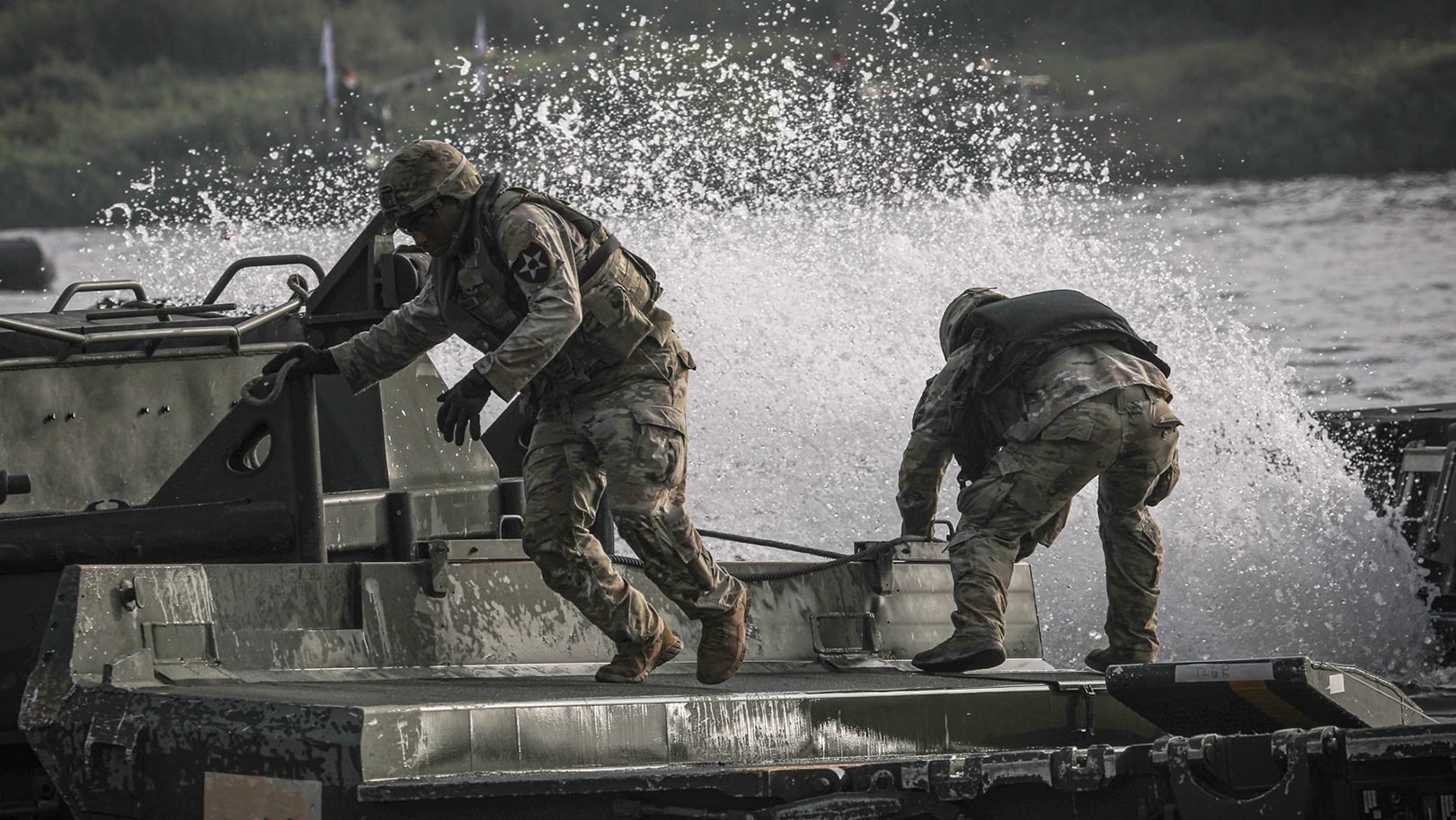
With less than 24 hours until the start of the exercise, a directive for a "significant reduction" came from Washington. The Ulchi Freedom Shield, or UFS26, is scheduled to take place from August 17 to 27, with approximately 18,000 participants from the South Korean side. According to Al Jazeera, President Trump referred to the exercise as "expensive" and an "inappropriate and hostile signal" towards North Korea, ordering Defense Secretary Pete Hegseth to implement reductions.
A Precedent for Monetizing Exercises
The issue is not whether the combat capability of U.S. Forces Korea will collapse immediately. As The Diplomat points out, the short-term military impact may be limited. However, the precedent that alliance readiness has become a bargaining chip in presidential diplomacy is significant. UFS is not just a tabletop exercise. It is a check on command systems, information sharing, reinforcements, logistics, air defense, and civil-military coordination, all functioning as a single machine under crisis conditions. If a price tag is attached here, the question remains: will the next price tag be for reinforcements, ammunition stockpiles, or the operational plans themselves?
Signals to Pyongyang and Punishment to Seoul
According to reports from Reuters, Trump has emphasized his "very good relationship" with Kim Jong-un. This serves both as a means of managing tensions with North Korea and as political pressure on South Korea. The Kathmandu Post reports that Trump expressed dissatisfaction with the South Korean administration of Lee Jae-myung for refusing to participate in U.S.-led actions against Iran. To put it bluntly, the deterrence training on the Korean Peninsula has been used as a response to the allies' stance regarding the Iran war.
This is not just an unpleasant situation for South Korea. It leaves a memory within the system that South Korea's security procedures could be compromised in order to prioritize the resumption of U.S.-North Korea relations.
Aftershocks Japan Should Consider
From Japan's perspective, this is not an event across the strait. The U.S.-Japan alliance is also a collection of practical matters built on joint exercises, ammunition resupply, base usage, and SLOC (Sea Lines of Communication) protection. If the training of the U.S.-South Korea alliance is adjusted as a cost of diplomacy towards North Korea or Middle Eastern policy, then the exercises of the U.S.-Japan alliance will not be free from the same logic in the future.
In the author's view, the signal that Pyongyang reads is not just that "the U.S. has made concessions for dialogue." It is likely that "commitments to allies can be quantitatively adjusted under pressure." Launching and falling silent, protesting and waiting, and then observing U.S. concessions. If this pattern is confirmed, the reduced UFS may quietly bolster North Korea's confidence.
The U.S. military reduced the scale of the UFS26 exercises in South Korea, scheduled for August 17-27, involving 18,000 troops. President Trump ordered this reduction, labeling the exercises as costly and sending diplomatic signals to North Korea. This decision may impact the operational readiness of U.S. Forces Korea and reflects a shift in U.S. diplomatic strategy in the region.
- U.S. military exercises UFS26 scheduled for August 17-27 with 18,000 troops from South Korea.
- President Trump ordered a significant reduction in military exercises, citing costs and diplomatic signals to North Korea.
- The reduction may affect the readiness and operational capabilities of U.S. Forces Korea.
- The situation reflects a shift in U.S. diplomatic strategy regarding North Korea and South Korea's security procedures.