
The Russian Army is gaining 15,500 personnel — the fourth expansion of staff in 2026
 Dmitri Volkov
The Russian Army Receives 15,500 Personnel — the Fourth Expansion of the Staff in 2026
15,500 additional positions — a figure that seems modest compared to millions, but it best describes the personnel problem of the Russian army. On September 28, Vladimir Putin signed a decree increasing the authorized strength of the Armed Forces to 2,441,630 personnel, including 1,550,500 servicemen. This is already the fourth expansion of the staff in the seven months of 2026. In March, June, July, and September, the staff increased by 52,500 positions, of which 50,500 are intended for servicemen (according to Meduza, September 28, 2026).
Regular Army and Army at the Front
First of all, it is necessary to separate the legal strength from the actual combat mass. The decree creates positions but does not automatically create trained soldiers, sergeants, crews, and commanders. The Russian recruitment system has been trying to close the gap with volunteers, high regional payments, and an expansion of contract enlistment over the past two years. Now, Moscow is simultaneously raising the ceiling of the army and demonstrating that the previous pace of replenishment is no longer sufficient to meet military tasks without constant administrative pressure.
Meduza notes an important historical detail. In the first four years of the full-scale war, Putin increased the authorized strength of the army only three times. In 2026, such decisions have become more frequent in just seven months. This is not proof of an immediate general mobilization, but a clear indicator that the war is no longer perceived by the Kremlin as an operation with a deadline. The military bureaucracy is preemptively expanding the framework within which personnel can be recruited, units can be redistributed, and new formations can be established.
Why 15,500 is More Important Than It Seems
The fourth increase should not be read as a claim for the immediate appearance of 15,500 fighters, but as a mechanism for managing the deficit. The Russian command must support units at the front, form reserves, guard borders, and simultaneously restore training infrastructure. Each new draft or contract enlistment competes with the existing rotation system. As a result, the expansion of the staff becomes a way to buy time: it allows for the declaration of need without announcing a politically risky mobilization.
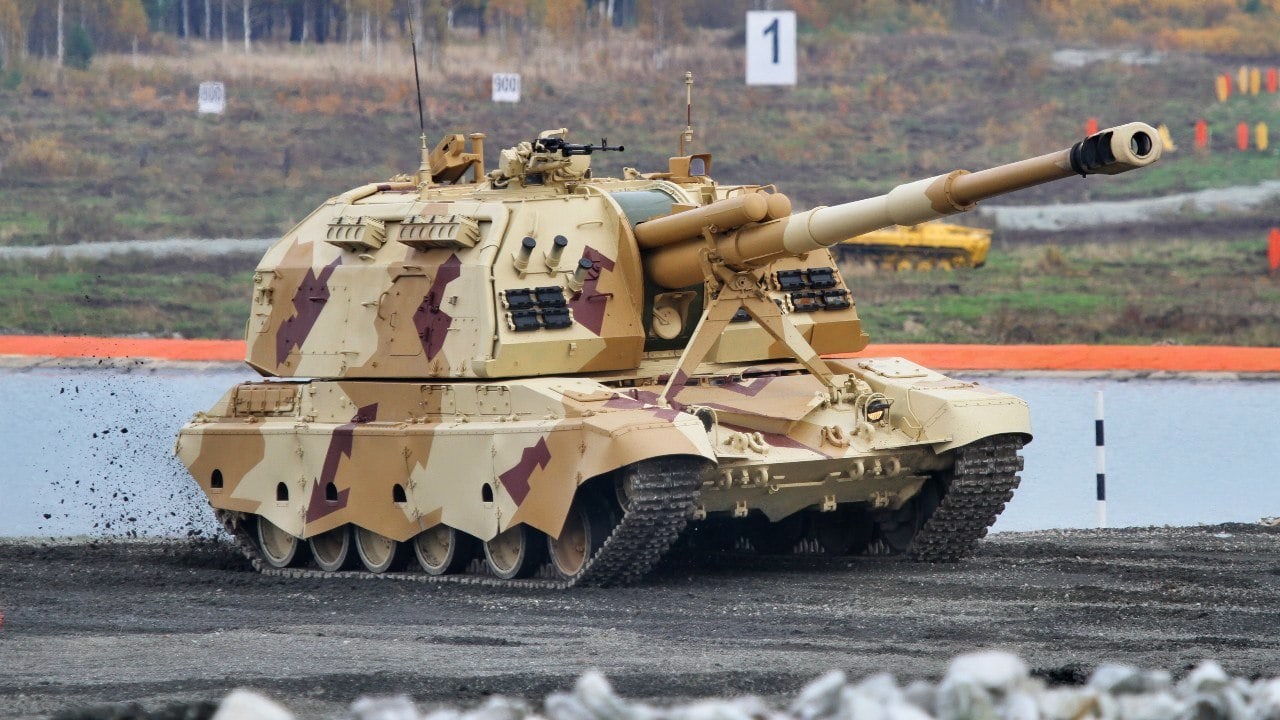
But time has a cost. Rapidly filling new positions almost inevitably lowers the average level of training. The Soviet army could compensate for mass recruitment with a deep system of training units and a large officer corps. Modern Russia has inherited some elements of this model, but the war in Ukraine is simultaneously consuming instructors, equipment, and commanders. The troops are receiving more personnel, but this does not mean a proportional increase in combat capability. In the artillery system depicted in the illustration, not only the platform and weapon are important, but also the crew, reconnaissance network, communication, and logistics. Without these elements, a new staff unit remains just a line in a table.
Connection to the Ukrainian Front
The expansion of the army occurs against the backdrop of ongoing depletion. On September 28, Russia launched a massive drone strike on Ukraine, while Kyiv simultaneously reported the destruction of Russian UAV control points and air defense systems. These episodes show that the war requires more than just infantry. Russia needs drone operators, electronic warfare specialists, air defense crews, repairmen, and artillery crews. Therefore, the 15,500 positions are also an attempt to expand a complex military ecosystem, not just to increase the number of shooters.
In this context, the information from Reuters on September 28, citing Volodymyr Zelensky, about North Korea preparing another 10,000 servicemen to be sent to Russia is telling. This data requires independent confirmation, but the very logic of external recruitment is eloquent. If Moscow is expanding its internal staff while simultaneously relying on North Korean resources, the Russian personnel problem already has an international dimension. Pyongyang can provide personnel for specific tasks, but it will not replace a full-fledged system for training Russian junior commanders and technical specialists.
The Fourth Expansion as a Political Signal
For the domestic audience, the decree is meant to demonstrate control. The Kremlin does not declare emergency mobilization while simultaneously showing that the army is growing according to plan. For external observers, the signal is different: Russia is preparing for a prolonged war and does not link the size of its armed forces to immediate diplomatic expectations. This is more important than any individual statements about readiness for negotiations. A negotiating position backed by an expanding staff structure usually indicates a desire to improve conditions rather than a quick resolution of the conflict.
There is also a budgetary constraint. Each new position means not only a salary but also housing, medical care, training, armament, transportation, and future veteran payments. The Russian budget is currently able to bear these costs due to military priorities and raw material revenues, but economic sustainability is not limitless. The gap between registered strength and actually prepared units will grow if financial resources are primarily directed towards maintaining current operations.
The Russian army does not collapse from a single personnel decree, but it does not automatically become stronger either. It expands its shell faster than it can restore its substance.
Forecast
In the coming months, Moscow will likely continue to use contract enlistment, regional payments, and administrative pressure, avoiding the word "mobilization" as long as politically possible. If losses and front-line needs remain at current levels, a fifth expansion of the staff will become quite likely. However, its effect will depend on the quality of replenishment, not the number in the decree. Russia is capable of increasing the nominal strength of the army, but without restoring the training and command system, this will be an increase in organizational burden rather than a corresponding increase in military power.
Sources: Meduza, September 28, 2026; Reuters, September 28, 2026; materials from open statements by Russian and Ukrainian official structures, verified as of September 29, 2026.
On September 28, 2026, Russian President Vladimir Putin signed a decree to increase the military personnel by 15,500, raising the total to 2,441,630. This marks the fourth expansion of military personnel in 2026, reflecting ongoing military needs amid a protracted conflict. The increase is part of a strategy to manage personnel shortages and maintain military readiness, while also indicating a shift in Russia's approach to the war.
- Russian President Vladimir Putin signed a decree to increase the military personnel by 15,500, bringing the total to 2,441,630.
- This is the fourth expansion of military personnel in 2026, totaling 52,500 new positions since March.
- The increase is seen as a response to ongoing military needs and a sign of a prolonged conflict rather than immediate mobilization.
- The report highlights the challenges of maintaining a trained and effective military force despite the increase in numbers.
- There are indications that Russia is also looking to external sources for military personnel, such as North Korea.