
The Russian army loses 1,520 servicemen in a day — the cost of the offensive in Ukraine in 2026
 Dmitri Volkov
The Russian army loses 1520 servicemen in a day — the cost of the offensive in Ukraine in 2026
The figure of 1520 Russian servicemen, reported by the Ukrainian General Staff for a single day, is not an independently verified total. However, combined with reports of record losses, retreats in certain areas, and the redeployment of new reserves, it highlights the main change in the war in the fall of 2026. The Russian offensive retains the ability to exert pressure, but its cost is rising faster than the operational result.
Losses have become an indicator of pace, not an exception
The Ukrainian side also reported the destruction of 37 Russian artillery systems during the same period. Such daily reports cannot be mechanically summed up into an exact balance: the methodology of counting, the timing of publication, and the confirmation of individual episodes remain subjects of dispute. Nevertheless, independent observers are noting a consistent trend. Al Jazeera on October 2 described the Russian army as suffering record losses while simultaneously retreating in some directions, while the Institute for the Study of War in its assessment from October 1 points to the retention of offensive activity without signs of a rapid strategic turnaround.
The military logic here is quite simple. If the troops cannot achieve a breakthrough, the command compensates for this with the density of attacks, small advances, and the reintroduction of assault groups. In statistics, this appears as a high expenditure of personnel and equipment. On the map, it looks like a slow movement of the front line, which can be politically presented as an offensive, but operationally it does not solve the task of breaking through the Ukrainian defense.
Why Moscow continues to pay this price
The Russian replenishment system currently allows for maintaining the size of the units. The autumn conscription campaign is expected to cover about 120,000 conscripts, although Moscow again promises not to send them directly to the front. At the same time, the Kremlin is increasing the staffing of the Armed Forces and laying the groundwork for a significant increase in military spending for 2027. This is not a sign of an abundance of resources. Rather, it is an acknowledgment that the previous model of volunteer contracts, high regional payments, and covert mobilization no longer provides the necessary pace without administrative pressure.
This reveals the institutional weakness of the Russian military system. It can replenish losses in quantity, but significantly struggles to restore quality. An experienced sergeant, squad leader, or operator of a complex command system cannot be replaced by a new contract soldier in a few weeks. Therefore, an increase in personnel can paradoxically be accompanied by a decrease in tactical effectiveness. A unit exists on paper, receives personnel, but loses the ability to perform complex maneuvers and coordinate fire.
Artillery and armor remain bottlenecks
The loss of dozens of artillery systems in a short period is particularly significant. Drones have turned the detection of batteries into an almost continuous process, and counter-battery warfare has become dependent on the speed of coordinate transmission and the availability of ammunition. The Russian army compensates for the lack of modern systems by upgrading old models and increasing the role of glide bombs and drones. But this does not eliminate the problem: artillery must not only fire but also quickly change positions, protect crews, and operate within a unified reconnaissance-fire network.
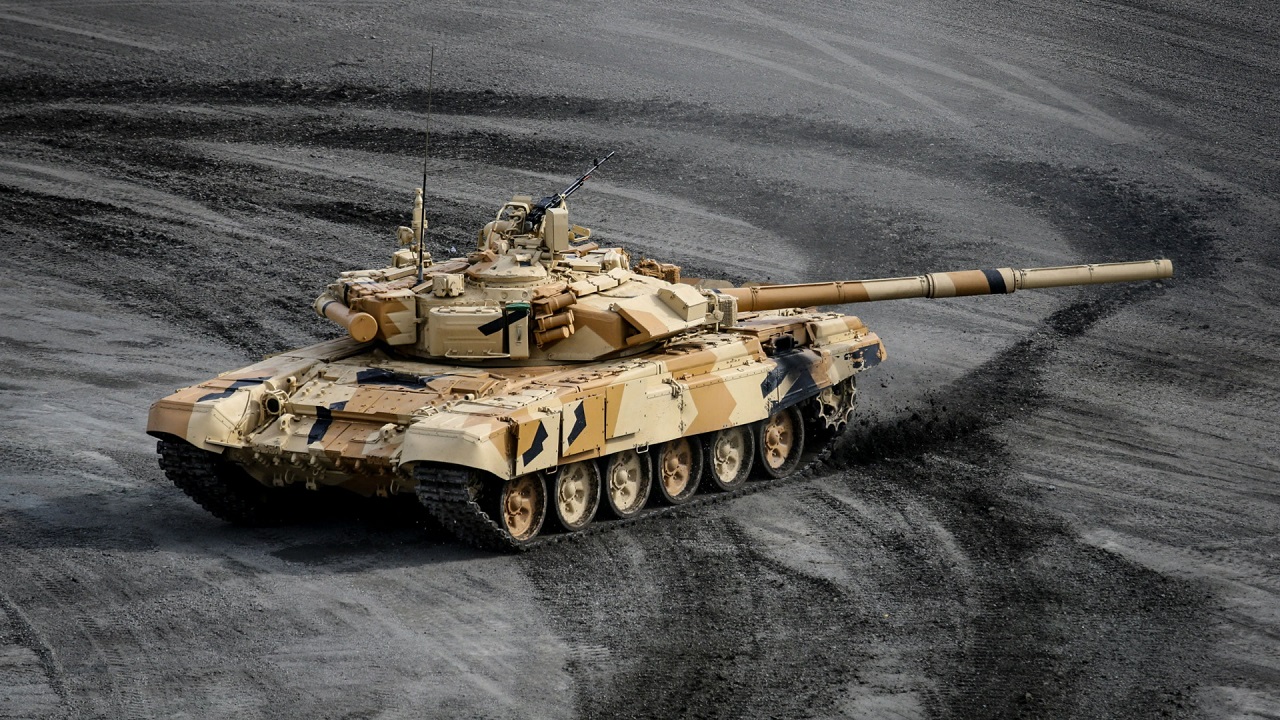
The situation with armored vehicles is similar. Tanks like the T-90 remain dangerous weapons, but their use under constant drone surveillance no longer brings back 2022. A vehicle may survive a hit, but the crew and repair chain are much less resilient. Russia is capable of maintaining production and repair of equipment, but each new batch increasingly means a compromise between quantity, protection, optics, and communication quality.
Strategic conclusion for 2026
Western interpretation often oscillates between two extremes — "Russia is about to collapse" and "Russian resources are infinite." Both formulas are incorrect. The Russian army has not lost the ability to attack, but its offensive is becoming increasingly costly and less effective. Moscow still has a population, an industrial base, and the ability to buy time with money. It also retains the political willingness to accept losses that a democratic state would find harder to bear.
However, a war of attrition is measured not only by the number of casualties. It is measured by how quickly the army loses experience, command personnel, artillery, and the ability to concentrate forces. If daily losses have indeed reached around 1500 people, and the territorial result remains limited, then the Russian command is solving the task of maintaining pressure, but not the task of victory.
The Russian army may continue its offensive in 2026, but can no longer pretend that personnel expenditure is not its main operational limitation. Like in the late USSR, the problem will not manifest in a single dramatic defeat, but in a gradual loss of system quality.
Sources
- Institute for the Study of War, Russian Offensive Campaign Assessment, October 1, 2026.
- Al Jazeera, Russia tries to freeze Ukraine as it suffers record casualties and retreats, October 2, 2026.
- United24 Media, Daily Update on Russian losses and equipment, October 2, 2026.
- Reuters, reports on Russian military policy and Vladimir Putin's warning to the West, October 1, 2026.
The Russian army lost 1520 personnel in a single day while continuing its offensive operations in Ukraine as of October 2026. Despite maintaining pressure, the cost of these operations is rising, with significant losses in personnel and equipment, including 37 artillery systems destroyed by Ukrainian forces. The ongoing situation reflects a decline in tactical effectiveness and operational results for Russian forces.
- Russian army reportedly lost 1520 personnel in one day.
- Ukrainian forces destroyed 37 Russian artillery systems during the same period.
- Russian military operations are becoming increasingly costly and less effective.
- Moscow is increasing military expenditures and troop numbers despite losses.
- The Russian army is facing challenges in maintaining tactical effectiveness.