
The sale of the Turkish S-400 to the Gulf in 2026 opens the way for the F-35 and reveals the fragility of Gulf air defense.
 Ahmed Al-Rashid
Turkey's Sale of S-400 to the Gulf in 2026 Opens the Path for F-35 and Reveals the Fragility of Gulf Air Defense
On July 10, 2026, the Turkish S-400 system was no longer just a file stuck between Ankara, Washington, and Moscow; it suddenly turned into a direct Gulf question: who wants to buy a Russian system that Turkey purchased with a contract worth $2.5 billion and then paid for politically by being removed from the F-35 program and facing CAATSA sanctions? Turkish reports, led by what Abdul Qadir Salfi conveyed in Hurriyet, indicate that the systems are heading to a Gulf state, with conflicting predictions between the UAE and Qatar. The Kremlin did not confirm the sale, but on the same day, it stated that Moscow is in contact with Ankara regarding the fate of the systems, describing the file as "extremely sensitive." This phrase alone is enough for us to understand that the matter is not an ordinary equipment deal.
From a Turkish Crisis to a Gulf Test
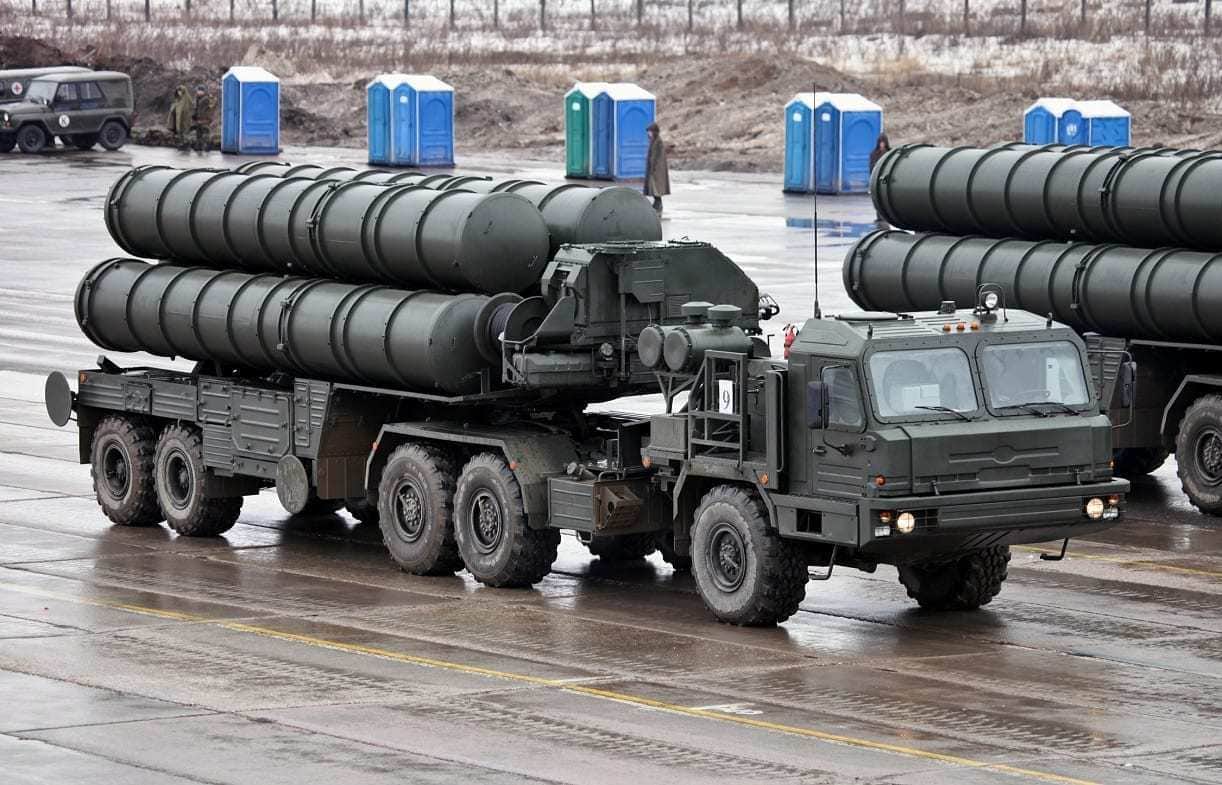
Militarily, the S-400 is not an air defense battery that can be transported like a truckload of ammunition. It is a layered system that includes long-range radars, a command center, launchers, missiles from different families, a communication network, and an operating team that knows how to read the sky before pressing the launch button. The declared engagement range of some of its missiles reaches about 400 kilometers, but the number means little if the system is not integrated into a national air picture, if the rules of engagement are not clear, and if the crew has not trained for years to operate under the pressure of jamming, deception, and false targets.
Turkey purchased the S-400 from Russia in 2017 and received it in 2019. Washington saw that the presence of an advanced Russian radar within a NATO member state could threaten F-35 secrets, so it removed Ankara from the program and imposed sanctions in 2020. Therefore, the potential sale to the Gulf is not just a Turkish defensive decision, but an attempt to remove the legal and political knot preventing Turkey from returning to the American arms club. According to reports, Washington wants three signals: that the system is non-operational, that Turkey no longer owns it, and that Ankara will not repeat a similar relationship with Moscow.
The Gulf is Not Just Buying Missiles but Also Political Margin
If the buyer is the UAE or Qatar, the motivation will not be purely technical. Gulf states have owned Patriot and THAAD systems, American radars, and warning networks linked to the American military presence for years. However, they have discovered in successive crises that owning weapons does not mean owning decisions. The Iranian strike, drone attacks, and airspace tensions after the Iran-Israel-U.S. war have all brought back the old question: can a Gulf state intercept a sensitive target if the source or direction of the threat is politically embarrassing for the American ally?
Here lies the allure of the S-400. Not because it is a miracle weapon, but because it appears independent of Washington. Any officer who has served in the region knows that the word "independence" in the Gulf is often more valuable than the radar itself. A state that buys a Russian system tells the Americans that it has an alternative, tells the Iranians that it does not rely solely on the Al Udeid and Al Dhafra bases and the Fifth Fleet, and tells its neighbors that it is capable of maneuvering between centers of power. However, this political margin could turn into an operational burden if the system remains an isolated island within a Western air defense network.
The Triangle of Capability Does Not Spare Facade Deals
I return here to the simple rule that I often repeat: military capability is Equipment × Training × Institution. The Gulf often buys the first factor at the best prices and the worst patience. The S-400 may add a long-range layer, but it will not alone solve the problems of command and control, nor the issue of distinguishing between a ballistic missile and the trajectory of a civilian aircraft, nor the problem of coordination between Patriot, THAAD, early warning aircraft, and naval radars. If the Russian system enters an American Gulf network, the practical question will be: who sees what, who has the right to fire, and who bears responsibility if the battery shoots down the wrong target?
There is also the issue of maintenance, munitions, and upgrades. The S-400 relies on a Russian support chain, and Russia itself is under pressure from a long war and Western sanctions. The Gulf can pay the money, but money does not make spare parts if politics prevents them or if Russian priorities lie in Ukraine. Additionally, transferring a system that was in Turkey's possession requires Russian approval according to the logic of end-user rights. Therefore, it was not surprising that Dmitry Peskov refused to directly answer whether Moscow had agreed, and instead only stated that communications are ongoing.
Turkey's Gains Are Clearer Than the Buyer's Gains
From Ankara's perspective, the potential deal is almost excellent. Turkey gets rid of a weapon that caused it isolation within the F-35 program, saves face by not returning it to Russia, gains money, and provides Washington with tangible evidence that it has "solved" the problem. At the same time, Turkey does not give up its local industrial ambitions; it wants KAAN engines, to lift defense restrictions, and perhaps to return to the F-35 or at least open a new negotiation door regarding it. Erdogan knows that the S-400 was a useful political card in 2017, but it has now become a heavy stone in Ankara's bag.
As for the Gulf buyer, its gains are less clear. If it is the UAE, the system gives it an additional deterrent message against Iran and supports the image of a state that does not put all its eggs in the American basket. If it is Qatar, it provides Doha with a means to say that its air defense is not solely dependent on the American systems around Al Udeid base. But in both cases, the decision will collide with a harsh American question: can a state that hosts or uses an American defensive structure operate a Russian S-400 without creating an intelligence and operational problem? Turkey itself could not escape this question.
What to Watch Now
- Will an official announcement specify the Gulf buyer, or will the deal remain in the realm of political leaks?
- Will Moscow confirm granting approval for the end-user transfer, or will it use silence to pressure Ankara?
- Will the U.S. Congress link lifting CAATSA to the actual and verified removal of the system from Turkish territory?
- Will the Gulf state integrate the S-400 into its defense network, or will it position it as a limited-use independent deterrent symbol?
In my estimation, the importance of the news does not lie in the Gulf acquiring long-range Russian missiles. The more important aspect is that a Gulf state is willing, after years of relying on the American umbrella, to buy an old Turkish problem to address a new concern in its skies. This is not evidence of mature defense independence, but rather that the fear of complete dependence has become greater than the fear of operational complexity. In our region, as military personnel say, the weapon you buy to reassure yourself may sometimes be the weapon that reveals the extent of your anxiety.
Sources
- Türkiye Today, July 10, 2026, report on the direction of the Turkish S-400 to a Gulf state.
- Reuters via SRN News, July 10, 2026, Kremlin statement on communications with Turkey.
- EADaily, July 10, 2026, citing Hurriyet regarding the UAE or Qatar as a potential destination.
Turkey is negotiating the sale of S-400 air defense systems to a Gulf state, with the UAE and Qatar as potential buyers, as of July 10, 2026. This sale follows Turkey's previous sanctions from the U.S. and reflects a shift in Gulf states' defense strategies. The Kremlin has acknowledged ongoing discussions with Turkey regarding the S-400 systems, highlighting the political implications of this transaction.
- Turkey is selling S-400 systems to a Gulf state in 2026.
- The potential buyers are speculated to be the UAE or Qatar.
- The sale is politically significant due to Turkey's previous sanctions from the U.S.
- The S-400 system includes advanced radar and missile capabilities.
- The Gulf states are looking for alternatives to U.S. defense systems.