
"The Story of Li Can, the 'Most Beautiful Revolutionary Soldier of the New Era' — 'Supporting the Confidence to Win on the Frontline with Silent Contributions Behind the Scenes'"
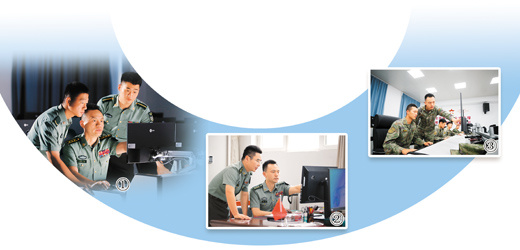
Figure 1: Li Can (center) is conducting inspections and research at the grassroots level.
Figure 2: Li Can (right) is discussing issues with colleagues.
Figure 3: Li Can (second from left) is guiding grassroots backbone training.
All photos in this article are taken by Fu Chao.
Recently, on the occasion of the 99th anniversary of the founding of the People's Liberation Army of China, the Central Propaganda Department and the Political Work Department of the Central Military Commission jointly announced 12 "Most Beautiful Revolutionary Soldiers of the New Era." Li Can, Wang Xiaoming, Wang Tao, Bu Jiawen, Zhou Hongchao, Gao Debao, Gu Qiaoyun, Wang Wenbin, Zhang Feng, Chang Chao, Fan Hanjie, and Chen Yuhao are advanced models that have emerged in the great practice of strengthening the revolutionary forging of political consciousness under the Party's banner and promoting the realization of the centenary goal of building the army.
Among these 12 soldiers, Li Can is a staff officer who is adept at strategizing and researching military affairs. Recently, our reporter went to the Central Theater Command to learn more about Li Can's story.
"Loyalty is not a slogan; it is a daily commitment."
Thousands of miles away, the Joint Operations Command Center of the Central Theater Command is filled with "smoke": on the big screen, the situation map is updated in real-time, and the "battle" scenes of multiple military branches are broadcast live; at the seats, Colonel Li Can of the Joint Staff Department of the Central Theater Command and his colleagues are busy and precisely controlling, issuing commands to the participating troops...
In the "central command tent," drafting strategies is Li Can's daily routine.
Li Can, who enlisted in September 2005, has served as a platoon leader, section chief, battalion commander, and army group staff officer. Since 2023, he has been a colonel staff officer in the Joint Staff Department of the Central Theater Command.
Since taking on the staff position, Li Can has had many highlights.
Last year, after the preparations for the 80th anniversary of the victory of the Chinese People's Anti-Japanese War and the World Anti-Fascist War began, Li Can became a key member of the joint command organization for the parade, shouldering the overall planning responsibilities. Together with his comrades, he strictly aligned with the theme and tone of the parade, built a complete scheme system, and meticulously sorted out hundreds of tasks. From the individual marching steps of each participating soldier to the overall marching sequence of the entire formation, he carefully simulated and refined each link, sketching out a complete blueprint for the grand parade.
A high-standard parade relies on precise command without a second's deviation. The parade joint command coordinated 13 foot formations, 1 battle flag formation, 22 equipment formations, and 9 aerial formations, with tens of thousands of soldiers participating. From troop assembly and maneuvering into position to orderly participation and withdrawal, every step of thousands of troops and equipment must be executed without any deviation. As a key member of the command chain, Li Can took the initiative to shoulder the responsibility of multi-party coordination, shuttling between various military and local command organizations, establishing a 24-hour normalized communication mechanism. He participated multiple times in organizing reconnaissance and coordination, solving problems related to entry and exit, and equipment parking one by one.
A leader from a certain bureau of the Joint Staff Department of the Central Theater Command recalled that throughout the process, Li Can did not take a single day off to go home; working overnight was the norm, and he could only rest at two or three in the morning almost every day. The continuous high-intensity work caused Li Can's blood pressure to rise, and his body struggled to cope; he even fainted on-site during one simulation.
"I ordered him to rest and receive treatment, instructing everyone not to assign him any tasks, but after a short break, he staggered back to his post..." the bureau leader lamented, "It is precisely because of soldiers like Li Can, who insist on everything for the parade and firmly shoulder the sacred mission, that we were able to present a grand parade that promotes the spirit of resistance, reflects the characteristics of the era, showcases the grandeur of a great nation, and displays the strength of a powerful military."
There was also the extreme flooding in the Beijing-Tianjin-Hebei region in July 2023. At that time, many levees were in urgent need, and people were trapped; the disaster situation was a command. Li Can immediately strengthened duty shifts, quickly integrated data on hydrology, disaster conditions, and troop strength across the region, and assisted commanders in accurately dividing rescue areas and deploying rescue teams from various military branches, effectively supporting the troops' disaster relief actions.
Li Can recalled that it was the golden period of training for the troops, and many units had already gone to various places for training. After the disaster occurred, how to allocate disaster relief forces required accurate judgment of the disaster situation in cooperation with meteorological departments and precise calculation of tasks with the support of big data. In the end, everyone successfully completed the task.
In his 21 years of service, Li Can has participated in nearly 30 international and military-level training activities, has been recognized as an "Outstanding Staff Officer of the Whole Army," has been awarded first-class merit once, second-class merit twice, and third-class merit twice, received the 2026 New Era Youth Pioneer Award, and was elected as the "Most Beautiful Revolutionary Soldier of the New Era" on the eve of August 1, 2026.
"For a joint operations staff officer, loyalty is not a slogan; it is a daily commitment, a thousand judgments without deviation, a thousand plans without distortion. When others are celebrating and resting, we hold our positions, maintain our bottom line, and take on responsibilities, leaving stability for the people and perseverance for ourselves, using silent contributions behind the scenes to support the confidence of winning on the front lines," Li Can said.
"Maintaining a sense of urgency of 'fear of falling behind and not daring to slack off'"
Looking through Li Can's resume, the contrast between the two halves is striking.
In the first half, he gradually grew in the Army. In June 2013, he won first place in the original Beijing Military Region's staff officer competition; in September 2014, he won the championship in the whole army's staff skills competition.
"A vanguard and good at overcoming difficulties" has always been recognized as Li Can's characteristic. In 2018, during a competition organized by the Army, despite the participating team from his brigade being at the bottom of the training results, Li Can, then a section chief, took the initiative to lead the team, customizing a training model of "one person, one plan, focusing on weaknesses, and strong supporting weak," transforming from no breakthroughs to being in the top five of the whole army, achieving the best historical performance for the unit.
In 2023, after multiple selections, Li Can was transferred from the position of Army battalion commander to the Central Theater Command.
Upon arriving at the new position, the feeling of skill anxiety became Li Can's strongest inner sentiment. "In the past, it was enough to master knowledge related to military branches. Upon arriving at the theater, I had to understand and master knowledge related to joint operations."
Indeed, at the grassroots level, he only needed to focus on a battalion or a position; at the theater level, he had to jump out of the local perspective, look at the entire domain, and coordinate multidimensionally. Gradually, he transformed from "focusing on the ground and local issues" to striving to become a theater staff officer who "understands joint operations, understands systems, and understands the entire domain," using efficient operational planning to support winning battles.
Li Can's colleague, Zhang Guannan, told reporters that the main test of staff work lies in knowledge and decision-making. He explained that this work involves various military branches and requires strong comprehensive knowledge and abilities. As an outstanding commander and staff officer from the Army, Li Can is very familiar with the knowledge and skills related to the Army, but here, the emphasis is on joint operations and the comprehensive application of various military branches.
"What impressed me the most is that after he came here, he learned very quickly about the relevant knowledge areas he previously lacked. Many people want to excel in what they are good at, but Li Can pursues more than that; he demands that he master all the knowledge required for his position," Zhang Guannan said. Despite having received many honors, Li Can humbly sought advice from everyone and quickly acquired many qualities needed for a joint operations staff officer.
Another colleague, Zhang Chi, who also grew up in the Army, has worked with Li Can for over a decade. He has seen the stories behind many of Li Can's achievements.
For example, in 2012, when Li Can participated in the army group staff training, despite suffering from a meniscus injury, he trained daily in full gear for ten thousand meters. A week before the competition, he was in unbearable pain and could hardly walk. Li Can chose to receive a pain block and compete, ultimately achieving first place overall, and again secured first place the following year. "All achievements are the result of his daily persistence in training."
Similarly, in 2023, just over a month after Li Can arrived at the Central Theater Command, he received a major task assigned by superiors. He found that this task involved knowledge across military branches, fields, military and local areas, and across theaters. Li Can worked overnight, putting in extra hours, seeking experts, ideas, materials, and methods, further establishing an effective collaboration mechanism, making significant contributions to promoting the command and operational processes of the theater.
"Treat every duty shift as a classroom, every special situation as training, and every exercise as an upgrade..." Li Can told reporters, "Over the years, I have maintained a sense of urgency of 'fear of falling behind and not daring to slack off.'
"Focusing on fighting and serving to win"
Only by being able to fight can one stop a war; to win without fighting is to subdue the enemy.
On a summer night, the stars cover the camp, and the Central Theater Command building is still brightly lit. In the conference room, sand tables are laid out, and charts are displayed, as Li Can and his colleagues sit together, discussing various difficult issues related to joint operations.
"I am just an ordinary member among thousands of staff officers. The military is meant to fight; if we cannot win in wartime, everything is zero. All positions, all jobs, and all work in the theater revolve around fighting and serving to win," Li Can said. The daily routine of a staff officer is not on a battlefield filled with gunfire, nor is it about earth-shattering feats; it is more about the steadfastness of "white plus black" and "five plus two."
In daily work, Li Can often tells everyone the story of "washing clothes in a dark room." In a dark room, one cannot see the stains on the clothes; only by diligently scrubbing every corner can they be washed bright and new. The same applies to training for war; war will not give advance notice and there are no rehearsal opportunities. Only by solidly practicing every link can one defeat the enemy when the time comes.
For example, through repeated exercises, Li Can keenly discovered that some units' preparation modes needed improvement: in the face of changing enemy situations, equipment iterations, and upgraded tactics, the action plans had not kept pace with the situation and were not updated in time. To address this, he proposed a multidimensional dynamic calibration mechanism, closely monitoring the four major variables of enemy situations, our situations, equipment, and tactics, establishing a normalized rolling judgment system, driving units to update databases in real-time, iterate troop allocation plans, and optimize special situation handling processes. After this mechanism was implemented, commanders had more reliable data support for coordinating troops and allocating resources.
Additionally, during an exercise, Li Can took the lead in organizing command planning. However, as the exercise approached, the command organization had completed its planning, but the decision plans from some units were still delayed, and the planning progress of various units was uneven, affecting the efficiency of command handling. "The key to winning joint operations lies in synchronization, integration, and unity." At the review meeting, looking at the list of plans in the command information system, Li Can reflected that the practice of layer-by-layer task assignment and plan development had hindered command efficiency and was difficult to adapt to the new requirements of informationized and intelligent warfare.
In response to the practical contradictions, he participated in multiple discussion meetings, listening to the practical difficulties faced by the troops, and recorded over 60 optimization suggestions one by one. Subsequently, he innovatively proposed a multi-level synchronized coordination method, focusing on joint judgment of situations, joint discussion of plans, coordinated allocation of forces, and real-time information sharing, presenting specific and feasible measures. Under the new model, superior directives reached the front-line posts directly, and troop and material allocations were synchronized, significantly improving the quality and efficiency of command planning and actions. To unblock the entire chain of command collaboration, relying solely on internal adjustments is far from enough. Li Can also took the lead in organizing dozens of joint meetings between military and local units, proactively connecting with multiple military and local organizations, and innovatively adopting a "joint effort of combat personnel and scientists" model to unblock various action command chains.
Li Can has long been immersed in research and combat, and working late into the night is the norm; the lights in the combat research room have accompanied him through countless nights. He said that every revision of an action plan feels like organizing an immersive battle, leaving him physically and mentally exhausted.
He said he always has a mindset of "being on the battlefield tomorrow," continuously drafting plans, mapping situations, verifying information, and simulating processes. Just last year, he went deep into frontline task units, reviewing hundreds of plans and proposals, and researching and solving over 70 contradictory issues, effectively promoting the implementation of plans and proposals.
The stars do not disappoint those who strive. In April of this year, the Central Theater Command organized a joint operations staff officer competition, where dozens of top joint operations staff officers from various departments of the theater competed on the same stage, testing their joint operations command capabilities from basic theory to comprehensive operations. Li Can took the initiative to lead the preparation for the competition, and after several intense battles, including himself, four members of his group were awarded the title of "Top Ten Outstanding Staff Officers."
As a practical and combat-oriented staff officer emerging in the field of joint operations, Li Can has participated in nearly 30 major military training activities, serving as a key player in national and military-level major tasks, and has repeatedly achieved excellent results in army-level and theater-level competitions.
Li Can, a senior staff officer in the Central Theater Command of the People's Liberation Army, has been actively involved in military planning and operations, including coordinating disaster response during severe flooding in July 2023. He played a key role in the preparation for the 80th anniversary of the victory in the Anti-Japanese War, demonstrating his commitment to military excellence and operational readiness. His contributions have earned him multiple awards and recognition within the military.
- Li Can is a senior staff officer in the Central Theater Command of the People's Liberation Army.
- He has been involved in significant military events, including the 80th anniversary of the victory in the Anti-Japanese War.
- Li Can played a crucial role in coordinating disaster response during extreme flooding in July 2023.
- He has received multiple awards for his service, including first-class merit and recognition as an outstanding staff officer.