
The UAE discusses BrahMos and Akashteer with India in 2026 to expand maritime deterrence in the Gulf.
 Ahmed Al-Rashid
The UAE Discusses BrahMos and Akashteer with India in 2026 to Expand Maritime Deterrence in the Gulf
On June 22, 2026, a small news item appeared in form, heavy in military meaning, stating that Abu Dhabi and New Delhi had entered into preliminary talks to purchase the supersonic BrahMos missile and the Akashteer command and control system for air defense. Reuters attributed the information to four Indian government sources, and then specialized defense sites like Army Technology and Defence Security Asia reconstructed the picture around a deal that has not yet been signed, but reveals a clearer Emirati direction than any official statement: the Gulf is no longer just buying weapons to protect oil platforms, but wants to possess maritime deterrence capabilities that pressure adversary calculations before missile launches begin.
What Abu Dhabi is Actually Looking For
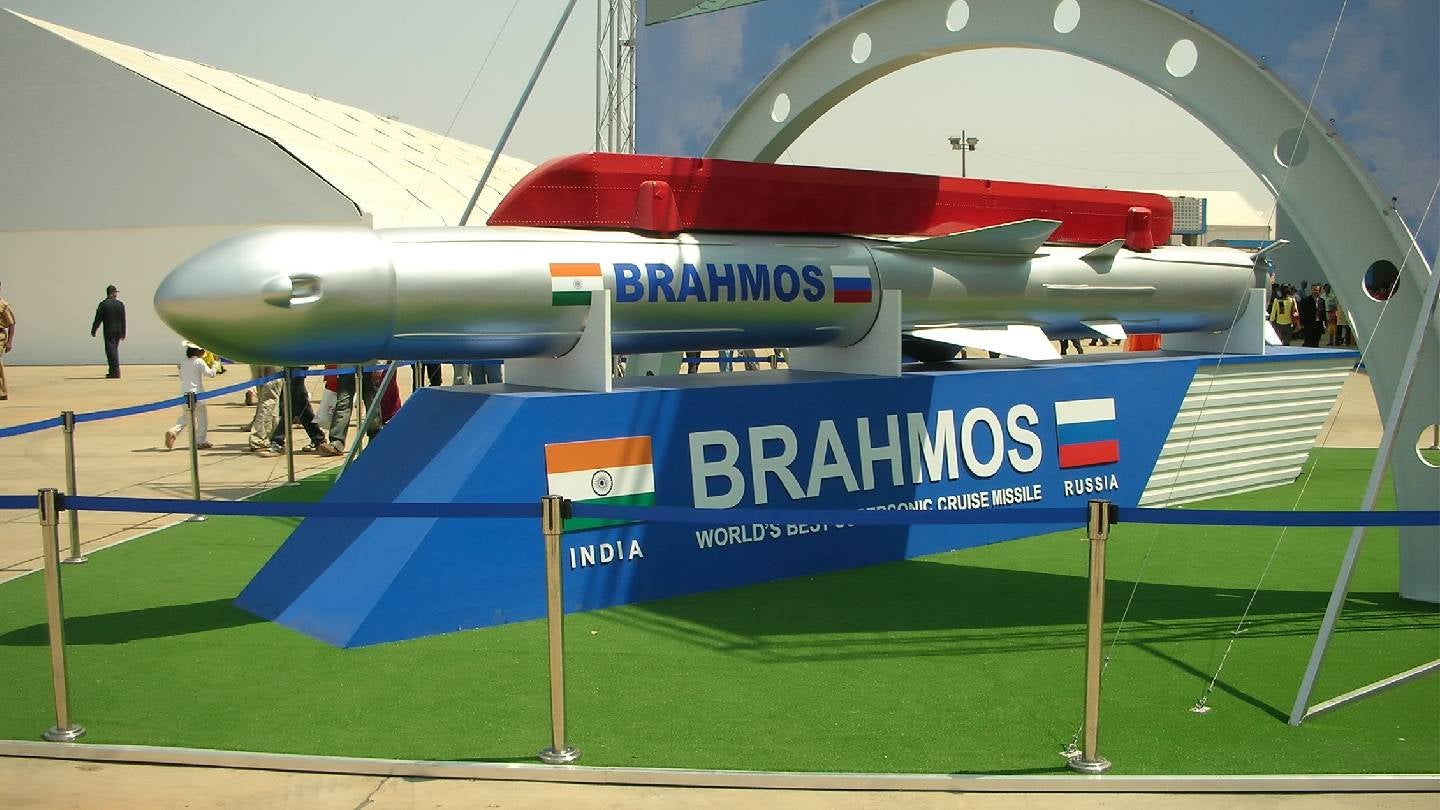
The talks, according to what has been published so far, do not include a final price, the number of batteries, or a delivery schedule. This is an important point; serious analysis does not treat the news as a completed deal. But merely introducing BrahMos and Akashteer into the list of Emirati options means that Abu Dhabi is considering two different layers of power: a rapid maritime strike against ships and coastal targets, and a command and control network that can link radars, sensors, and interceptions in a short time.
BrahMos in its export version has a range of about 290 kilometers, a figure that seems limited on the larger map, but is sufficient in the geography of the Gulf. The distance between the shores of the UAE and the sensitive passages near the Strait of Hormuz makes the relatively short range practically valuable. The missile flies at speeds approaching Mach 2.8 to Mach 3, using a low trajectory over the sea with a final maneuver, which reduces the reaction time for ships and air defense systems. In simple military language, speed here is not just a technical ornament; it is a tool to confuse decision-making.
The Akashteer System May Be More Important Than the Missile
Media attention will be drawn to BrahMos because it is a famous missile and its image is suitable for headlines. But practically, the UAE's interest in the Akashteer system is no less important. This Indian system is designed to connect radars, command centers, and interception units within a unified air picture, automating part of the threat sorting and data distribution. In an environment of drone attacks and cruise missiles, the problem is not always a lack of intercept missiles; the problem is that the decision arrives late or the picture is incomplete.
The UAE possesses advanced American layers like THAAD and Patriot, and has extensive experience operating Western equipment. However, owning separate interception batteries does not necessarily equate to having an integrated air defense. Here returns the triangle of capability that I always talk about: equipment, training, institution. Purchasing BrahMos provides clear offensive equipment. Purchasing Akashteer, if it happens and is successfully integrated, may touch on the institutional aspect, meaning the decision-making process and data exchange between units. This is much harder than receiving a new launcher at the port.
Why India and Not a New Western Supplier
Choosing India, or at least testing it as a supplier, carries a political message as much as it carries military value. Abu Dhabi is not severing its security relationship with Washington, nor can it realistically do so, but it wants a wider margin. The American supplier provides technology and political protection, but it brings usage restrictions, approvals, and oversight. The Chinese supplier raises direct American sensitivities. India occupies a useful middle ground: a major economic partner for the UAE, close enough to Washington not to raise a red alert, and willing to market its defense systems as part of its industrial rise.
For New Delhi, entering the Gulf market through the UAE would be a greater achievement than the value of the contract itself. India has sold BrahMos to the Philippines, and the missile's name has been associated with deals or discussions with Vietnam, Indonesia, and other countries. But the Gulf is a different market; here the money is available, operational friction with Iran is present, and reputation spreads quickly. If the UAE accepts BrahMos or Akashteer after political and technical tests, other Gulf countries will read that as a signal that India is no longer just a buyer of Russian and Western weapons, but has begun to offer products that can be integrated into regional deterrence equations.
The Impact on Iran and Hormuz Calculations
Iran will view BrahMos from the perspective of the maritime passage, not just from the angle of the Indian-UAE relationship. Any Emirati coastal battery capable of launching a supersonic missile towards a ship or maritime facility will enter into the calculations of the Revolutionary Guard, especially if deployed near coastal infrastructure or military ports. The issue is not that the missile alone will change the balance of power; no single missile does that. The issue is that its existence adds a new layer to the cost of Iranian movement in the Gulf.
However, caution should be exercised against exaggeration. BrahMos requires a reliable reconnaissance and target acquisition network. Hitting a moving ship in the Gulf does not start at the launcher, but begins with radar, aircraft, drones, command centers, and a data exchange chain. If the UAE buys the missile without building an independent or semi-independent targeting network, it will acquire a powerful weapon but one that is constrained. Any military personnel who has served in the region knows that the Gulf is small on the map, but it becomes very complex when electronic warfare, jamming, and political denial of information begin.
Constraints of the Potential Deal
- No official numbers for quantities, price, or delivery date have been released yet.
- BrahMos is a joint Indian-Russian project, and any export to a third party usually requires Russian approval.
- Integrating Akashteer with THAAD, Patriot, and American command networks will not be just a technical decision, but a political and security one.
- Iran may respond by enhancing jamming capabilities, coastal missiles, and suicide drones against launch platforms.
These constraints do not diminish the importance of the news. On the contrary, they remind us that real Gulf deals are not measured by the image of the weapon at the exhibition, but by the state's ability to integrate it into an operational system that works under pressure. The UAE is better than most of its neighbors in managing modernization programs, but it is not exempt from the old Arab problem: we buy quickly, then discover that integration, training, and sovereignty over software are harder than signing.
The practical question is not whether BrahMos can hit a target in the Gulf, but whether the UAE can build a decision, reconnaissance, and launch chain that makes this target hitable within the first ten minutes of a crisis.
Conclusion
The talks about BrahMos and Akashteer do not mean that Abu Dhabi has replaced Washington with New Delhi. This is a naive interpretation. What it means is that the UAE wants to add a new supplier to its deterrence architecture, especially after recent Gulf crises have proven that relying solely on the American guarantee is not enough to reassure small, wealthy capitals. Practically, this is an attempt to build a rougher local deterrence capability: a missile threatening the sea, and a network connecting the sky.
But the contradiction will remain as it is: the UAE wants greater autonomy, but it operates within an American security system it cannot leave. It wants an Indian missile of Russian origin, an Indian command system, American interception batteries, and deterrence primarily directed at Iran. This is not necessarily a recipe for failure, but it is a recipe for complexity. And in the Gulf, as the old military saying goes, a weapon that you cannot integrate becomes nothing more than a shiny burden.
UAE and India are engaged in preliminary discussions to acquire the BrahMos missile and Akashteer system to enhance maritime deterrence in the Gulf. The talks, reported on June 22, 2026, indicate a strategic shift in UAE's defense procurement, aiming to integrate advanced weapon systems into their military capabilities. The BrahMos missile, with a range of 290 kilometers, and the Akashteer system for command and control, are central to this initiative.
- UAE and India are discussing the purchase of BrahMos and Akashteer systems.
- The talks aim to enhance maritime deterrence in the Gulf.
- BrahMos has a range of approximately 290 kilometers, suitable for the Gulf geography.
- Akashteer is designed to integrate radar and command units for air defense.
- The acquisition reflects UAE's desire for a diversified defense procurement strategy.