
The UN places ISWAP at the top of jihad — the Sahelian convergence tightens around Nigeria
 Marie Dubois
The UN places ISWAP at the top of jihad — the Sahelian convergence is closing in on Nigeria
In Sokoto, in northwestern Nigeria, farmers are now paying zakat to armed men from the Sahel. The Nigerian army calls them Lakurawa — "the recruits." On August 11, the newspaper Truth Nigeria described what no official in Abuja wants to say out loud: the Sahelian jihad, which is strangling Bamako and encircling Ouagadougou, is now reaching the gates of Nigeria.
On the same day, the reading of the 23rd strategic report of the UN Secretary-General on the Islamic State (S/2026/638), presented to the Security Council on August 5, provided official confirmation: Africa has become the epicenter of Daesh activity, and the Islamic State West Africa Province (ISWAP) is the most active franchise of the organization on the planet.
A report that shifts the center of gravity
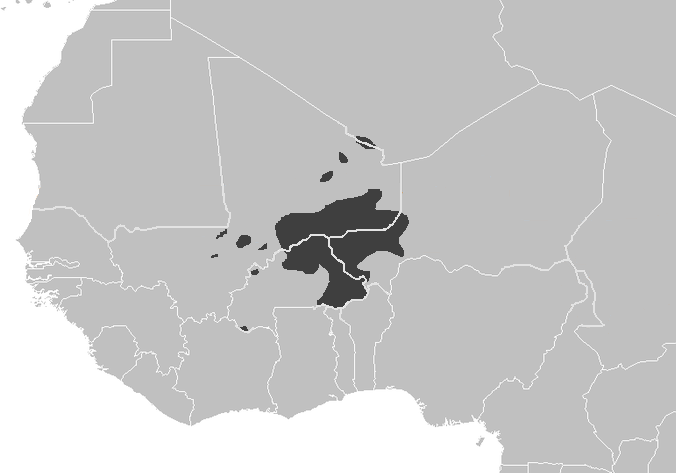
This report, circulated on July 30 and presented by the UN's counter-terrorism services, leaves no ambiguity. For the first time, the provincial hierarchy of the Islamic State is reshaping around West Africa: ISWAP conducted more attacks than any other franchise in the first half of 2026, even surpassing the historical provinces of Iraq and Syria.
On the ground, this shift has a name: Abu Bakr ibn Muhammad ibn Ali al-Mainuki, the number two of the Islamic State and head of ISWAP, killed on May 16 in a joint Nigerien-American operation in Borno State. His death, according to the report, is expected to hinder the coordination of the global network. It is a real strike — it has not slowed the machine.
The report also assesses the Islamic State in the Greater Sahara (EIGS) at about 2,000 men, with 75% of the attacks claimed in 2026 occurring in Niger — including the complex attack on Niamey International Airport on January 29, which demonstrated an urban capability I had never seen in this group during my two stays in the Sahel.
Lakurawa, the gateway to northwestern Nigeria
The novelty is the Sokoto-Kebbi axis. The EIGS has penetrated there not through a frontal offensive, but through co-optation: it recruits among the fighters of Lakurawa, a former self-defense group that has become a terrorist organization. According to the Nigerian army, Lakurawa collects zakat, kidnaps schoolchildren, and cooperates with Boko Haram. Investigations by Good Governance Africa, conducted over three weeks in Sokoto and Kebbi, confirm a presence of the EIGS that is much more structured than the authorities admit.
On February 3, men linked to Lakurawa killed more than 160 people in the villages of Woro and Noko, in Kwara State, in the heart of the Middle Belt. The Security Council condemned the massacre in a statement on February 17. And on December 25, 2025, the U.S. military struck EIGS camps in Tangaza County, Sokoto — the first known U.S. kinetic action inside Nigeria against a Sahelian franchise.
"The jihadists of the Sahel are determined to exterminate Christianity. Look at what they are doing in Burkina Faso... The jihadists from Mali are now flowing into Nigeria via Benin," warned Adakole Adam, from the Adamson Security Consultancy, quoted by Truth Nigeria.
Bamako strangled, Ouagadougou besieged
The pressure on Nigeria is the direct consequence of two strangulations. In Bamako, JNIM has been waging an economic war against fuel convoys since September 3, 2025: more than 300 tankers destroyed, while 95% of the country's fuel transits through Senegal and Ivory Coast. On April 25, Defense Minister Sadio Camara was killed in a JNIM/FLA car bomb attack in Kati, just a few kilometers from the capital. General Goïta now has every convoy escorted by the army and the Russian Africa Corps.
In Burkina Faso, analysts estimate that JNIM and EIGS control up to 60% of the territory. Captain Traoré's junta has dissolved all political parties, expelled the UN representative, and severed diplomatic relations with France in June. The UN reports speak for themselves: 6.8 million displaced people in the region since February. The jihadist pressure is not decreasing — it is overflowing, southward, toward the coastal states, toward Nigeria.
The corridor is simple to read on a map: Liptako-Gourma, the Benin-Nigerian border, then Sokoto. This is the route that cattle convoys used to take — it is now the one for motorcycle columns. More than 3,000 kilometers separate the heart of the Sahel from Lagos. In practice, the distance is measured in days of track, not in borders.
Abuja, three fronts and a deadline
Nigeria is facing three simultaneous threats: ISWAP and Boko Haram in the northeast — ISWAP is estimated to have between 8,000 and 12,000 fighters and is equipping itself with commercial drones, according to UN observers —, Lakurawa in the northwest, and the Fulani ethnic militia (FEM) in the Middle Belt, where the three threats converge on the same farming communities.
Intelligence remains partial — the assessments of Lakurawa, in particular, are difficult to verify on the ground. But the direction is clear. The 200 American instructors deployed in Nigeria since February, the strike in Tangaza, the visit of Under Secretary of State Frank Garcia to Abuja, Abidjan, and Bamako in July: Washington is preparing responses. The UN report provides the strategic framework for this preparation.
What I am watching
The most fragile point remains the Kebbi-Niger border and the corridor connecting the Diffa region to Lake Chad: if ISWAP and EIGS synchronize their offensives — the tactical alliance observed in February around Lake Chad suggests this — Abuja will have to choose between defending the northeast or the northwest.
From experience, I can say one thing: an army that disperses its brigades across three fronts against a mobile enemy ends up holding none. Nigeria has not yet lost any decisive ground. But the UN report, read from Sokoto, is not just another document. It is a countdown.
ISWAP is actively conducting military operations in Nigeria, with an estimated 8,000 to 12,000 fighters involved. The group is recruiting from local militias like Lakurawa and coordinating with other jihadist factions. Recent reports indicate a significant increase in ISWAP's activities, surpassing historical ISIS affiliates in Iraq and Syria. The situation is exacerbated by the ongoing jihadist pressure from groups like EIGS, affecting regional stability.
- ISWAP is the most active ISIS affiliate globally as of August 2026.
- Lakurawa is recruiting fighters and conducting operations in Nigeria.
- The Nigerian military has reported ISWAP's troop numbers between 8,000 and 12,000.
- The EIGS has a structured presence in Nigeria, confirmed by local investigations.
- The US has conducted kinetic operations against EIGS camps in Nigeria.