
Summary and Key Points: The Lockheed SR-71 Blackbird’s legendary Mach 3.2 capability was driven by the revolutionary Pratt & Whitney J58 engine, a hybrid turbo-ramjet.
-At peak speeds, the J58 bypassed its core compressor, allowing 80 percent of its thrust to be generated by a variable-geometry inlet system and its complex ejectors.
-This unique configuration utilized a movable spike to position shockwaves, effectively transforming the powerplant into a ramjet at high altitudes.
-By managing extreme skin temperatures of 500 degrees Fahrenheit through fuel-based heat exchange, the J58 enabled the Blackbird to simply outrun surface-to-air missiles while maintaining sustained high-speed cruise efficiency.
The “Turbo-Ramjet”: SR-71 Blackbird’s Mach 3 Power Summed Up in 2 Words
The Lockheed SR-71 Blackbird remains one of the most often referenced achievements in aerospace engineering.
It was capable of sustained cruise speeds above Mach 3.2 and altitudes exceeding 80,000 feet.
The aircraft’s performance was not simply the result of aerodynamic refinement or advanced materials, but of a next-generation engine and propulsion system that continues to inform modern engine technology.
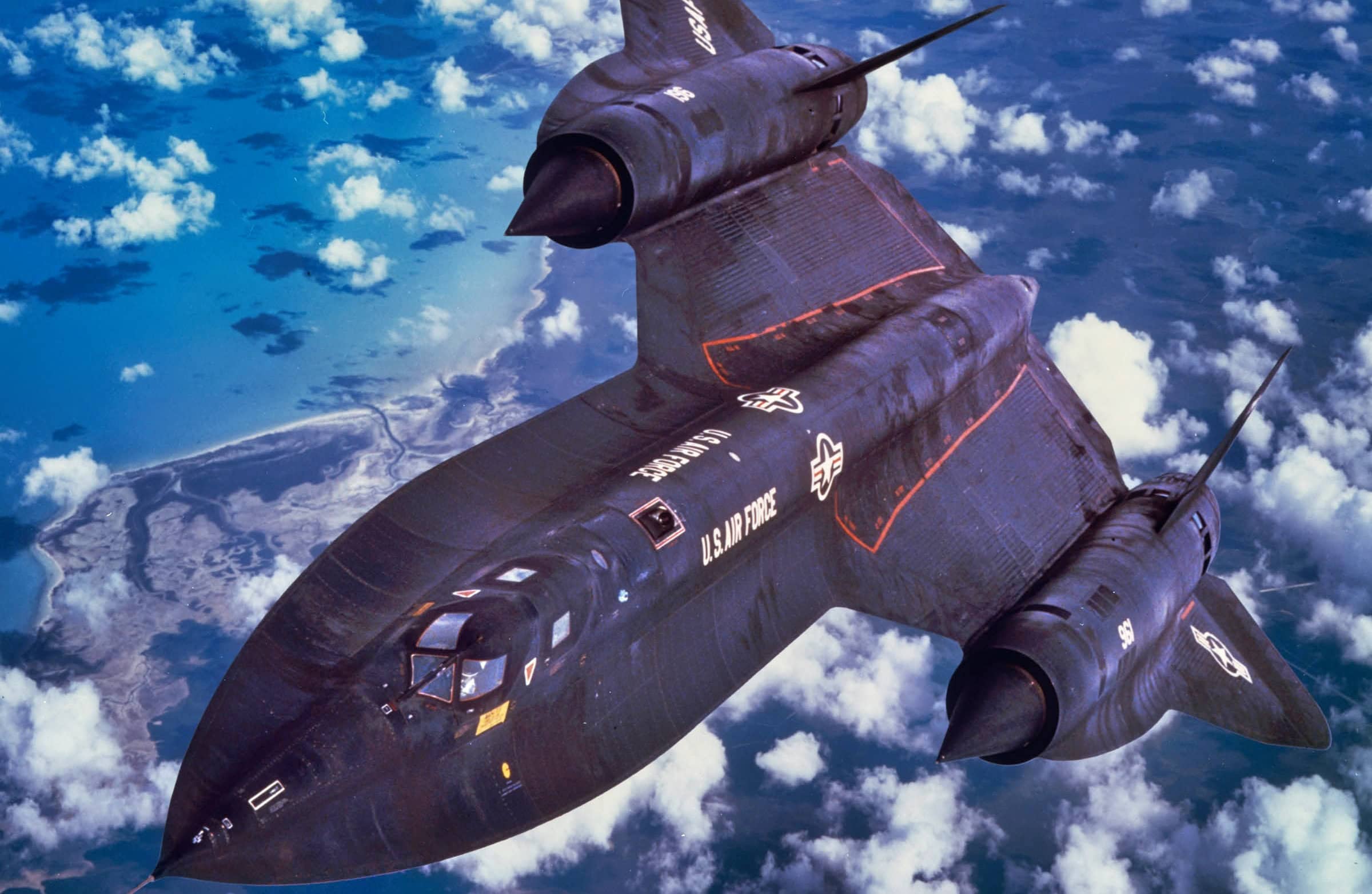
SR-71 Blackbird. Image Credit: Creative Commons.
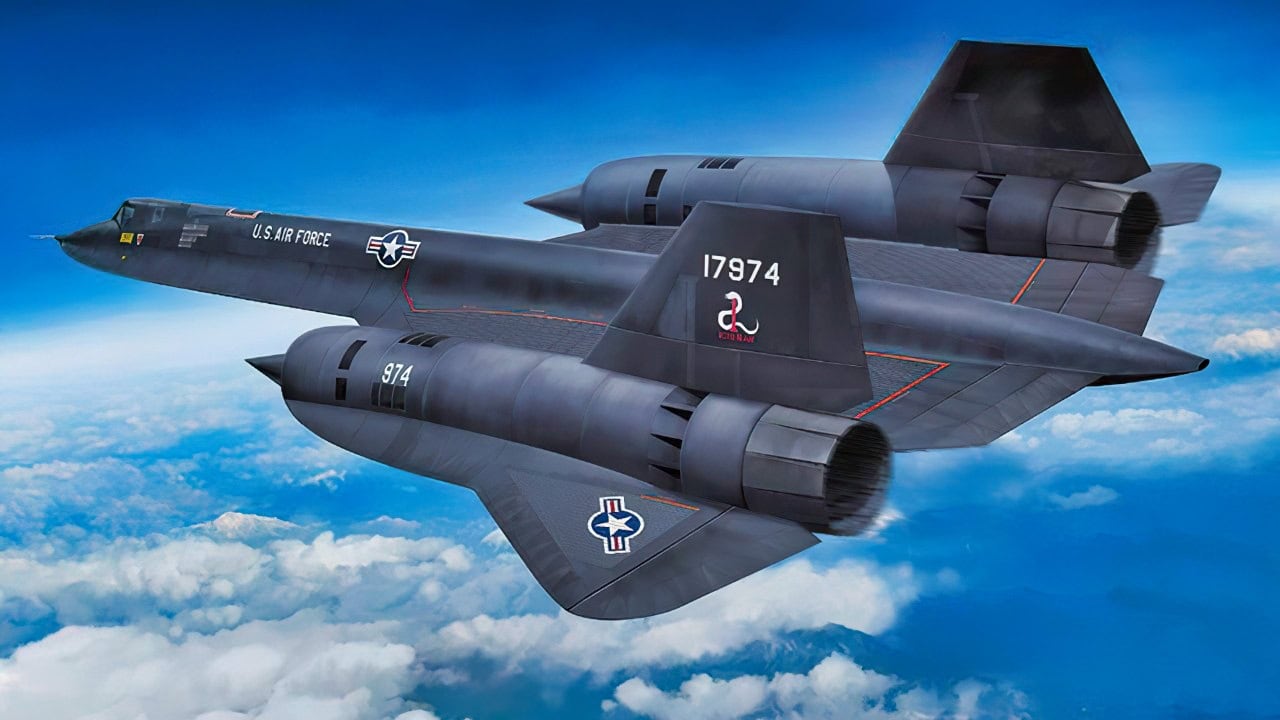
SR-71 Blackbird. Image Credit: Creative Commons.
At the heart of this achievement were its two Pratt & Whitney J58 engines—powerplants that transformed from turbojets into ramjet-like systems at high speed.
The speed and power of these engines have been attributed to their design, which includes inlet geometry and fuel chemistry, enabling the SR-71 to travel at speeds no other operational air-breathing aircraft has ever sustained.
A detailed 2009 NASA research paper, “Design and Development of the Blackbird: Challenges and Lessons Learned,” specifies many of the SR-71’s technological attributes.
Outrun Missiles
According to the NASA research paper, the engine design enabled unparalleled operational advantages.
The SR-71 could outrun surface-to-air missiles simply by accelerating. As speed increased, missile guidance systems struggled to compensate, and the aircraft’s altitude further complicated interception.
The propulsion system was so reliable at high speed that the aircraft was actually most efficient when flying fast and high, precisely where it was hardest to target.
The J58 engine was unlike conventional turbojets of its era, NASA says. In a typical turbojet, incoming air passes through an inlet, is compressed by rotating compressor blades, mixed with fuel, ignited, and expelled through a nozzle to produce thrust.
The air is compressed, mixed with gasoline, and then ignited to create a controlled explosion that generates propulsion. However, at speeds above Mach 3, traditional turbojets are said to encounter severe limitations, according to scientists.
The incoming air is moving so fast that managing compression, temperature, and pressure becomes extraordinarily difficult. Excessive heat can damage turbine blades, while shockwaves can destabilize airflow.
The engineering success of the SR-71’s propulsion system lay in overcoming these factors, which would otherwise impede Mach 3 speeds.
Variable Geometry Inlet
According to NASA scientists, one of the most critical components enabling Mach 3.2 flight was the aircraft’s variable-geometry inlet system. Each engine nacelle featured a movable spike at the front. As the aircraft accelerated, the spike automatically moved aft, precisely positioning shockwaves within the inlet.
“A variable geometry inlet diffuser and a complex bleed bypass system allowed for high engine efficiency in the Mach 2.0 to Mach 3.2 flight regime by controlling the location of the shock wave inside the inlet and allowing air to bypass the turbine section and go directly to the afterburner,” the NASA paper writes.
At cruise conditions, most compression did not occur in the engine itself but in the inlet.
In fact, studies of the J58 indicate that at Mach 3.2, roughly 80 percent of the engine’s thrust came from the inlet and ejector system rather than from the core turbojet components.
This meant that the engine behaved less like a traditional turbojet and more like a ramjet—an engine that relies primarily on forward speed to compress incoming air.
The J58 could be considered a hybrid turbojet-ramjet, seamlessly transitioning between operating modes as speed increased.
Heat Management
Thermal management was perhaps the greatest engineering challenge in achieving Mach 3.2 flight. At those velocities, aerodynamic heating could raise skin temperatures to over 500 degrees Fahrenheit. The engines faced even higher internal temperatures.
The J58 addressed this through advanced materials and cooling strategies, including fuel-based heat exchange and robust turbine blade design.
Additionally, the NASA paper says that because so much compression occurred in the inlet, the mechanical compressor stages experienced less stress than they would have in a conventional high-speed engine.
About the Author: Kris Osborn
Kris Osborn is the President of Warrior Maven – Center for Military Modernization. Osborn previously served at the Pentagon as a highly qualified expert in the Office of the Assistant Secretary of the Army—Acquisition, Logistics & Technology. Osborn has also worked as an anchor and on-air military specialist at national TV networks. He has appeared as a guest military expert on Fox News, MSNBC, The Military Channel, and The History Channel. He also has a Master’s Degree in Comparative Literature from Columbia University.