

When you hear the term “parasite,” you usually get queasy. Indeed, parasites evoke negative images in most people’s minds. But we here at 19FortyFive visited a parasite last year, and it was far from a negative experience. In this case, the parasite in question was the McDonnell XF-85 Goblin, a Cold War-era parasite fighter concept the Air Force experimented with, now on display in a museum for anyone (like us) to see. In this case, at the National Museum of the US Air Force.
Indeed, the XF-85 Goblin is one of the strangest fighter aircraft designs ever conceived. It’s barely 15 feet long, and it lacks conventional landing gear.
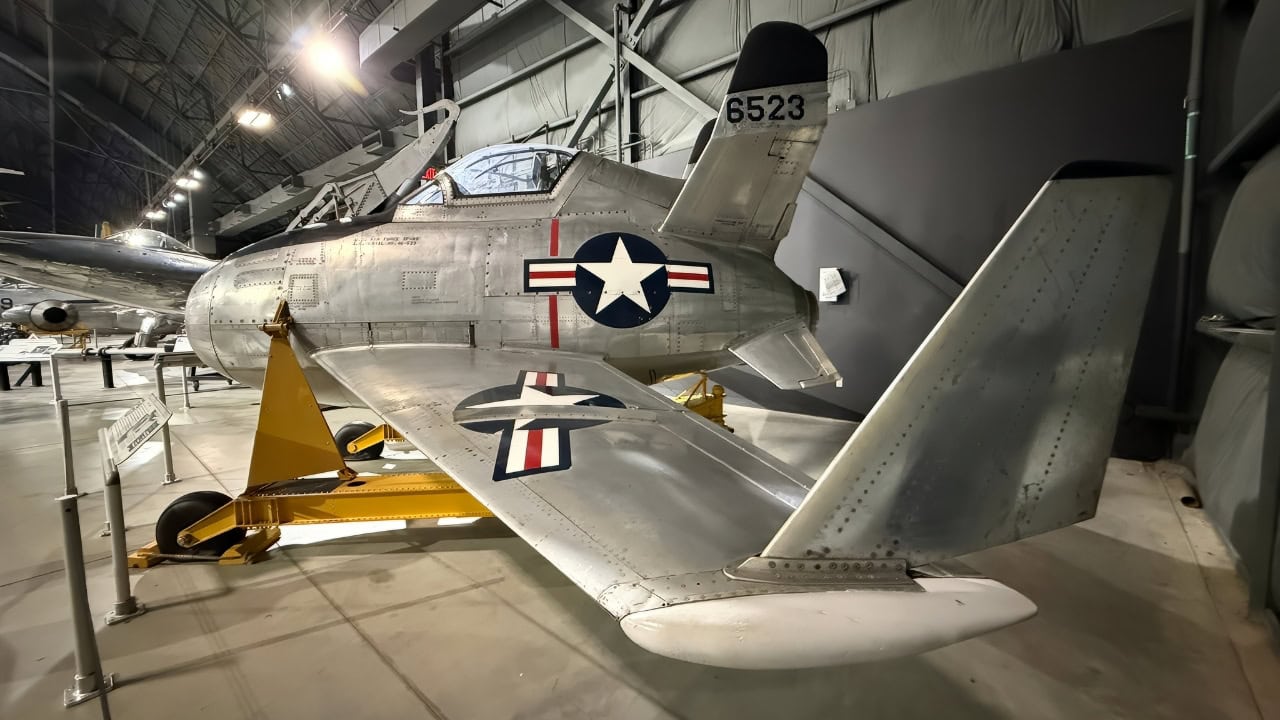
XF-85 Goblin Wing Close Up. Image Credit: Harry J. Kazianis for 19FortyFive.com
In fact, the Goblin is designed to spend much of its operational life aboard another aircraft, such as the Convair B-36 Peacemaker.
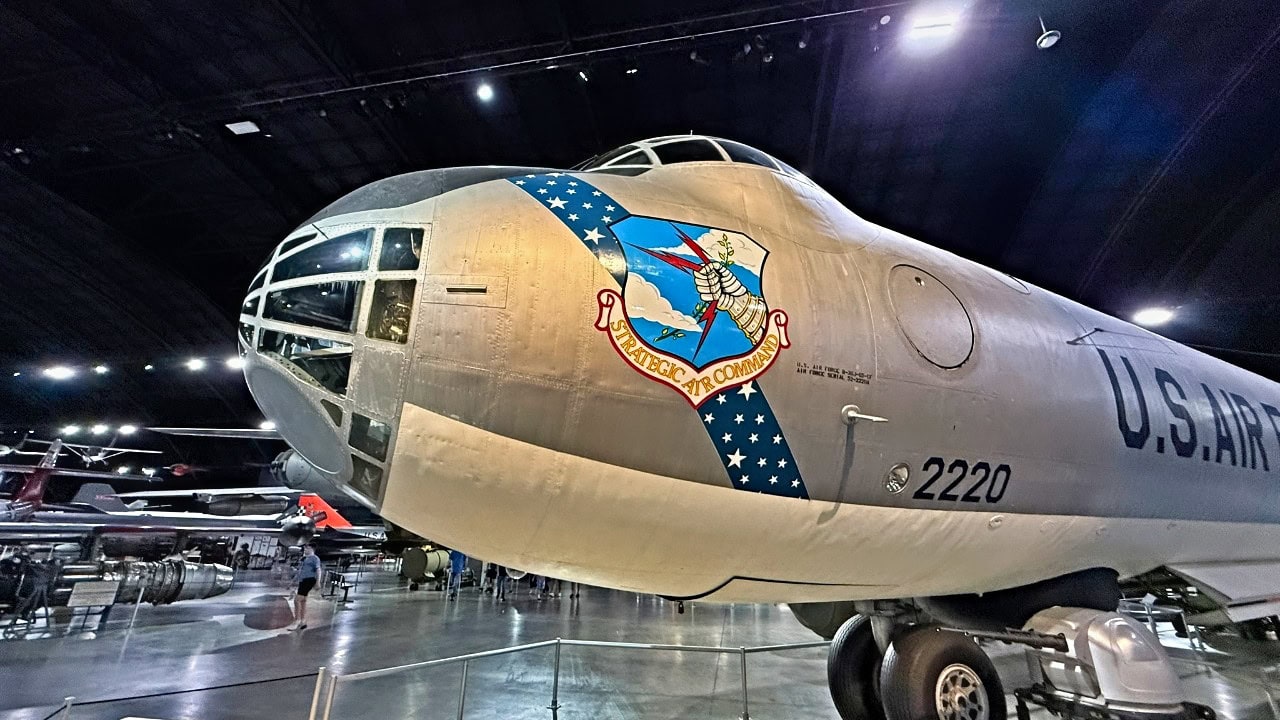
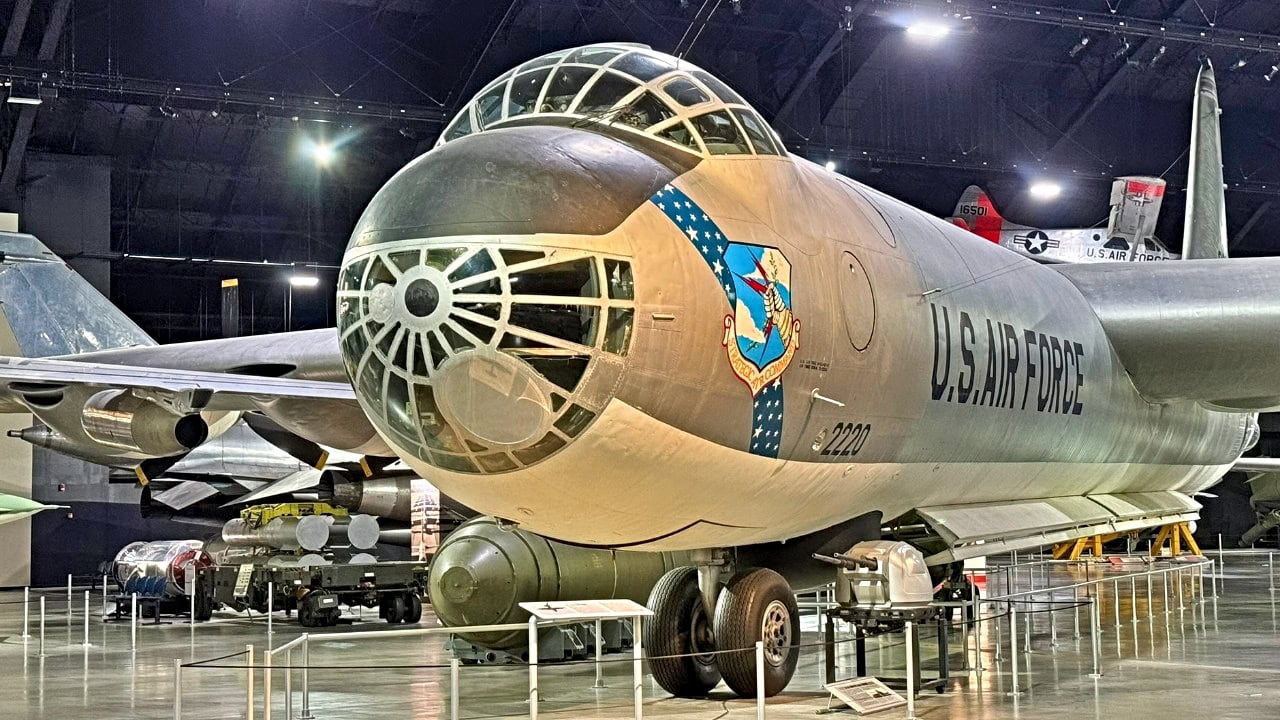
B-36. 19FortyFive.com image.
And the Goblin came about when the Air Force tried to solve one of the early Cold War’s biggest strategic problems: how to protect strategic bombers thousands of miles from home while operating in Soviet airspace.
A Parasite Plane
Because the Air Force’s B-36 Peacemaker had intercontinental range, the Air Force could attack targets far beyond the reach of contemporary fighter escorts.
Without those escorts, though, even the powerful B-36 was vulnerable to anti-aircraft fire and enemy interception.
So McDonnell Aircraft designed the Goblin to sit inside the belly of the B-36, like another bomb, and deploy it as needed to better defend the B-36 as it worked its way through enemy airspace.
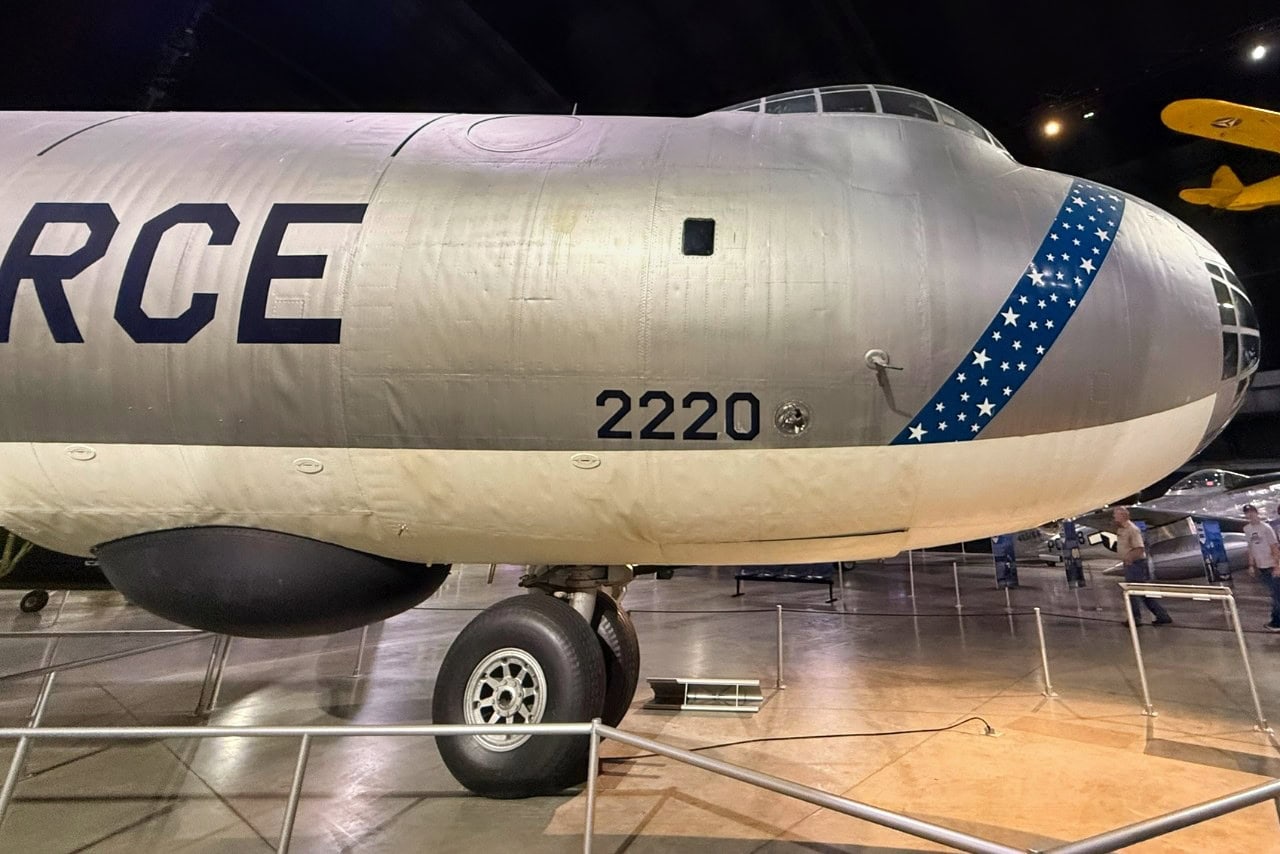
B-36 Bomber Dayton, Ohio USAF Museum. Image Credit: 19FortyFive.com/Harry J. Kazianis
Basically, the Air Force experimented with a flying aircraft carrier in the early days of the Cold War.
While strange, this wasn’t a new concept at all.
Various countries fighting in the Second World War experimented with smaller aircraft attached or placed inside larger ones.
The Soviet Union had its Zveno parasite airplane during World War II. But the enormous distances that a potential hot war with the Soviet Union gave that WWII-era idea new life in the United States.
By 1945, McDonnell had produced the design that became the XF-85. Two prototypes were ordered in October of that same year. Everything about the Goblin was meant to fit within the larger bomber aircraft of the US Air Force.
For example, the Goblin measured just 14 feet 10 inches long, with a wingspan of barely 21 feet 1 inch. Its wings folded to reduce its size.
It carried around 4,550 pounds. One Westinghouse J34 turbojet produced 3,000 pounds of thrust. The Goblin’s maximum speed was estimated at around 650 miles per hour.
Nevertheless, the Goblin was a true-blue fighter, albeit lacking conventional landing gear, with an armament that included .50-caliber machine guns.
A Flying Aircraft Carrier
Air Force plans called for deploying the Goblin once the B-36 Peacemaker detected hostile fighters. A trapeze system would lower the XF-85 beneath the B-36.
The Goblin would then detach from that trapeze system and engage the attackers.
Once it removed enemy fighters threatening the B-36, the Goblin would return to the inside of the larger aircraft.
To return to the B-36 midflight, the Goblin would maneuver beneath the B-36 and use a retractable hook to catch the trapeze.
The fighter would then be pulled inside the bomb bay.
Testing soon determined that launching the Goblin was much easier than returning it to the B-36.
During testing, the B-36 was not used to experiment with the Goblin. Instead, the B-29 Superfortress was converted into the mothership for the Goblin.
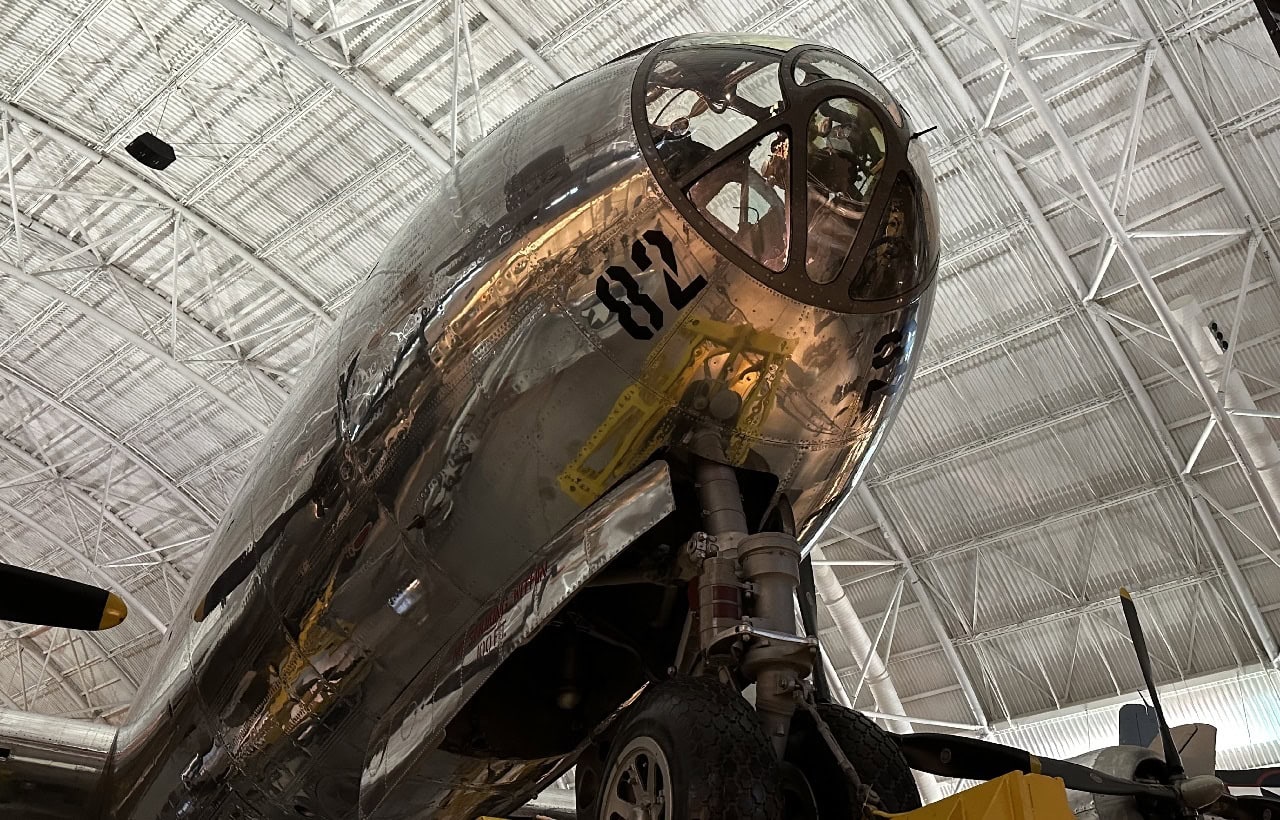
Enola Gay B-29. Image was taken on October 1, 2022. Image Credit: 19FortyFive.com
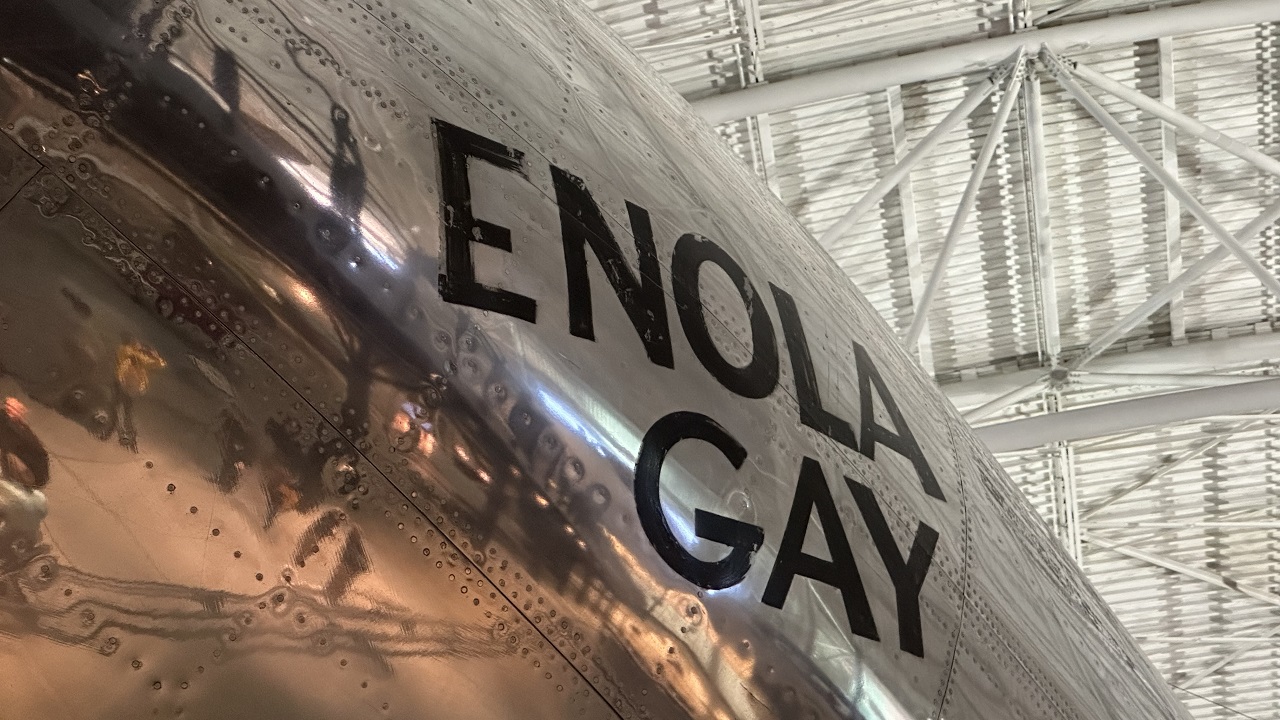
Enola Gay B-29. Image was taken on October 1, 2022. Image Credit: 19FortyFive.com
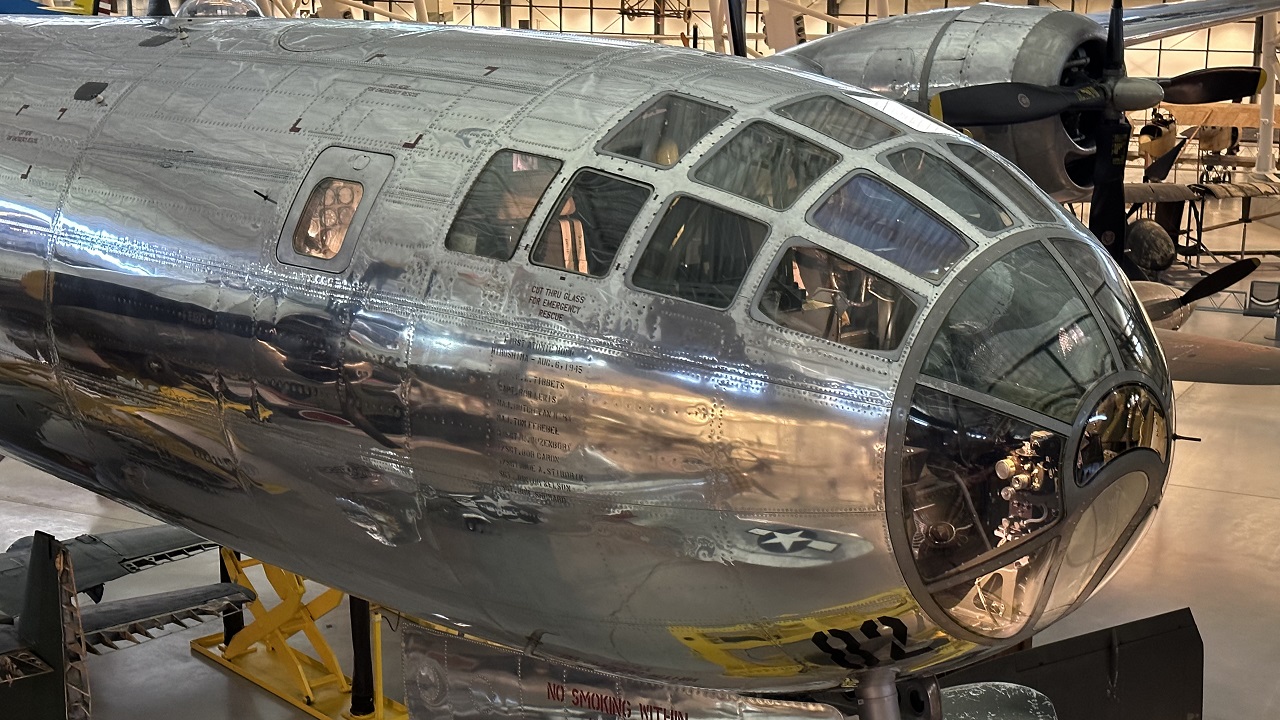
Enola Gay B-29. Image was taken on October 1, 2022. Image Credit: 19FortyFive.com
The Air Force nicknamed that mothership “Monstro.” Testing occurred at the Muroc Air Test Center (now known as Edwards Air Force Base) in 1948.
The first free flight of the Goblin occurred on August 23, 1948, by McDonnell test pilot Edwin Schoch.
Everything went well with the Goblin’s test until the plane tried to return to the mothership.
Airflow beneath and behind the large mothership produced turbulence precisely where the Goblin had to fly (and exactly when the Goblin needed accuracy).
As the fighter approached the bomber, compressed and disturbed air complicated the Goblin’s movement, making it hard to catch the recovery hook on the trapeze.
In fact, during one such test, Schoch hit the mothership, shattering his canopy, forcing the McDonnell test pilot to do an emergency landing of the Goblin–sans landing gear–in a nearby lakebed.
This problem occurred repeatedly. Schoch successfully reconnected his Goblin to the mothership only three times during several test flights.
A Failure?
McDonnell ultimately recommended suspending further recovery testing.
The Strategic Air Command (SAC) put the total program cost at more than $3 million while the Goblin accumulated only two hours and 19 minutes of flight time.
Only two Goblins were ever made — nd none were ever incorporated into the B-36 that they were designed to defend.
By 1949, though, the Air Force perfected midair refueling.
So, rather than carrying fighters within the bombers, the Air Force extended the range of conventional fighters by refueling them midflight.
The Air Force terminated the XF-85 Goblin program that same year. Interestingly, the Air Force kept experimenting with the parasite-fighter concept for years thereafter.
None ever came into operational use.
The Goblin was an attempt by the Air Force to experiment with a solution to a very real problem plaguing them at the time of its creation.
Luckily, the Air Force innovated an entirely new concept–midair refueling–before the inability to make the Goblin succeed hampered the Air Force’s strategies in the early Cold War.
About the Author: Brandon J. Weichert
Brandon J. Weichert is the Senior National Security Editor at 19FortyFive.com. He also manages The Weichert Brief on Substack. Weichert also hosts “National Security Talk” on Rumble. He is the author of four bestselling national security books, the most recent of which is A Disaster of Our Own Making: How the West Lost Ukraine (Encounter Books). Follow him via Twitter/X @WeTheBrandon.