

Summary and Key Points: Defense Expert Brandon J. Weichert examines the Lockheed SR-71 Blackbird’s tires. First flown on December 22, 1964, the Mach 3 jet cruised above 80,000 feet at more than 2,000 mph, with temperatures exceeding 600 degrees, so over 90 percent of it was titanium. Its silver tires carried powdered aluminum in the rubber, ran nitrogen at 415 psi, cost about $2,300 each, and were rated for 15 landings, which is why the 140,000-pound Blackbird took off light and refueled midair.
The SR-71 Feature Everyone Misses: Those Special Tires
The Lockheed SR-71 Blackbird first flew on December 22, 1964. Yet, it remains one of the most advanced planes the United States military ever possessed.
It served for decades, was never shot down, and even had several iterations, from an interceptor variant to an attempted long-range nuclear bomber (that never went beyond the design stage).
All this from a supersonic cruise plane that was designed in 1964.
Incredible Technology for SR-71 Blackbird
And these planes were durable. Of course, they had to be, given their maximum operating speed of more than 2,000 miles per hour and operational altitudes above 80,000 feet.
Because of the plane’s uniqueness, American engineers had to fundamentally rethink some basic assumptions about aerospace design and development to meet the SR-71’s capabilities and demands.
One area of specialization engineers had to reconsider was tires. One of the SR-71’s most distinctive features was the silverish appearance of its tires.
They chose that color not because it looked cool (although it did).
They chose that color because the rubber contained powdered aluminum designed to help the tires withstand the extreme temperatures of constant supersonic flight.
What’s more, engineers had to keep the tires inflated to 415 pounds per square inch and filled with nitrogen rather than compressed air (as most tires are).
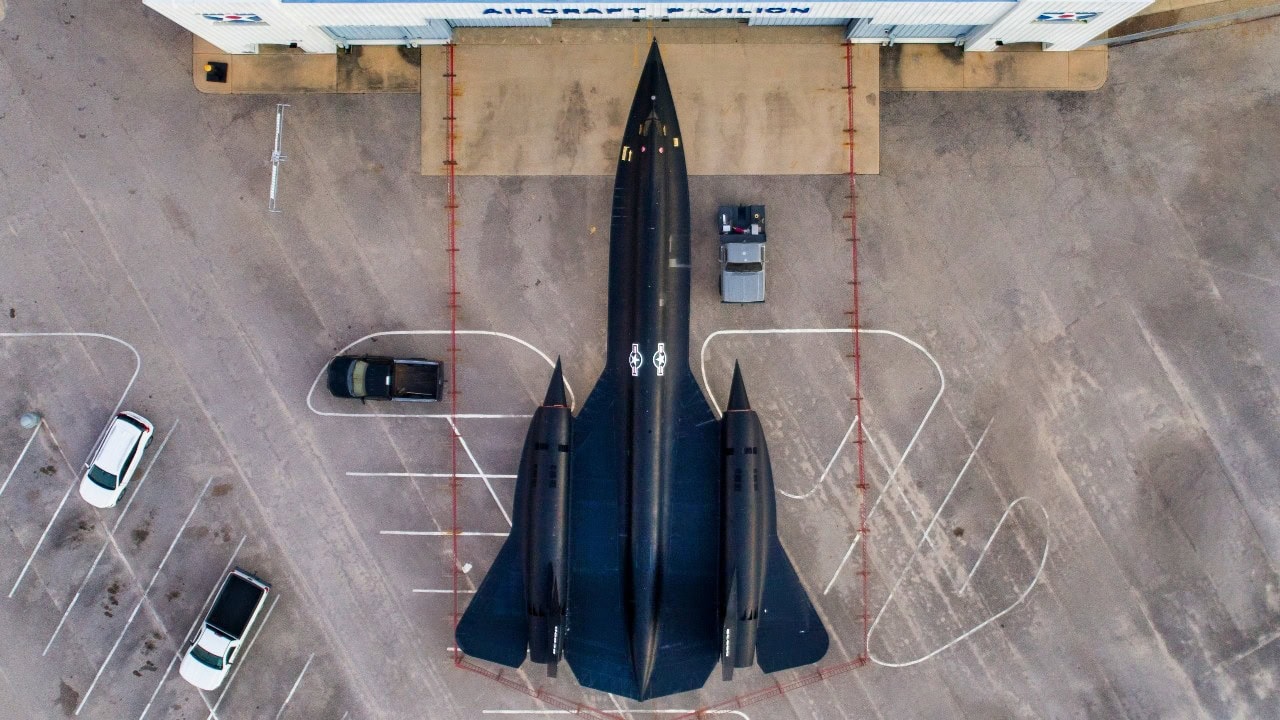
SR-71 Blackbird Overhead. Creative Commons Photo.
Because the Blackbird reached Mach 3, some parts reached several hundred degrees Fahrenheit.
NASA even reported that thermal experiments aboard the SR-71 could produce “heat-soak” temperatures greater than 600 degrees Fahrenheit!
In fact, more than 90 percent of the aircraft was titanium and other titanium-like alloys because the Blackbird couldn’t be built like a conventional aircraft.
Conventional aircraft materials couldn’t withstand the heat those Mach 3 speeds produced.
The Tires From Hell
So, nitrogen-filled, aluminum-laced tires inflated to 415 psi had some serious advantages.
Nitrogen eliminated oxygen from inside the tire, thereby reducing the risk of combustion.
Nitrogen also ensured greater pressure stability across the enormous temperature changes encountered during Blackbird operations.
High-pressure nitrogen inflation has long been used in demanding aerospace applications where temperature, pressure, and fire risk must be tightly controlled.
According to Aviation Geek Club, which documented this aspect of the SR-71’s engineering, the specialized, nitrogen-filled, aluminum-laced tires cost around $2,300 per tire at the time.
These tires could theoretically survive 15 full-stop landings.
But the SR-71 was such an experimental plane that the Air Force kept operating parameters much more conservative, lest overusing these tires at high speeds cause an accident.
One pilot assessed that takeoff for the SR-71 and its sister A-12 Oxcart variant, used by the CIA, was the most onerous aspect for these specialized, expensive tires.
An SR-71 Blackbird could carry up to 80,000 pounds of specialized fuel, and its gross takeoff weight exceeded 140,000 pounds.
Often, the Air Force did not have the Blackbirds take off fully loaded with fuel and would require them to refuel in midair to reduce threats to the aircraft’s safety.
Still, if the Blackbird were fully loaded, takeoff was especially rough on the tires.
Anyway, those tires were among the Blackbird’s most distinctive features. Another interesting aspect was its black exterior, which gave the Blackbird its mystique.
Specialized paint was needed to dissipate excess heat generated by sustained Mach 3 flight.
Its titanium signature expanded as temperatures increased, while the aircraft’s fuel system and other components were engineered around the dramatic thermal changes between the Blackbird being stationary on the ground and the Blackbird underway.
A Unique Plane
But the tires are one indicator of how sensitive and specialized the SR-71’s design was.
The Air Force also recognized the inherent dangers of repeatedly operating these planes.
So the Air Force worked to reduce the risk of accidents and wear and tear as best it could under Cold War pressure.
That’s why those unique procedures of taking off light and refueling midair rather than making the tires bear the full burden of a fully loaded SR-71 were so important.
This specialization, and the concomitant procedures, and the extreme costs involved, explain why the Air Force could not mass-produce these planes.
It also helps explain why the nuclear-bomber variant never really took off, if you’ll pardon the pun.
If the tires involved had to be so specially made and they couldn’t take off fully loaded without fear of damage being done to the plane, then what was the real benefit of having nuclear bombers that were based upon the SR-71’s design?
Nevertheless, the SR-71 was designed in the mid-1960s, flew for decades thereafter, broke all manner of records, and played a critical role in helping the United States win the Cold War.
It is an engineering marvel for any age. The fact that it was built so long ago and hasn’t been replicated since it last flew in 1999 shows how unique the SR-71 was.
About the Author: Brandon J. Weichert
Brandon J. Weichert is the Senior National Security Editor at 19FortyFive.com. He also manages The Weichert Brief on Substack. Weichert also hosts “National Security Talk” on Rumble. He is the author of four bestselling national security books, most recently A Disaster of Our Own Making: How the West Lost Ukraine (Encounter Books). Follow him via Twitter/X @WeTheBrandon.