

The B-58 Hustler Hit Mach 2 and Set 19 Speed Records — The Air Force Retired It After 10 Years and Kept the B-52 for 70
The B-58 Hustler was the U.S. Air Force’s first operational supersonic bomber—it had an impressive max airspeed of Mach 2.0. We saw it in person last year at the National Museum of the U.S. Air Force, and we have to say, it gives us goosebumps.
Arriving on-scene during the first half of the Cold War—just a few years after the big, lumbering, decidedly subsonic B-52 Stratofortress—the Hustler should have been a huge hit.
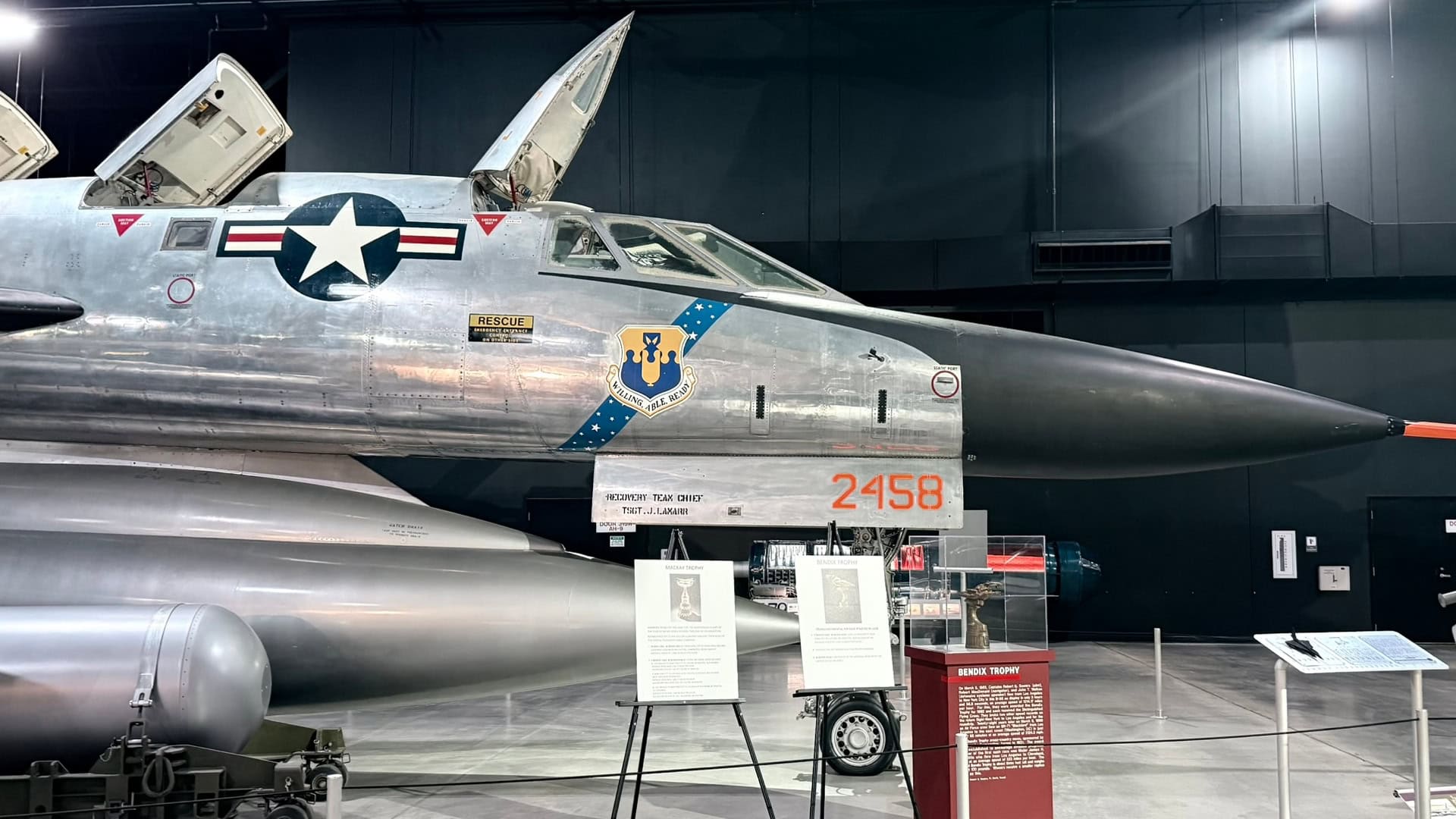
B-58 Hustler Bomber U.S. Air Force. 19FortyFive.com Image. Taken at the National Museum of the U.S. Air Force.
Alas, in the immortal words of former ESPN College GameDay commentator Lee Corso, “Not so fast, my friend.” Six-and-a-half decades later, the B-52 is still going strong (just ask the Iranian regime), while the Hustler has been relegated to military aviation history trivia.
Yes, the Air Force does have a Mach-busting strategic bomber, the B-1B Lancer, but even the Lancer tops off at a relatively modest Mach 1.2—a mere 60 percent of the B-58’s speed capability.
Why did such a promising warbird as the B-58 fail in the long run, while the B-52 succeeded?
B-58 Hustler Initial History
The B-58 was built by the now-defunct Convair Division of General Dynamics, which also produced the F-106 Delta Dart interceptor and the behemoth B-36 Peacemaker heavy bomber (the largest mass-produced piston-engined aircraft ever built).
Intended as a replacement for the Boeing B-47 Stratojet—the United States’ first strategic jet bomber—the Hustler made her maiden flight on Veteran’s Day, November 11, 1956, and was officially introduced into operational service with the Air Force on March 15, 1960.
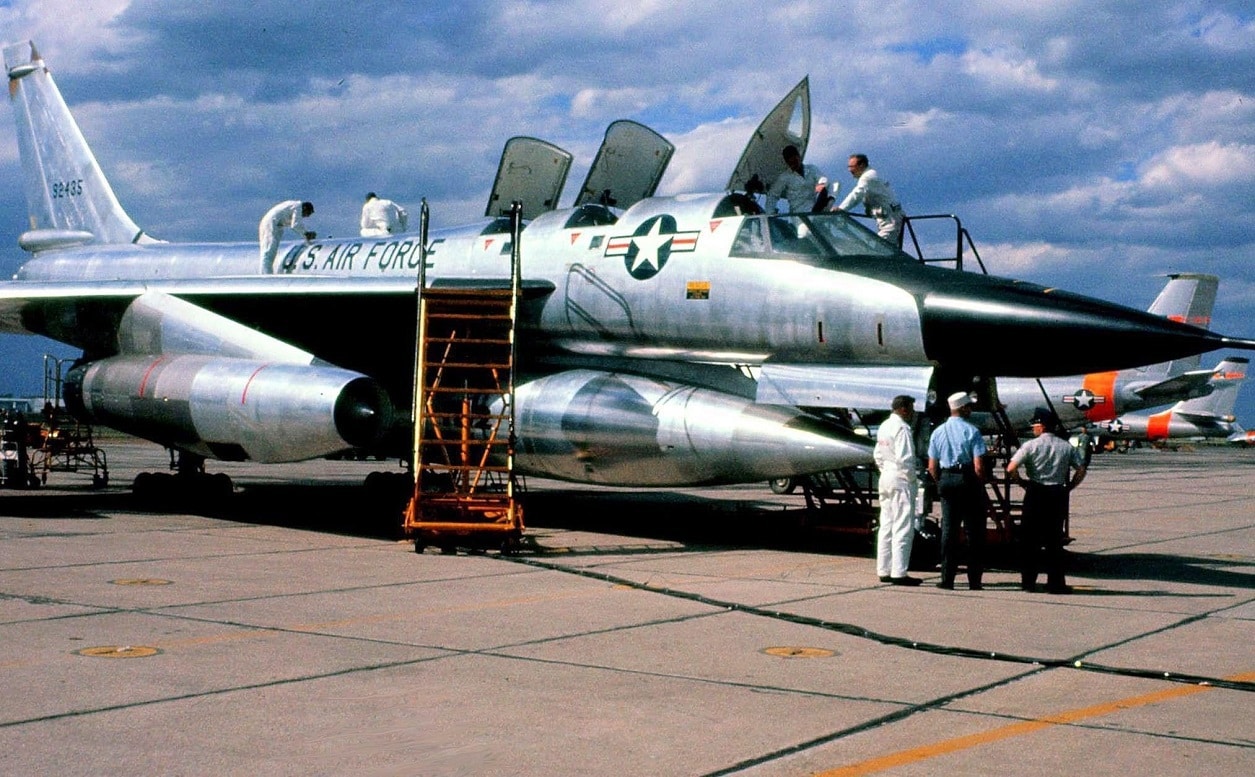
B-58. Image Credit: Creative Commons.
A total of 116 B-58 airframes were built, including 30 test and pre-production aircraft and 86 specimens for full production.
The plane had a crew of three: the pilot, radar navigator/bombardier, and defense systems operator.
The bomber’s impressive speed was made possible by four General Electric J79-GE-5A afterburning turbojets, each generating 15,000 lbs. of thrust with afterburner. This was the first GE engine designed for supersonic aircraft, and the most advanced turbojet of its time.
Ordnance-wise, the Hustler had a payload capacity of 19,450 lbs.-worth of bombs (1× Mark 39 or B53, or 4× B43 or B61 nuclear bombs), and a 20-mm tail gun for defense against enemy interceptors.
The plane also sported distinctive features such as a delta-wing shape, a sophisticated inertial guidance navigation and bombing system, a slender “wasp-waist” fuselage, and an extensive use of heat-resistant honeycomb sandwich skin panels in the wings and fuselage.
Operational History
For all of the Hustler’s impressive stats, the warbird never saw combat.
The bomber’s career was stunted by mechanical issues and by the evolving capabilities of the adversary’s aerial defenses.
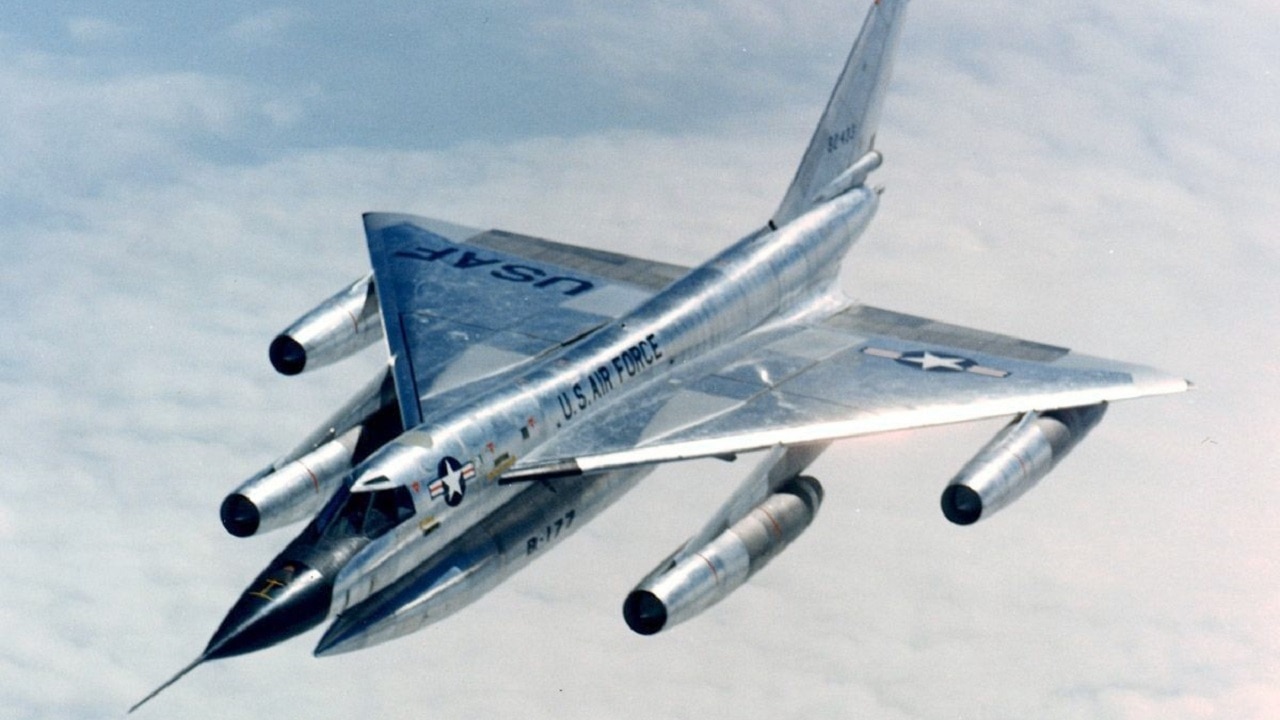
B-58 Hustler. Image Credit: US Air Force.
The phaseout of the fleet began at the end of 1965, when the Soviets introduced highly accurate surface-to-air missiles. It was feared that the Hustler’s high-altitude attack profile could no longer guarantee success against the increasingly sophisticated Soviet air defenses.
Moreover, the aircraft was substantially more expensive to operate than other bombers, such as the B-52, and it also suffered from a high accident rate.
In addition to being less expensive to operate, the B-52 wasn’t plagued by the B-58’s reliability issues.
That said, during the B-58’s relatively brief career, it set 19 world speed and altitude records, earning five different aviation trophies for its aircrews along the way.
The warbird gained a bit of cinematic stardom, thanks to the 1964 nuclear war suspense thriller Fail-Safe.
Therein, a B-58 portrays the “Vindicator,” a fictitious bomber inadvertently tasked with dropping “The Bomb” on Moscow.
The Air Force retired the B-58 on January 31, 1970, just shy of the plane’s 10-year operational anniversary.
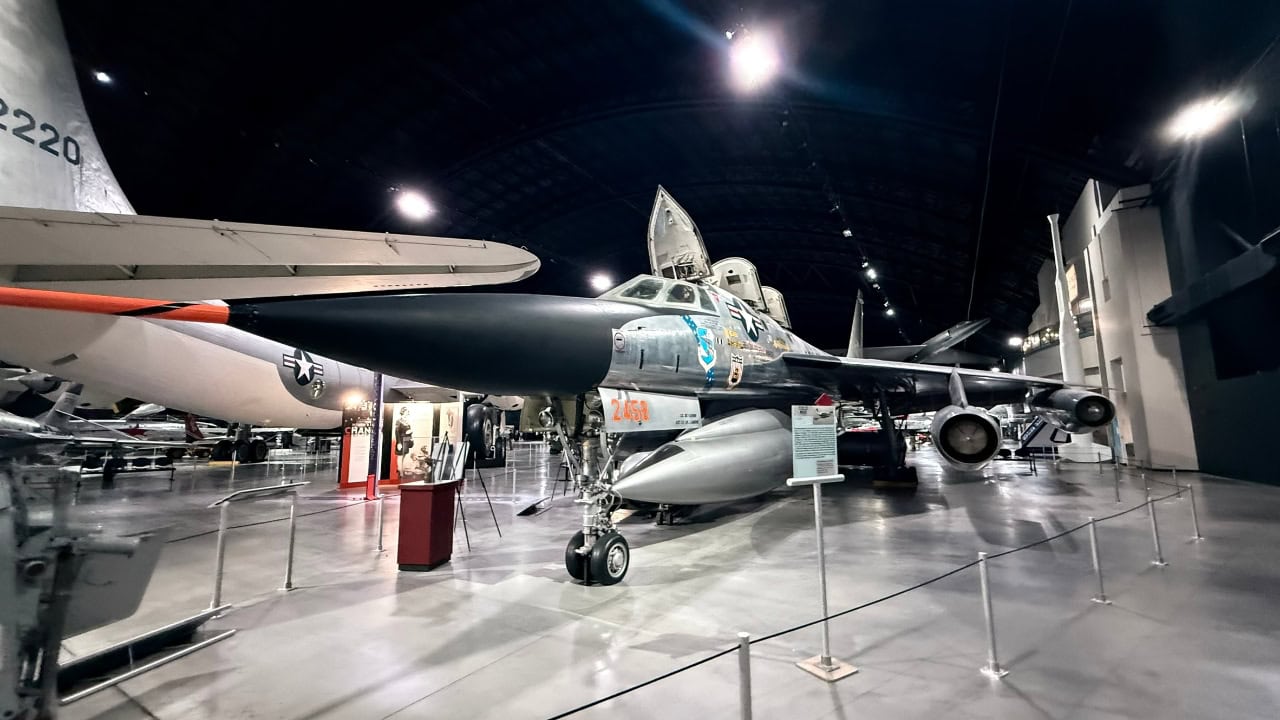
B-58 Hustler. Image Credit: 19FortyFive.com
Where Are They Now?
Eight B-58 specimens have been preserved for posterity. One of them, a Hustler bearing AF Serial No. 59-2458 and the nickname “Cowtown Hustler,” sits proudly in the NMuseum of the United States Air Force at Wright-Patterson AFB, in the vicinity of Dayton, Ohio.
Cowtown Hustler set three speed records while flying from Los Angeles to New York City and back on March 5, 1962.
For these achievements, the crew received the Bendix and Mackay Trophies that year. Cowtown Hustler was donated to the museum in December 1969.
Some of the pictures in this essay are from our visit with that bomber.
Other museum options include:
-Serial No. 55-0663, a TB-58A (trainer version) at Grissom Air Museum, Grissom Air Reserve Base, Peru, Indiana. This is the oldest remaining Hustler and the fourth one ever built.
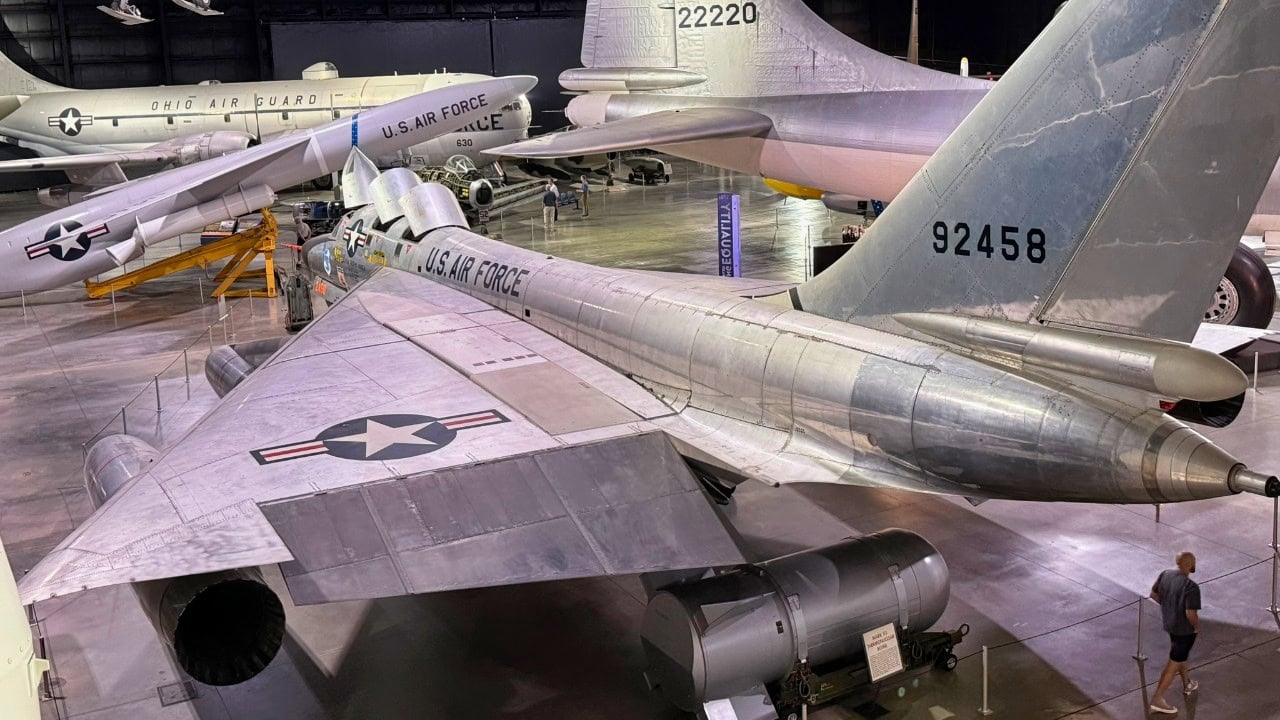
B-58 Bomber. 19FortyFive.com Image from National Museum of the Air Force.
-Serial No. 61-2080, at the Pima Air & Space Museum, adjacent to Davis-Monthan AFB, Tucson, Arizona; this was the last B-58 ever delivered.
-Serial No. 61-2059 “Greased Lightning” at the Strategic Air Command & Aerospace Museum near Ashland, Nebraska; this one earned her page in the history books by averaging 938 mph while flying 8,028 nautical miles from Tokyo to London in 8 hours and 35 minutes in October 1963.
About the Author: Christian D. Orr
Christian D. Orr is a Senior Defense Editor. He is a former Air Force Security Forces officer, Federal law enforcement officer, and private military contractor (with assignments worked in Iraq, the United Arab Emirates, Kosovo, Japan, Germany, and the Pentagon). Chris holds a B.A. in International Relations from the University of Southern California (USC) and an M.A. in Intelligence Studies (with a concentration in Terrorism Studies) from American Military University (AMU). He is also the author of the book “Five Decades of a Fabulous Firearm: Celebrating the 50th Anniversary of the Beretta 92 Pistol Series, the second edition of which was recently published.