
The US-Iran Negotiations Fall into "Rashomon": Genuine Talks or a Smoke Screen?
Since the large-scale joint raid by the U.S. and Israel on Iran began on February 28, the Middle East conflict that has captured global attention has lasted for 29 days. Now, on one hand, the U.S. has proposed a ceasefire plan, while on the other hand, it is increasing troop deployments in the Middle East. What does this mean? Is it a signal to fight or negotiate? Or is it a means of extreme pressure?
Military Observer Wei Dongxu: If the U.S. is eager to extricate itself from the quagmire of conflict in the Middle East, it may ultimately achieve a ceasefire through negotiations, thereby avoiding greater losses.
If negotiation is the primary intention, or if a ceasefire is the main goal, then the current troop increase in the Middle East, including amphibious readiness groups and relevant airborne combat units, may be aimed at supporting the negotiations. This troop increase could be intended to apply pressure on Iran, giving the U.S. more leverage at the negotiating table.
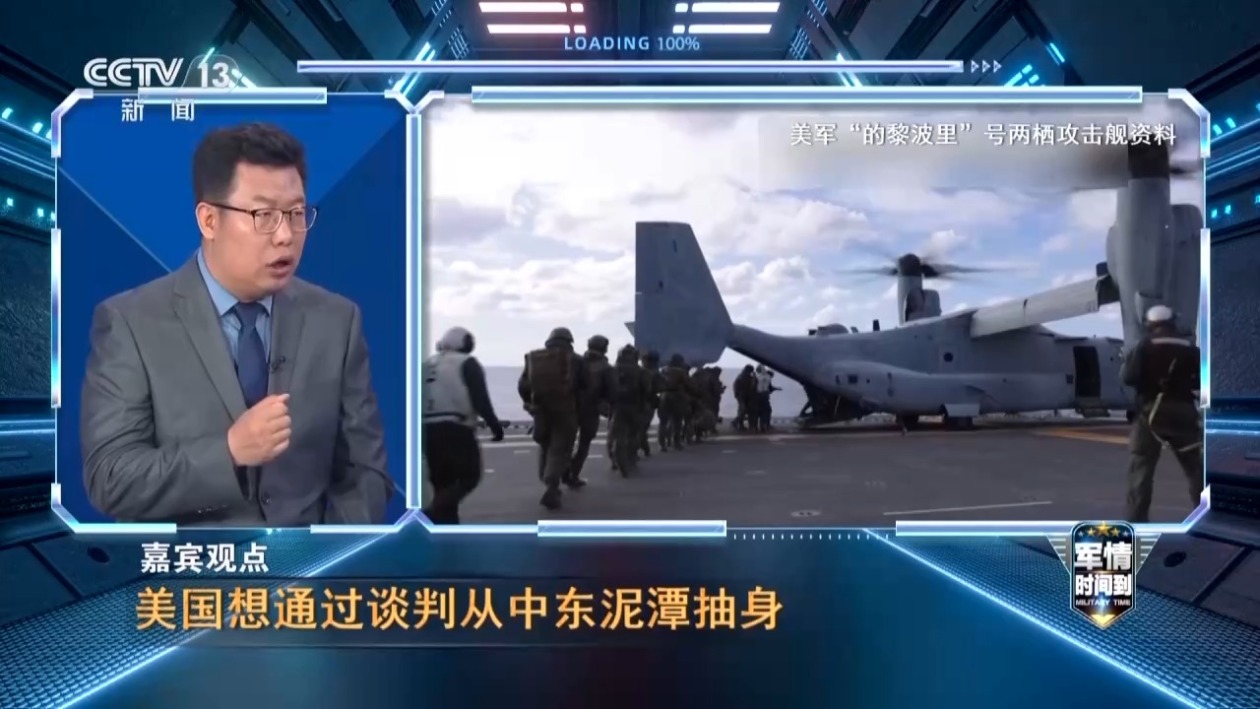
However, if the U.S. intends to use military force to seize control of the Strait of Hormuz, or to target Iran's nuclear facilities, including further destruction of secret underground missile sites, it may need to conduct large-scale amphibious operations or ground combat. This would not only involve controlling several islands within the Strait of Hormuz but could also mean occupying or forcibly seizing some coastal areas of Iran, thereby providing depth to its military operations.
The U.S. has increased its military presence in the Middle East while proposing a ceasefire in negotiations with Iran. This dual approach may be aimed at exerting pressure on Iran to secure a favorable outcome. The U.S. is considering deploying amphibious forces and airborne troops to enhance its strategic position in the region.
- U.S. has increased troop presence in the Middle East.
- Negotiations with Iran are ongoing regarding a ceasefire.
- U.S. may use military pressure to strengthen its negotiating position.
- Potential amphibious operations are being considered in the Strait of Hormuz.