

Summary and Key Points: Expert Sean Spoonts, a Navy veteran and former SOFREP editor-in-chief, revisits Grumman’s Super Tomcat-21, the 1990s proposal to replace aging F-14 Tomcats needing 40 to 60 maintenance hours per flight hour. The design promised upgraded General Electric F110 engines with 60,000 pounds of thrust, Mach 1.1 supercruise and an overall top speed of Mach 2.34, 4,400 pounds more fuel in enlarged wing gloves, an 18,000-pound bring-back weight, and a 15 mph slower landing, but with Soviet bombers fading, the Navy chose the Super Hornet.
Sadly, this project can be summed up in one word: failure. This is the story of why.
Grumman F-14E Super Tomcat 21: An Introduction to Aviation History
In the modern era of aviation, few military aircraft have a bigger fan base than the Grumman F-14 Tomcat.
Social media is full of Tomcat lore for aviation enthusiasts, historians, gamers, and modelers.
On YouTube alone, tens of thousands of videos, clips, and flight-simulator runs feature the F-14.
The Tomcat has a massive digital footprint online and is among the world’s most famous and widely recognized aircraft.
Less widely known is that, for a time, a successor might have existed: the Super Tomcat-21 (ST-21). It was also known as the Grumman F-14E Super Tomcat 21.
In the 1990s, the F-14 Tomcat airframes were nearing the end of their service lives; keeping them flying became increasingly expensive, requiring 40-60 maintenance hours per hour of flight.
So Grumman proposed a replacement to address some of the Tomcat’s problems while improving on the already solid design pilots and the public loved: the Super Tomcat-21.
The Super Tomcat-21 Was Trying To Hold Off The F/A-18 Super Hornet
Grumman knew they had competition in the F-18 Hornet from McDonnell Douglas (now Boeing).
They also knew that the Navy was shopping around the Advanced Tactical Fighter (ATF) program, which called for speed and range specifications the current F-14D didn’t meet, but neither did the proposed F/A-18E/F Hornet.
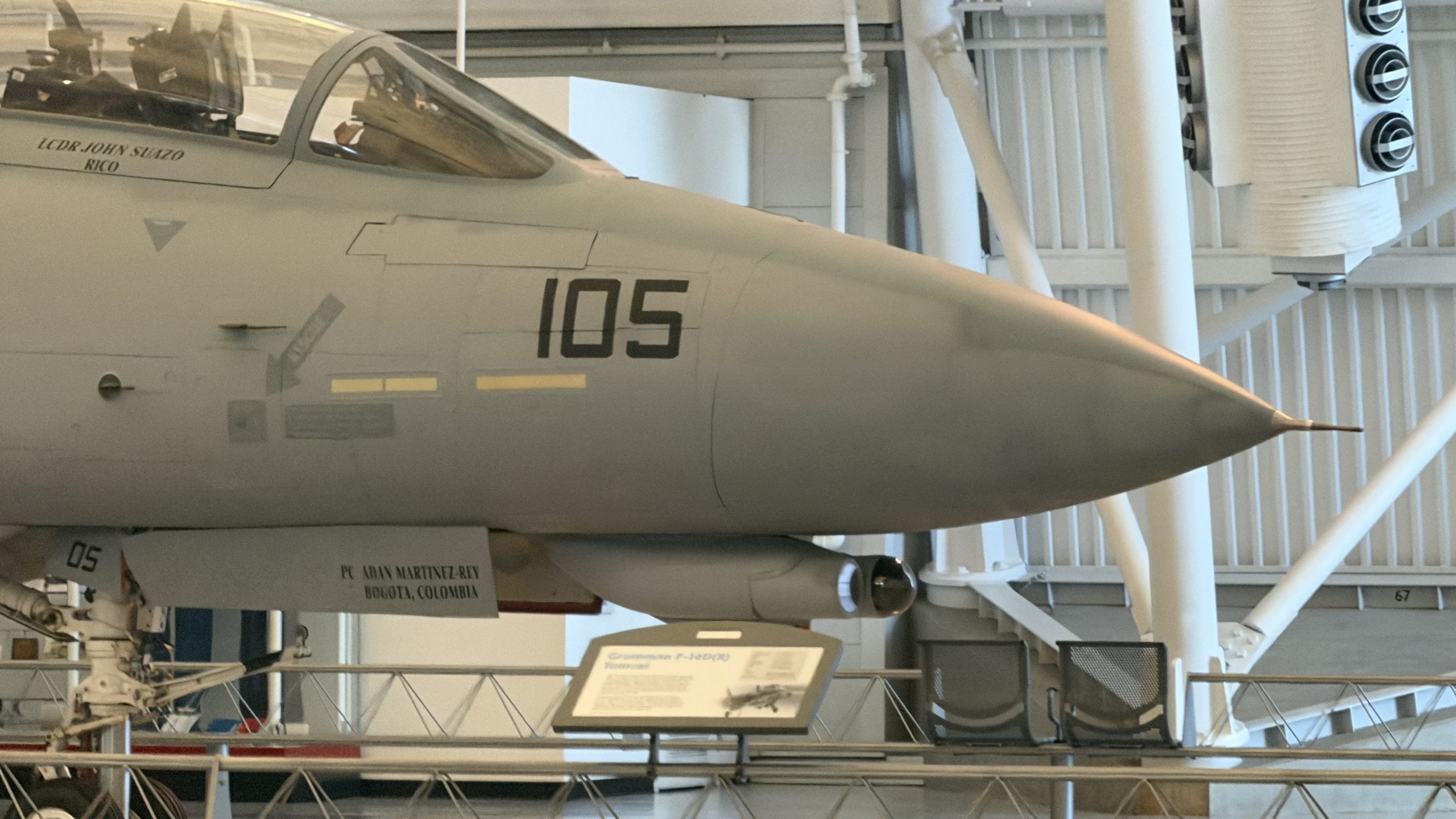
Steven F. Udvar-Hazy Center F-14 Tomcat Exhibit. 19FortyFive Photos by Christian D. Orr.
Grumman proposed an improved Tomcat called the F-14D Quickstrike.
A Tomcat moved out of its role as a long-range carrier interceptor and into the role of strike fighter.
Grumman was saying, “Instead of the Navy sinking billions into an entirely new jet, why not let us upgrade the 700+ Tomcats already in service?”
The F-14D had been in service long enough that Grumman knew what to improve, starting with the engine.
Grumman F-14E Super Tomcat 21 Would Fly Mach 1.1 In Super Cruise
In the 1980s, the Tomcat was refitted with the General Electric F110-GE-400 producing 54,000 lbs. of thrust in afterburner.
Grumman wanted to swap in their F110-GE-429 Turbofan.
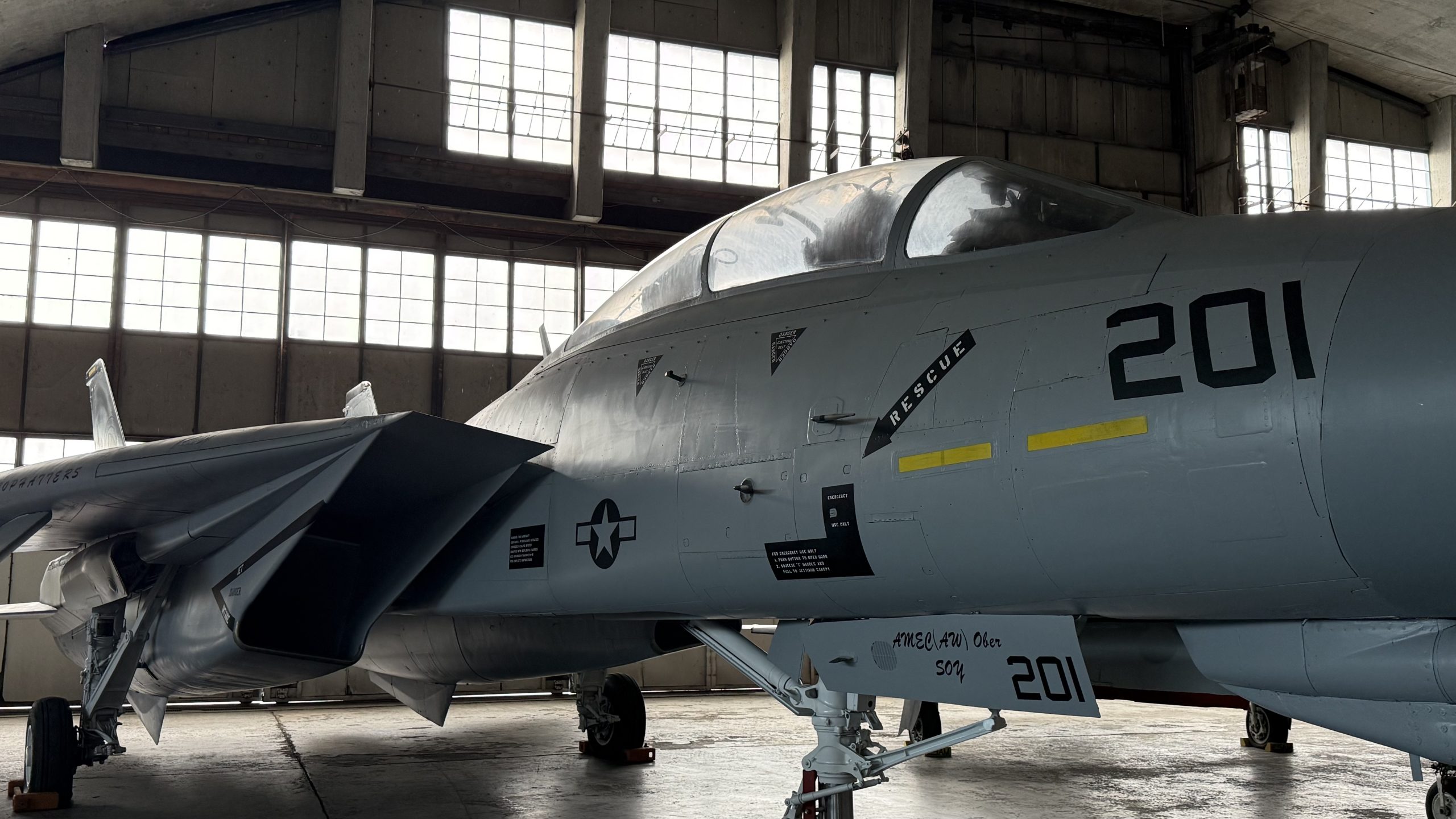
F-14 Tomcat. 19FortyFive staff photo from museum visit.
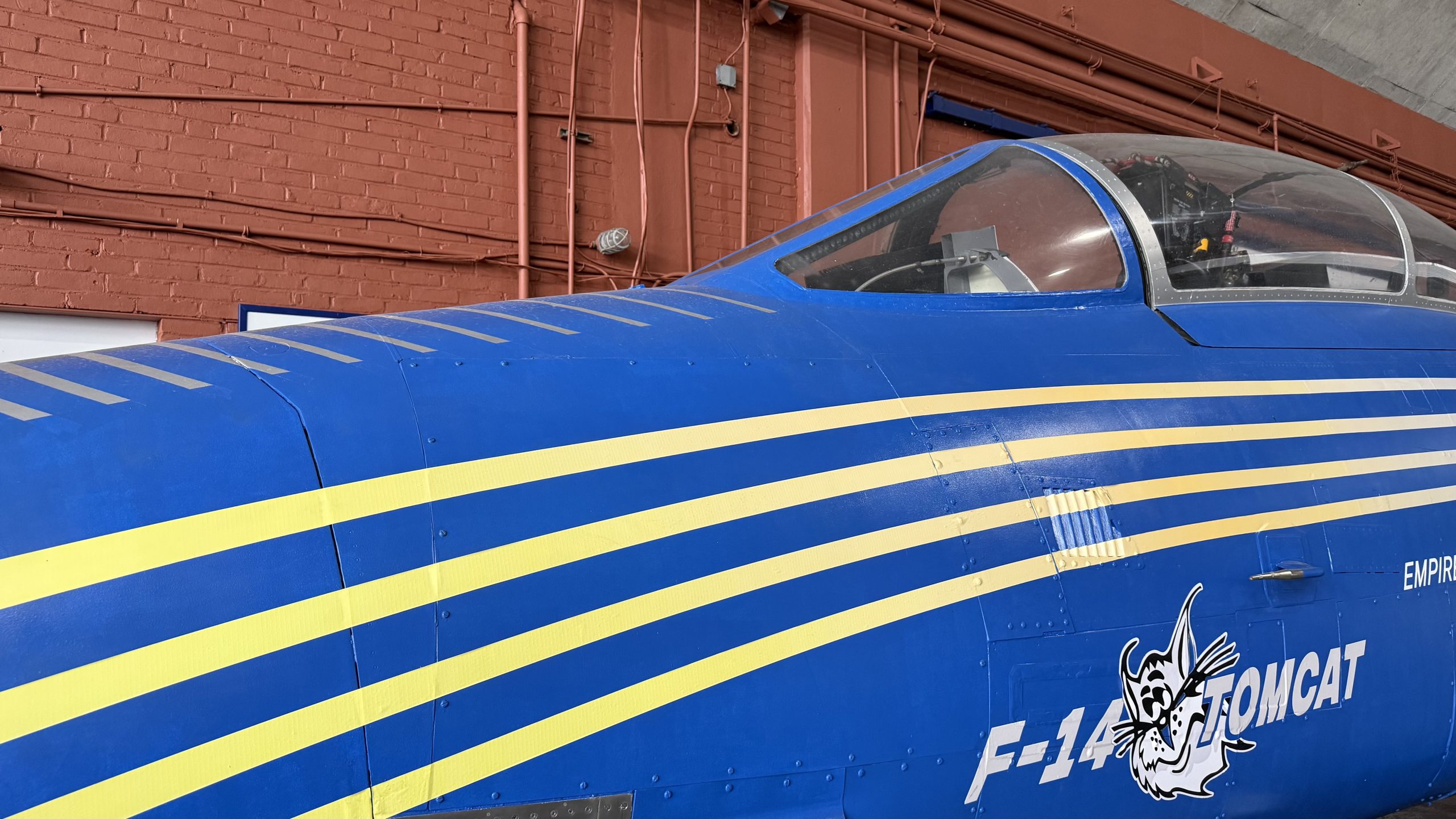
F-14 Tomcat. 19FortyFive staff photo from museum visit.
This would increase thrust to 60,000 lbs and let the Tomcat-21 hold Mach 1.1 in supercruise mode without afterburners.
Super Tomcat-21 Increased “Bring-Back” Weight by 2,000 lbs.
The Tomcat was already heavy on takeoff, so it had landing-weight restrictions to keep the landing gear from collapsing and the wings from falling off.
A Tomcat couldn’t land with the full weight of its ordnance load without dumping fuel down to about 2,000-4,000 lbs. to meet these limits, which was a very low fuel state if they had to make more than one landing attempt.
Increasing the Bring-Back weight to 18,000 from 16,000 lbs. added 2,000 lbs. of fuel while staying within landing weight limits.
The Super Tomcat-21 would carry more fuel within an improved wing design.
Grumman would replace the existing retractable glove vanes on the fuselage with a larger, rounded glove root, increasing the Tomcat-21’s fuel capacity by about 4,400 lbs.
This would maintain its range despite increased drag from ordnance under the wings.
Grumman F-14E Super Tomcat 21 Had A Slower Landing Speed. That Would Make It Safer
On the swept-back wing itself, the Tomcat-21 would get improved leading edges and better Fowler flaps, decreasing the landing speed by 15 mph.
The F-14D came in fast on landing, with only about 10 mph between minimum landing speed and stall speed.
That extra 15 mph minimum speed on the ST-21 would widen that margin, making the Tomcat-21 safer to land.
The Tomcat would also get a digital flight control system, and the canopy would be a single piece to improve visibility for the pilot and radar intercept officer behind him.
The Super Tomcat Could Be Converted From Strike Fighter To Interceptor Quickly
Further refinements included equipment swap-outs that let ground crews take the strike fighter version (AST-21) and clean it up to perform in the carrier defense interceptor (ST-21) role as needed.
Bomb stores on the strike version could be swapped out for drop tanks, and the Forward Air Controller Module could be removed.
In the air-to-ground configuration, the electro-optical and infrared system used to track and target air targets could be removed to save weight for bombs and fuel.
As proposed, the Tomcat-21 (ST-21) would have been an exceptional improvement over the F-14D as an interceptor while expanding further into the strike-fighter role. Unfortunately, it never got much beyond drawings and a few models.
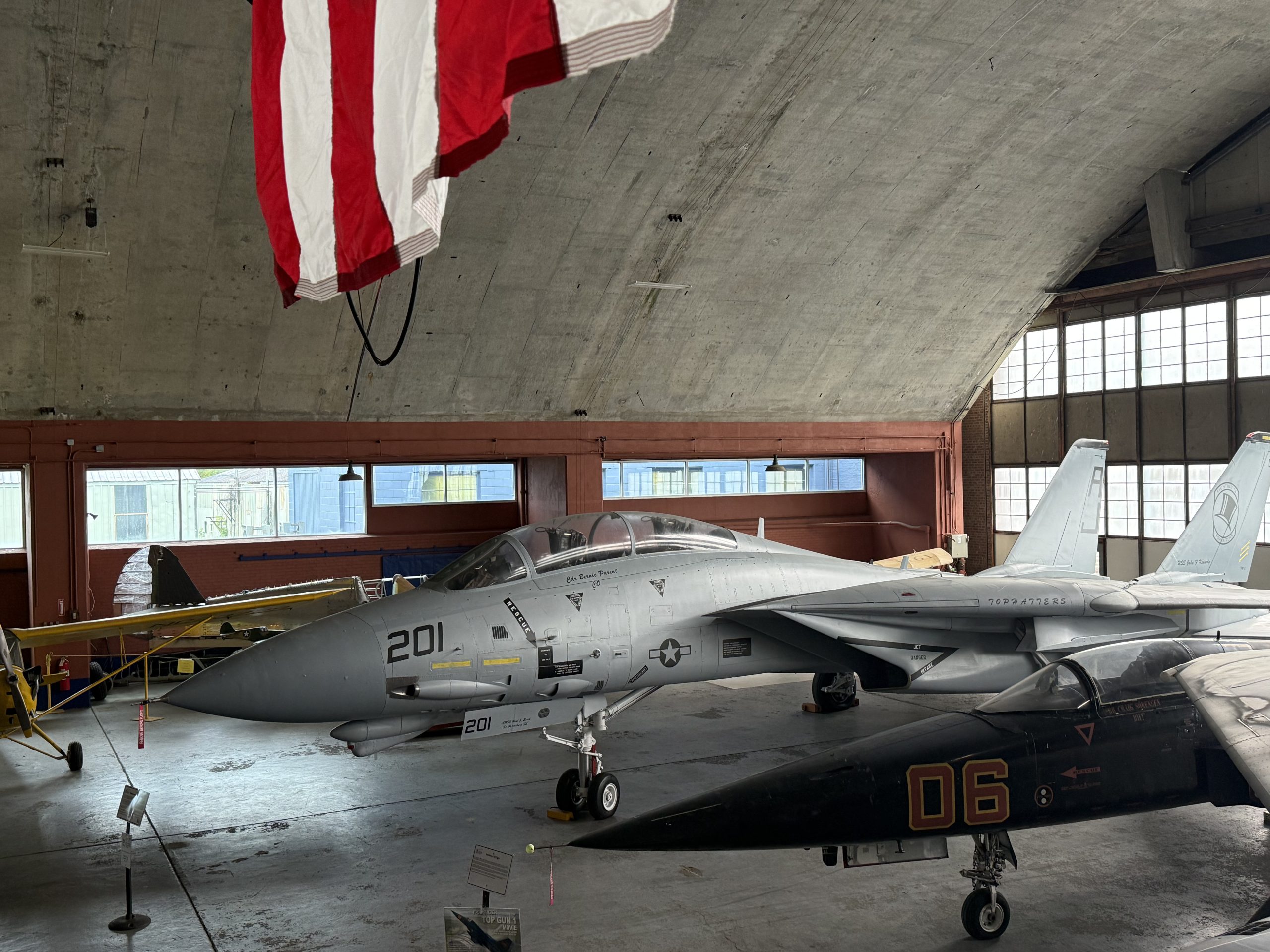
F-14 Tomcat. 19FortyFive staff photo from museum visit.
The Original Tomcat Lost Its Primary Mission, Probably Dooming The Super Tomcat-21
Grumman could have made these modifications; they knew how to build and upgrade Tomcats.
The Tomcat-21 was probably a victim of its own successor: the F/A-18, a long-range interceptor.
The F-14 was made to fight in a very special way.
Its job was to intercept masses of Soviet bombers trying to ripple-fire cruise missiles at its carrier.
Each of the six Phoenix missiles on a Tomcat had a range of 100-120 miles. Each could target a single bomber. Just four Tomcats could launch 24 Phoenix missiles.
That was enough to take on two full squadrons of Soviet Backfire bombers, with missiles to spare.
But the Soviet Union was fading as an adversary, and the mission the F-14D mastered no longer existed, or was expected to return.
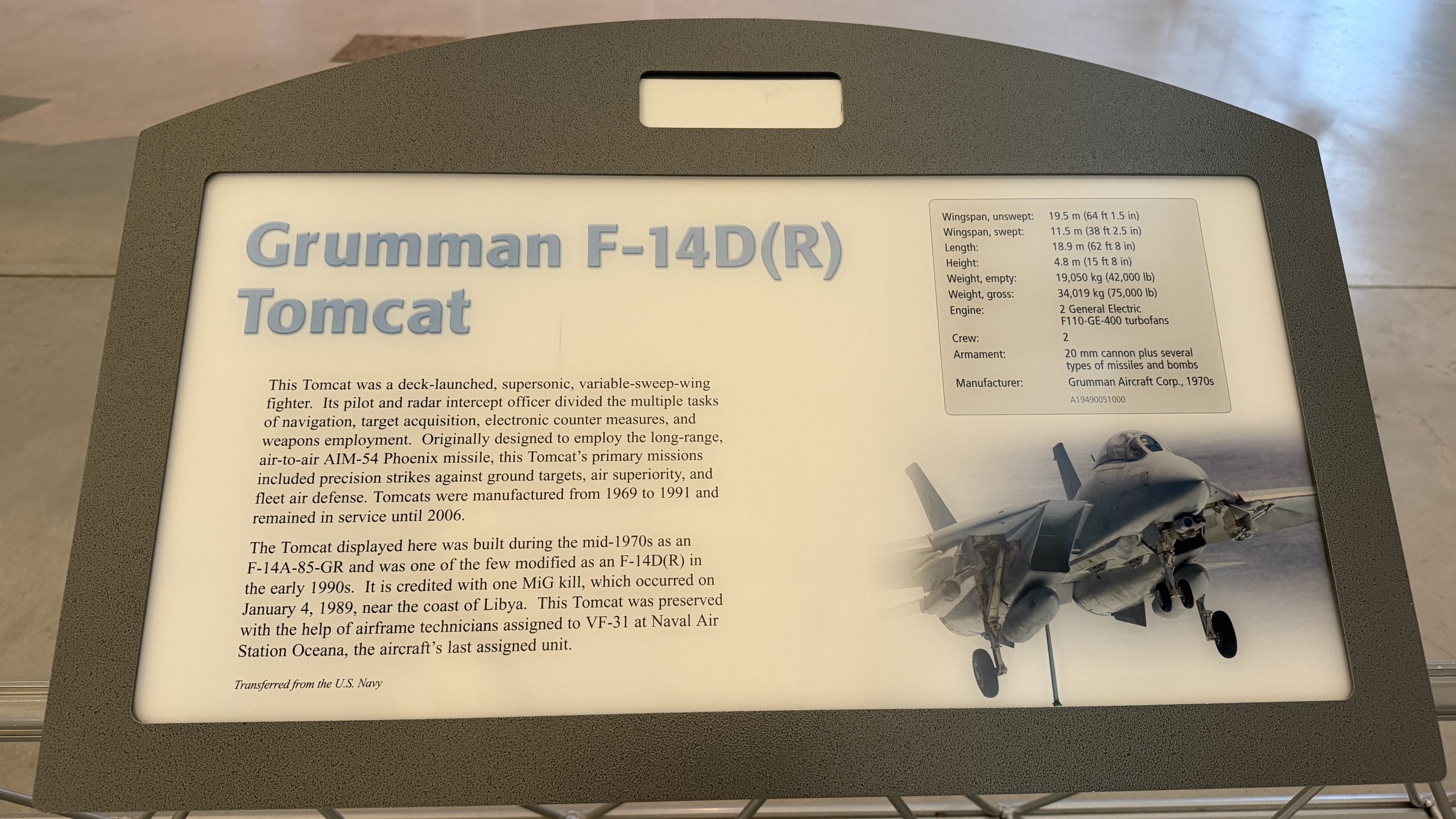
F-14 Tomcat from Steven F. Udvar-Hazy Center. Image taken by 19FortyFive staff on 9/30/2026.
The Navy Picked a Jack-of-All-Trades Over The Tomcat-21
In the end, the Navy decided on the F/A-18E/D Super Hornet. Not because it could be the blistering-fast interceptor the Super Tomcat-21 would have been, but because it could (and has) fill a variety of roles as a fighter, strike, or electronic warfare aircraft.
I don’t think the Navy got a bad deal in the Super Hornet, but the Grumman F-14E Super Tomcat 21 would have been incredible in the air.
About the Author: Sean Spoonts
Sean Spoonts is the former Editor-In-Chief of SOFREP.com. He is a military analyst, writer, and commentator whose work has appeared in Newsweek, CNS News, Ukrinform, and various 30military/veteran media networks and professional publications, including the Military Intelligence Professional Bulletin. He is a U.S. Navy veteran, having served as an Aviation Anti-Submarine Warfare Operator and Search and Rescue Helicopter Aircrewman.