
The Washington-Tehran Agreement Excludes Israel from the Room and Imposes Arrow-3 and Patriot Tests Within 60 Days
 Ahmed Al-Rashid
The Washington-Tehran Agreement Excludes Israel and Imposes Arrow-3 and Patriot Tests Within 60 Days
On June 18, 2026, the military issue with the U.S.-Iran agreement was not just that it established a ceasefire, but that it did so while Israel was reading the details from the outside. Axios's report on Benjamin Netanyahu's anger, along with what The Guardian and Associated Press published about a 60-day memorandum of understanding, presents us with an uncomfortable scene of an ally that fought alongside Washington only to find that Washington could close the war without it.
From a military perspective, this is not a matter of political dignity. When one party involved in the war does not know all the terms of its cessation, operational planning becomes more difficult than the fighting itself. Israel claims that the war achieved significant objectives and that it conducted around 14,000 air sorties with the United States, but it simultaneously acknowledges that it is not a party to the agreement and does not know all its details. Here begins the paradox that the Gulf must read well: air superiority does not always grant its holder the right to sit at the closure table.
Lebanon is the Test Item, Not the Margin of Agreement
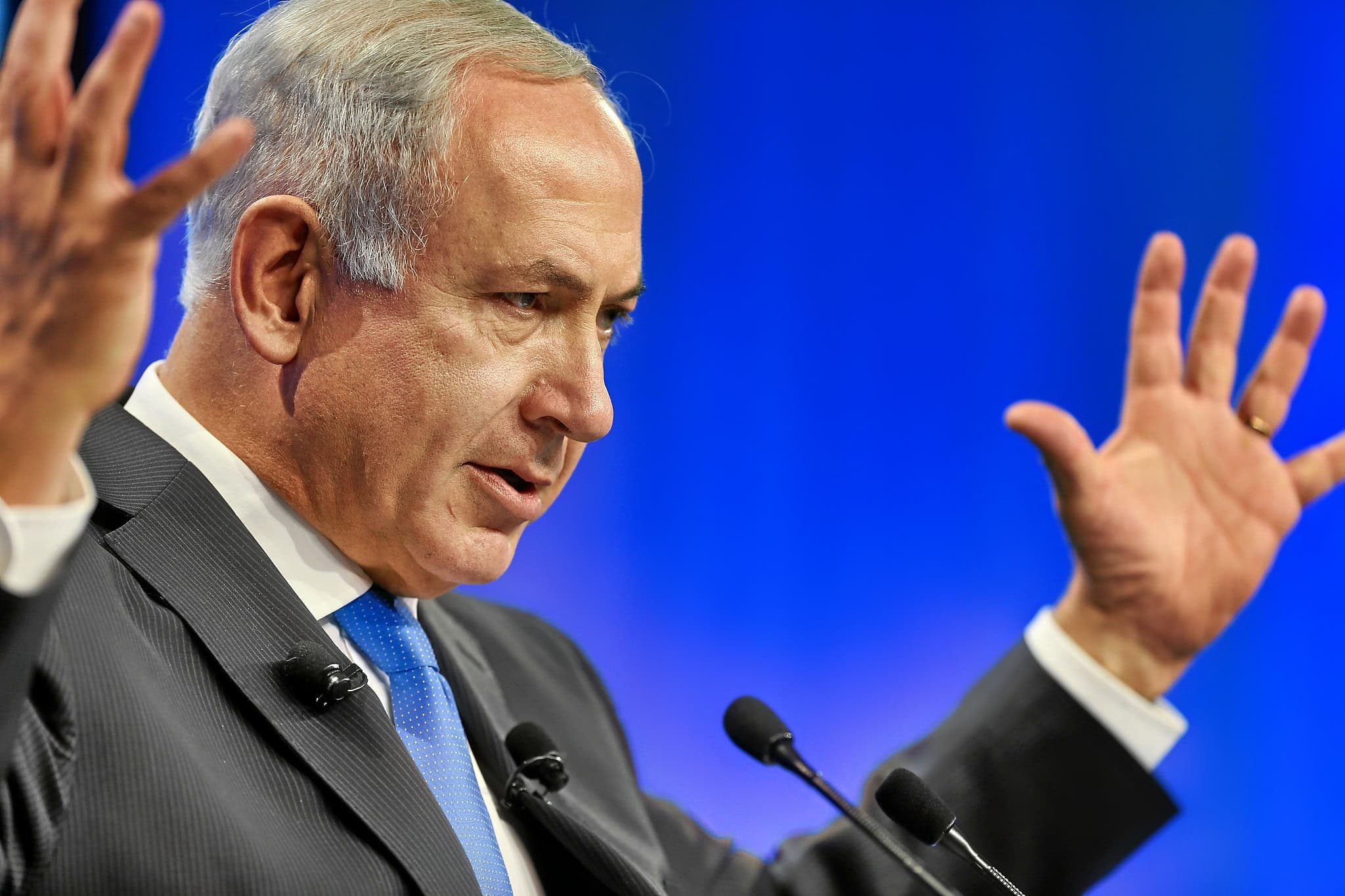
The most important paragraph is not the one discussing uranium enrichment or oil sanctions, but the one that includes Lebanon in the cessation of military operations. According to the text presented by U.S. officials to journalists, the United States, Iran, and their allies announce a cessation of operations on all fronts, including Lebanon. This formulation seems diplomatic, but militarily it pressures Israeli freedom of movement against Hezbollah, even if the Americans add that Israel can respond if attacked.
Netanyahu stated that he would not restrict himself from preventing Iran from acquiring nuclear weapons, and that Israeli forces would remain in the buffer zone south of Lebanon as long as necessary. This is not the language of a man who emerged from war reassured; it is the language of a leader trying to maintain a margin of maneuver after Washington shifted the center of gravity from the battlefield to the legal and political interpretation of the agreement.
Any military officer who has served in the region knows that the phrase "right to respond" does not equal freedom of action. The right to respond requires an incident, evidence, and American acceptance or silence. Freedom of action, on the other hand, is the ability to take the initiative before the threat is complete. Between these two concepts lies a wide space that Hezbollah may exploit to redeploy, restore communications, and test new boundaries without reaching a threshold that necessitates an open war.
Arrow-3 Succeeded, but Politics Changed the Meaning of Success
Published military estimates show that Israeli multi-layered defenses intercepted a high percentage of medium-range Iranian missiles, with the outer layer relying on Arrow-3 and the inner layers on Arrow-2 and David’s Sling, in addition to U.S. support from THAAD batteries and naval vessels equipped with SM-3 missiles. This is a technical achievement that cannot be underestimated. However, successful missile defense does not resolve the political question: Can Israel impose an end to the war on its own terms?
Israel emerged from the round with evidence that its system is capable of absorbing a significant missile shock, but it also emerged with Iran holding the opposite evidence: Tehran can make the cost of war regional and force Washington to seek a settlement before exhausting American stockpiles further. Here, it is not enough to say that Arrow-3 is excellent. The more important question is the number of interceptors, the rate of production, and the extent to which the United States is willing to allocate them to the Middle East while simultaneously having accounts in Ukraine and a larger account in the Pacific.
The Gulf Sees Its Reflection in the Israeli Mirror
What happened with Israel should awaken the memory of the Gulf capitals. Saudi Arabia, the UAE, Qatar, Kuwait, and Bahrain possess Patriot systems, and Saudi Arabia and the UAE have THAAD as an outer layer. The UAE has also used Korean systems like M-SAM, and reports have mentioned previous Israeli support for defensive elements like Iron Dome and laser weapons. However, the war revealed that the Gulf threat is shorter-range and more intense: short-range missiles, suicide drones, and constant pressure on airports, ports, and oil infrastructure.
In my opinion, the difference between Israel and the Gulf is not just in the type of metal but in the structure of decision-making. Israel has local systems, unified command, and a long training record for operating under fire. Some Gulf armies possess expensive equipment, but they still rely on American and European human and technical layers for maintenance, planning, data integration, and inventory management. Here, the equation of capability that I always repeat returns: equipment × training × institution. If one of the sides is weak, then buying a more expensive missile does not create a stronger army.
- Arrow-3 and THAAD address the long-range and high-altitude threat, but they do not solve the problem of cheap drones.
- Patriot PAC-3 is essential against ballistic missiles, but it is costly if used against cheap targets in high density.
- David’s Sling and M-SAM fill important gaps, but their true value depends on a joint warning and command network.
- Iron Dome is more suitable for short-range threats, but it does not replace active defense around bases and oil facilities.
The Sixty Days Are Not a Truce but a Stockpile Test
A CSIS study on U.S. munitions after the Iran War indicates that some stockpiles that were heavily used may take one to four years to return to previous levels, and that the demand for Patriot, THAAD, and other precision munitions will compete with the needs of other allies. This is a point that should be factored into the calculations of Riyadh, Abu Dhabi, and Doha before any celebration of reduced tension. The political truce may begin in one day, but rebuilding stockpiles does not work as quickly as a press release.
If the sixty-day negotiations fail, or if fighting resumes in Lebanon, the Gulf question will not be "Do we have Patriot?" but "How many launch-ready missiles do we have, who manages the stockpile, and who decides the priority of protection between an airbase, a refinery, and a civilian airport?" These are troubling questions, but they are the questions of real war. Armies are not measured by the number of display platforms at exhibitions, but by the number of nights they can operate when the sky is crowded.
The Deeper Lesson for the Region
The U.S.-Iran agreement does not mean that Iran has become less dangerous, nor that Israel has become militarily weaker. The more accurate meaning is that Washington still holds the political stop button in the region's wars, even when it does not possess all the tools of combat alone. This reality disturbs Israel today, but it should also disturb the Gulf. Those who tie their security to an external party should expect that this party has an electoral agenda, a stockpile of munitions, oil accounts, and adversaries in Asia.
Practically, Israel did not lose the war in the air, but it discovered that the end of the war is sometimes written in a room it cannot enter. And this is precisely the lesson that Gulf capitals must understand before they buy a new air defense layer and think they have purchased decision independence.
The sources used in this analysis include Axios on Netanyahu's reaction, The Guardian and Associated Press on the terms of the memorandum of understanding, Times of Israel on Netanyahu's statements, Atlantic Council on missile and proxy-related gaps, CSIS on U.S. munitions stockpiles, and Breaking Defense on the performance of missile defenses against Iranian attacks.
The U.S.-Iran agreement, effective June 18, 2026, excludes Israel from negotiations and mandates testing of Arrow-3 and Patriot systems. Israel's military operations, including 14,000 air sorties, are acknowledged, but it is not a party to the agreement. The U.S. and Iran declared a halt to military operations across all fronts, including Lebanon, impacting Israeli operational freedom against Hezbollah.
- The U.S.-Iran agreement excludes Israel from negotiations.
- Israel conducted approximately 14,000 air sorties during the conflict.
- The U.S. and Iran announced a halt to military operations on all fronts, including Lebanon.
- Israel's air defense systems successfully intercepted a high percentage of Iranian missiles.
- The 60-day period is seen as a test of military stockpiles rather than a true ceasefire.