
Three PLA Military Aircraft and Six Warships Appear Around the Taiwan Strait, Eastern Reconnaissance is Becoming the Norm
 Li Minghui
Three PLA Aircraft and Six Naval Vessels Appear Around the Taiwan Strait, Eastern Reconnaissance is Becoming the Norm
On September 29, Taiwan reported the discovery of three PLA military aircraft and six PLA naval vessels around the island of Taiwan, with one aircraft entering Taiwan's so-called air defense identification zone. Looking at this number alone, it does not constitute a high-intensity operation; however, when placed back into the context of activities since September, the signal changes. The PLA is transforming the eastern and southeastern sides of the island into a reconnaissance direction that can be repeatedly utilized, rather than just occasionally traversed.
The Numbers Are Small, but the Direction is More Worth Watching
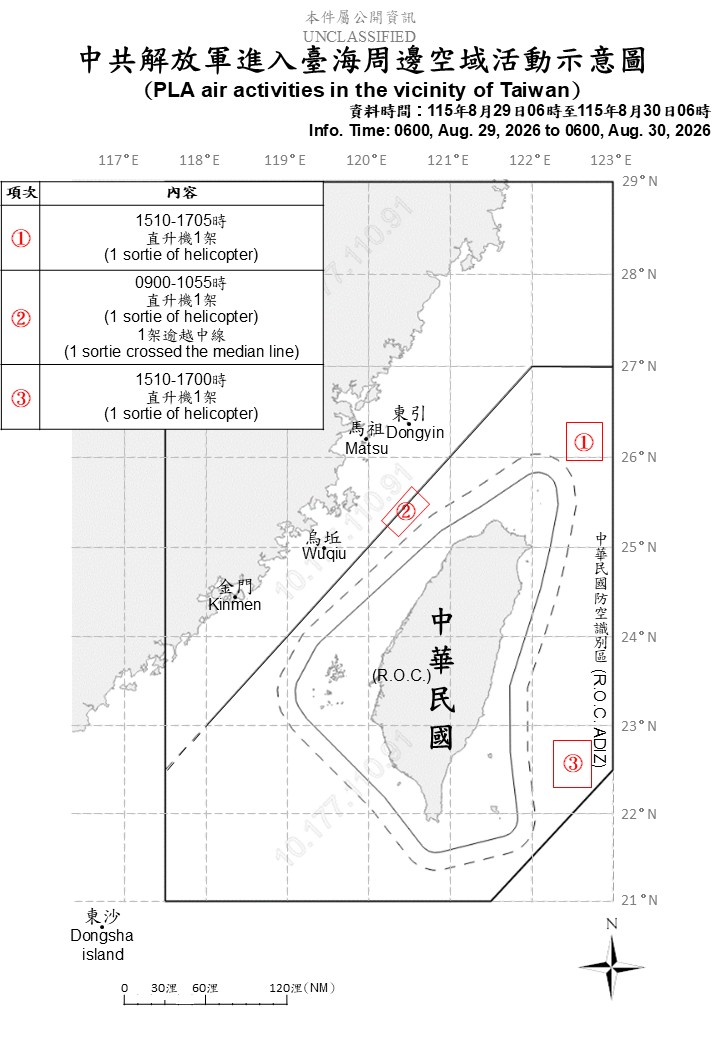
The daily data released by Taiwan's defense department is often simplified to "how many aircraft and ships today." What is truly valuable are the flight paths, formations, and frequency of repetition. An analysis by The Diplomat of activities from September 5 to 19 shows that the PLA has deployed various types of platforms including J-11, Su-30, H-6, Y-8 electronic warfare aircraft, KJ-500, and drones on the eastern side of the island. This combination is not merely to assert presence: fighter jets are responsible for escorting and compressing reaction space, electronic warfare and early warning platforms are tasked with establishing electromagnetic and air situation maps, while drones are suitable for prolonged presence near flight routes.
In simple terms, the value of operations on the eastern side lies not in "breaking through" something every day, but in continuously recording the takeoff and landing rhythms of Hualien and Taitung airports, radar activation patterns, ship and aircraft dispersal routes, and the maritime and aerial channels that external reinforcements might use. For the PLA, this is about creating a dynamic database of wartime target lists in advance; for Taiwan, it means that the traditionally quiet eastern region is becoming increasingly difficult to maintain.
Reconnaissance Directions are Serving Blockade and Strikes
The western coast of the island is the center of discussions regarding conflicts in the Taiwan Strait, but the eastern coast is Taiwan's "backdoor" connecting to the Western Pacific. If the ports and airports on the western coast are subjected to long-range fire suppression, Hualien, Taitung, and their offshore routes will bear the responsibility for decentralized deployment, supply transfer, and seeking external support. By placing drones, electronic reconnaissance aircraft, and naval vessels on the eastern side, the PLA is effectively testing a sensor-shooter link for coordinated strikes involving missile, air, and surface naval forces from target detection to engagement.
Reports on September 28 regarding the PLA's joint operations in the South China Sea also remind us not to completely separate activities in the Taiwan Strait from those in the South China Sea. The maritime and aerial coordination, coast guard presence, and pressure on the Philippines from the South China Sea may provide the PLA with another model for low-intensity, sustainable joint operations. This does not necessarily mean that the next step is to blockade Taiwan, but it can help the forces refine the integration of maritime and aerial situation sharing, long-range supply, and the connection between law enforcement and military power.
Shortcomings Still Exist Between "Seeing" and "Striking Accurately"
The military power assessment report submitted by Taiwan this year states that the PLA is developing improved Z-20 helicopters, unmanned transport helicopters, Type 076 amphibious assault ships, and new landing craft, while also strengthening low-orbit satellites, Beidou navigation, cyber warfare, and electronic warfare systems. These projects indicate that the PLA is filling in the puzzle for cross-sea joint operations, but they also expose a fact: if capabilities were already mature, there would be no need for such intensive reconnaissance, drills, and equipment catch-up.
The author believes that today's three aircraft and six naval vessels resemble a "low-cost sampling" rather than a countdown to war. What truly needs to be observed is whether drones continue to appear on the eastern side in the coming weeks, whether electronic warfare aircraft and vessels form a fixed coordination, and whether Taiwan is forced to keep more aircraft and air defense resources in the east for the long term. The last question the PLA needs to resolve is: can it stably convert the intelligence accumulated day by day into reliable strike effects under complex electromagnetic interference and external intervention conditions?
Sources
- Daily activity reports around the Taiwan Strait from Taiwan's defense department, September 29, 2026, aggregated and reprinted by Google News.
- Analysis by The Diplomat on the PLA's expansion of reconnaissance on the eastern side of the island and Taiwan's Western Pacific strategy, September 2026.
- Focus Taiwan report on Taiwan's 2026 military power report assessing the PLA's joint island landing capabilities, September 1, 2026.
On September 29, 2026, three Chinese military aircraft and six naval vessels were detected conducting reconnaissance operations around Taiwan, with one aircraft entering Taiwan's air defense identification zone. The PLA's activities in the eastern and southeastern areas of Taiwan are becoming routine, indicating a shift in their operational focus. This ongoing reconnaissance aims to gather intelligence on Taiwan's military capabilities and response patterns.
- Three PLA aircraft and six naval vessels were detected near Taiwan.
- One aircraft entered Taiwan's air defense identification zone.
- PLA reconnaissance activities in the eastern and southeastern areas of Taiwan are becoming routine.
- The PLA is testing a sensor-shooter link for coordinated strikes.
- Taiwan's eastern region is increasingly difficult to keep quiet due to PLA activities.