
Trump scales back Korea drills, citing ties with Kim Jong-un
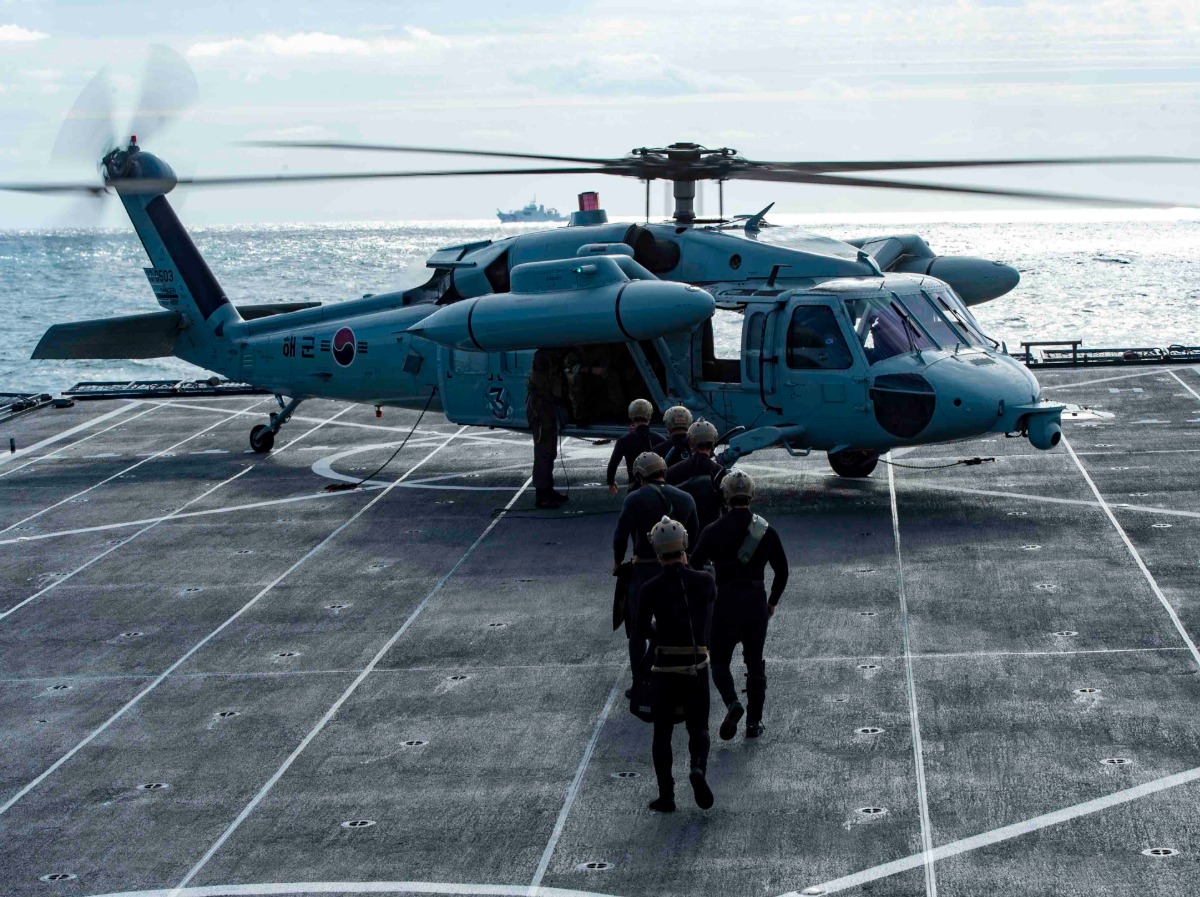
President Donald Trump has ordered the Pentagon to scale back this year’s Ulchi Freedom Shield exercise with South Korea, a move experts say could be an attempt to draw North Korean leader Kim Jong-un back to the negotiating table, the Korea Times reported.
Trump said Sunday the joint drills were costly and sent an “inappropriate and hostile signal” to North Korea, citing his “very good relationship” with Kim and describing Pyongyang as “unthreatening and respectful” during his time in office. He said it was too late to cancel the exercise outright since it was already scheduled to begin Monday, and instructed Defense Secretary Pete Hegseth to “substantially reduce” it. The remarks followed a Truth Social post in which Trump shared a photo from his 2019 meeting with Kim at Panmunjeom, writing that the two leaders “get along GREAT.”
Ulchi Freedom Shield began as scheduled Monday and is set to run 11 days through August 27, with roughly 18,000 South Korean troops taking part alongside U.S. forces. This year’s drills carry an added focus on drone warfare, GPS disruption and cyberattack scenarios, drawing on lessons from North Korean troops who have fought alongside Russian forces in Ukraine.
South Korea’s Defense Ministry said Monday the exercise was proceeding according to its originally planned schedule and scale, and that Seoul had not received a formal request from Washington to reduce it following Trump’s remarks. The allies had already planned to conduct 14 field training drills during this year’s exercise, down from 22 during the same period last year. The ministry said some planned drills could still be adjusted if Washington formally requests changes.
Cheong Wa Dae said South Korea and the United States “have closely coordinated on maintaining a solid combined defense posture and on joint exercises and training.” A presidential office official added that Seoul “will make the necessary diplomatic efforts as a ‘pacemaker,’ in close coordination with the United States.”
Yu Ji-hoon, a research fellow at the Korea Institute for Defense Analyses, said Trump appears to be seeking an early opening for talks that could lead to another summit with Kim.
“I think Trump has a strong personal desire to quickly create an opportunity for talks with North Korea and possibly another summit, and present that as a foreign policy achievement,” Yu said.
Yang Moo-jin, chair professor at the University of North Korean Studies, called Trump’s order “impulsive in form, but calculated in substance.” Yang said Trump’s directive may also target Seoul. In the same social media post, Trump noted that South Korea had declined his request to join U.S. efforts to denuclearize Iran, calling it a “somewhat unrelated” matter.
This marks the first time since the start of Trump’s second term that he has ordered joint exercises scaled back. During his first term, following his June 2018 summit with Kim in Singapore, Trump referred to the drills as “war games” and called them provocative and expensive, leading to the suspension or reduction of several exercises. Unlike in 2018, this order comes before any formal talks with Pyongyang have resumed.
North Korea has criticized this year’s Ulchi Freedom Shield ahead of its start, with Defense Minister No Kwang Chol calling the drills a demonstration of “military confrontation” and warning that North Korean forces would counter “any provocation going beyond the boundary line.” North Korea’s state media described the exercise as a “rehearsal for an aggressive war.” Pyongyang conducted its 11th ballistic missile test of the year on August 12, launching a midrange missile roughly 700 kilometers (435 miles) into the sea east of the peninsula, days after a short-range launch on August 6 ended a 48-day pause in testing.
Yu said North Korea is likely to welcome Trump’s message but will wait to see whether the U.S. actually reduces its participation before deciding how to respond. Yang said Pyongyang could eventually demand a full halt to joint exercises and push for arms reduction talks tied to recognition as a nuclear weapons state.
Yu cautioned that it remains premature to say South Korea has been sidelined, but warned Pyongyang could increasingly favor direct talks with Washington if U.S.-North Korea relations advance faster than inter-Korean ties, potentially leaving issues such as joint exercises, sanctions and denuclearization to be negotiated without full coordination with Seoul.
Content preview only. Full article available at source. View Full Article
President Trump ordered a reduction in the Ulchi Freedom Shield exercise involving 18,000 South Korean and U.S. troops, citing costs and the need to improve relations with North Korea. The exercise, which began in August 2023, focuses on drone warfare and cyberattack scenarios. North Korea condemned the drills, calling them a military confrontation, while experts believe Trump's directive may be an attempt to facilitate negotiations with Kim Jong-un.
- Trump ordered the Pentagon to scale back the Ulchi Freedom Shield exercise with South Korea.
- The exercise involves approximately 18,000 South Korean and U.S. troops.
- The drills focus on drone warfare, GPS disruption, and cyberattack scenarios.
- North Korea criticized the drills as a demonstration of military confrontation.
- Experts suggest Trump's actions may be aimed at reopening talks with North Korea.