
Trump's Ulchi Freedom Shield Cut Is a Free Concession to Pyongyang
 Marcus Chen
Trump's Ulchi Freedom Shield Cut Is a Free Concession to Pyongyang
Eighteen thousand South Korean troops were set to begin Ulchi Freedom Shield on Monday. Instead, hours before the drill was due to start, President Donald Trump took to Truth Social to call the exercise "totally inappropriate and hostile" and order the Pentagon to "substantially reduce" it. Seoul's Joint Chiefs confirmed the exercise started anyway, on schedule, and runs through August 27. That is the least surprising part of the story.
What matters is what the cut is really for, and what it signals to every ally in the Indo-Pacific watching this episode from a distance.
The Cost Argument Doesn't Survive Contact With the Exercise
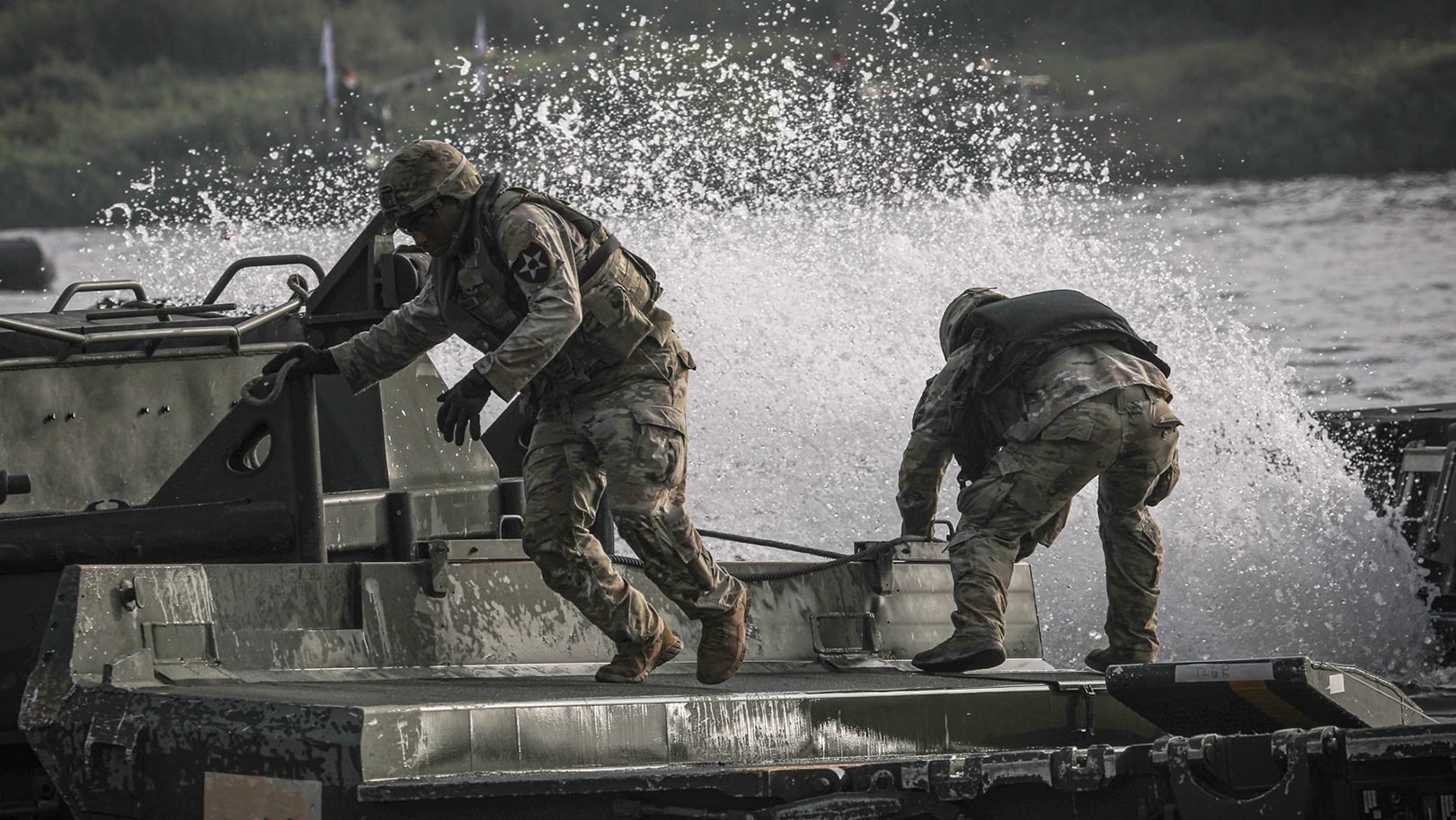
Trump's stated rationale is money. Ulchi Freedom Shield, however, is not a live-fire extravaganza. In recent years the drill has shifted toward computer-simulated missile defense, cyber defense and command-post scenarios — the training that actually matters on a peninsula defended by 28,500 U.S. troops backed by a nuclear umbrella. The marginal dollar cost of running it is small next to the cost of running it badly when it counts.
Anyone who has served with ROK-U.S. Combined Forces Command knows the value is not in the fuel bill. It is in exercising wartime operational control transfer procedures, the integration of American and Korean command structures, and the muscle memory of responding to a launch sequence that begins without warning. That is the part a "substantial reduction" directly attacks.
What the Cut Actually Buys
Read the president's post and the transaction is explicit. Trump tied the reduction to Seoul's refusal to join U.S. operations against Iran, and to his "very good relationship" with Kim Jong Un — a leader whose forces, per U.S. officials, have gained real combat experience fighting alongside Russia in Ukraine, and whose ICBMs, per U.S. Northern Command's Lieutenant General Joseph Jarrard, can now deliver a nuclear payload anywhere in North America.
"These exercises are not only costly... but send a signal that is totally inappropriate and hostile, to a Country that, as long as Donald J. Trump has been President, has been unthreatening and respectful." — President Donald Trump, Truth Social, August 17, 2026
That sentence is doing a lot of work. "Unthreatening and respectful" is a description of a state that fired ballistic missiles into the Sea of Japan within the past week, that is supplying weapons to Russia's war in Ukraine, and that has spent a decade expanding an arsenal Washington cannot fully intercept. It is also the description Pyongyang has spent decades trying to get Washington to accept. Trump handed it over for free, hours before the peninsula's largest annual exercise was due to begin.
Jenny Town, who runs the Stimson Center's 38 North program, put it plainly in comments cited by Reuters: the move "may be part of a larger effort to create a diplomatic opportunity with Pyongyang... although the haphazard nature of this move is unlikely to make much of an impression in Pyongyang."
That is the correct read. Kim does not need a cheaper exercise. He needs sanctions relief, legitimacy, and a U.S. commitment to stop deploying the systems the drills rehearse. Cutting a computer-simulated exercise delivers none of those. It delivers exactly one thing: proof that alliance commitments are transactional and revocable.
The Bill Lands on Seoul — and Tokyo, and Taipei
Here is the calculation that should keep Indo-Pacific planners up at night. If the largest annual exercise with the ally hosting 28,500 American troops can be cut over a trade dispute and a request to join a war in the Middle East, what exactly is the commitment that underpins every other posture decision in the region worth?
- Ulchi Freedom Shield: August 17-27, approximately 18,000 ROK personnel
- U.S. forces in Korea: 28,500, with Seoul's burden-share payments rising annually
- Recent DPRK activity: ballistic missile launches into the Sea of Japan within the past week
- NORTHCOM assessment: DPRK ICBMs capable of reaching North America with nuclear payloads
Seoul's Blue House responded by expressing hope for "meaningful dialogue" between Washington and Pyongyang — a diplomatic necessity, since it cannot veto the decision of its own ally. CSIS's Victor Cha offered a more cynical read: Trump wants to engage Kim as a way to pry North Korea away from Russia, which has been using Korean troops and missiles in Ukraine. That goal is real. The method is not.
You do not weaken the alliance that makes your leverage credible and then expect to extract concessions at a summit. That is negotiating against yourself. Pyongyang's entire bargaining position rests on the assumption that the U.S. commitment to the peninsula is durable; the president just confirmed it is not. And Seoul, which signed a $350 billion investment framework with Washington last year and has watched the allies squabble over Coupang, trade and burden-sharing, just learned that every one of those disputes is a potential lever on its own security.
The Deterrence Math Doesn't Change
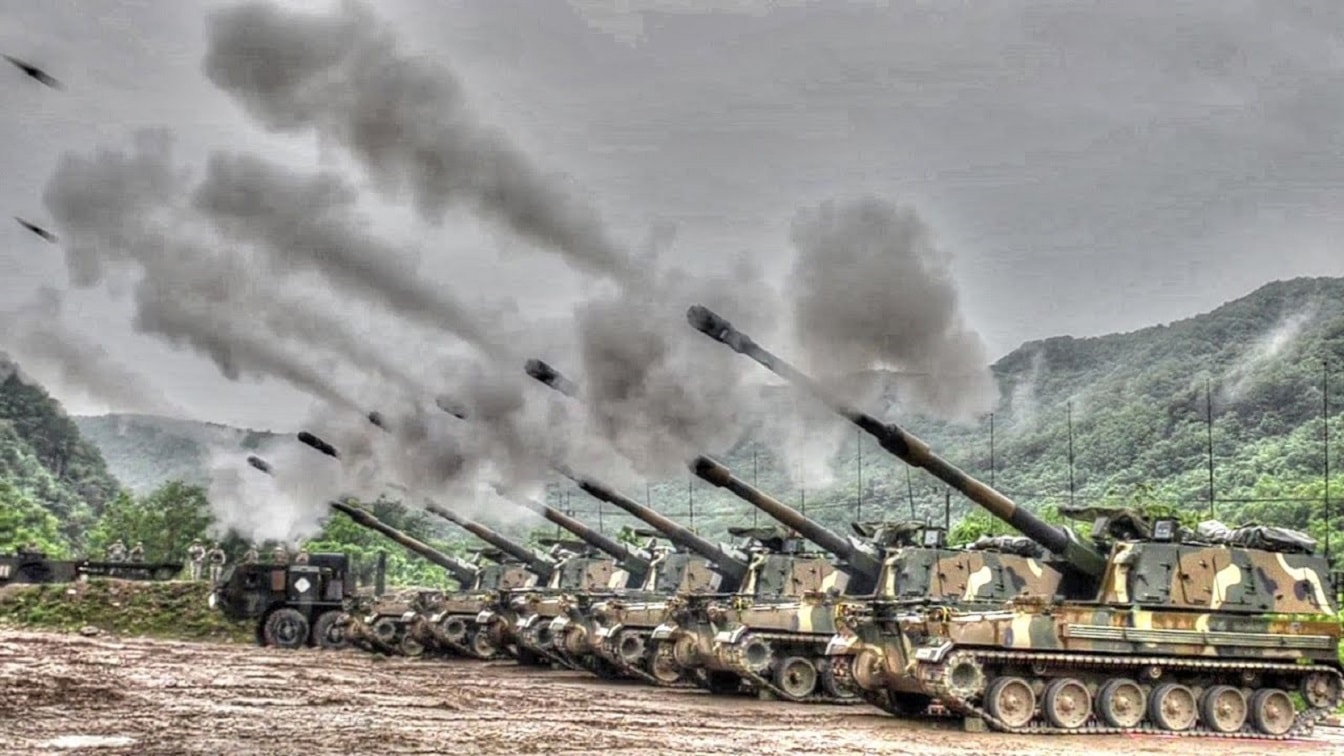
None of this changes the military balance on the peninsula. The K9s still sit in their firing positions. The missiles still fly in simulation. But deterrence is not a stockpile; it is an expectation held by adversaries and allies about what you will do. That expectation was priced into the drills. The president just marked it down.
Cutting Ulchi Freedom Shield saves Washington pennies and buys nothing in Pyongyang. What it costs is the working assumption — in Seoul, in Tokyo, and everywhere else in the region — that the American commitment survives the next post. Kim didn't have to fire a missile to win this round. He just had to wait for one.
President Trump ordered a substantial reduction of the Ulchi Freedom Shield exercise involving 18,000 South Korean troops, scheduled from August 17 to 27, 2026. This decision, made hours before the exercise began, is perceived as a concession to North Korea, which has recently conducted ballistic missile launches. The reduction raises concerns about U.S. military commitments in the Indo-Pacific region and the implications for regional allies.
- Trump ordered a substantial reduction of the Ulchi Freedom Shield exercise hours before it began.
- 18,000 South Korean troops were set to participate in the exercise.
- The exercise runs from August 17 to August 27, 2026.
- North Korea has recently launched ballistic missiles into the Sea of Japan.
- The reduction is seen as a concession to North Korea amid ongoing tensions.