
Tu-22M3 near Irkutsk shows the cost of wear and tear of Russia's long-range aviation in 2026
 Dmitri Volkov
Tu-22M3 near Irkutsk shows the cost of wear and tear on Russia's long-range aviation in 2026
One lost Tu-22M3 does not change the course of the war. But this is precisely the unpleasant detail for the Russian General Staff: in 2026, even a single accident involving long-range aviation is no longer statistical noise. The Russian Ministry of Defense confirmed that on June 15, the Tu-22M3 bomber crashed while approaching to land in the Irkutsk region during a training flight; according to the official version, the aircraft was unarmed, the crew ejected, and a commission from the Aerospace Forces was sent to the crash site. The Moscow Times, citing Interfax, specifies that the crash site is located near Svirsk, about 50 kilometers from the Belaya airbase, where heavy bombers Tu-22M3 and Tu-95 are stationed. This geographical detail is more important than dramatic video footage: Belaya was already among the bases affected by the Ukrainian operation "Web" in 2025, and now a non-combat loss is being recorded near it.
An accident without munitions does not mean an accident without military significance
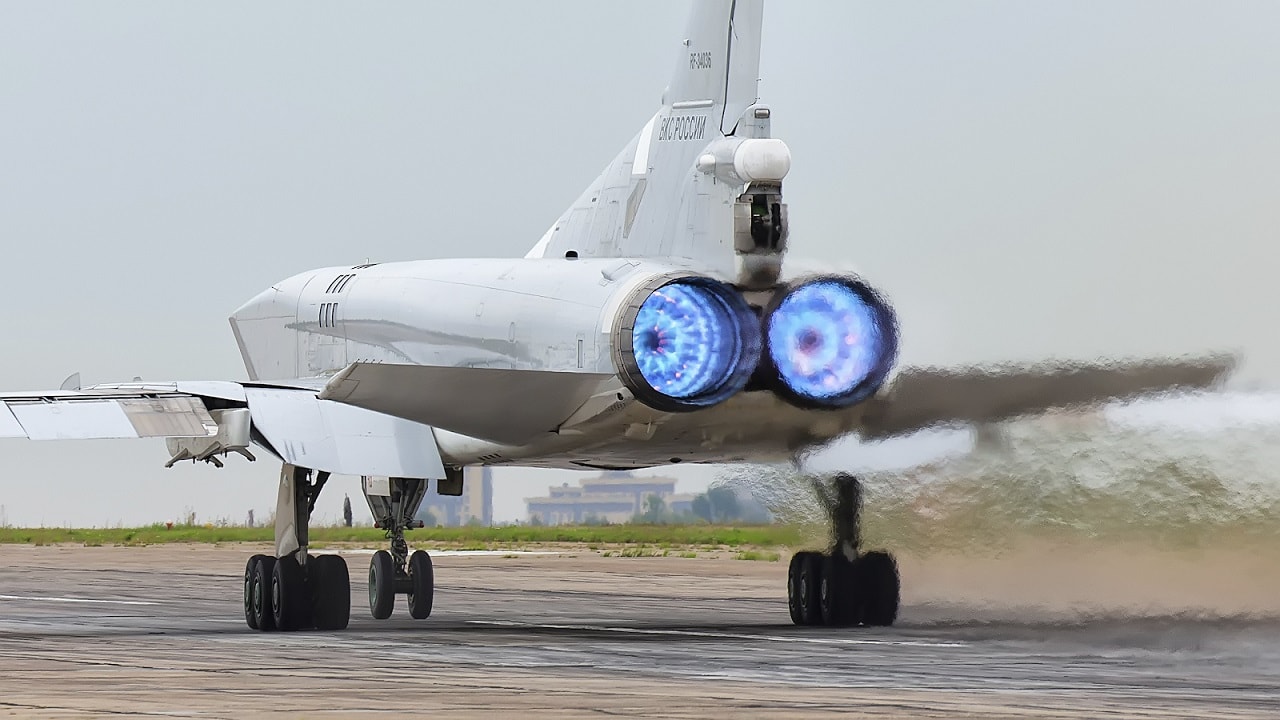
Kiev and Ukrainian specialized publications report the same basic narrative: the aircraft crashed while approaching to land, the crew of four managed to leave the aircraft, and preliminary causes in Russian media cite technical malfunction or engine failure. These details still require an official investigation, but for military analysis, the established fact is sufficient. The Tu-22M3 is not a front-line Su-25 and not a disposable drone. It is a Soviet supersonic missile carrier, designed as a naval and theater strike tool, and in the war against Ukraine, it has turned into a platform for launching X-22 and X-32 missiles from deep within Russian airspace. Its value is determined not only by range and speed but also by the fact that such platforms are becoming scarce, and Russia is effectively not producing new ones.
Here, one must be cautious with the numbers. Open estimates vary: 19FortyFive reported in the spring of 2026 about approximately 27–30 operational Tu-22M3s after losses and wear; Ukrainian estimates are usually harsher, and Russian official data, as usual, is less verifiable. But the order of magnitude is clear. This is not a fleet of hundreds of aircraft. Production of the Tu-22M3 ended in the 1990s, the modernization program for the Tu-22M3M is progressing slowly, and the NK-25 engine has long ceased to be a serial product in the normal Soviet sense of the word. Therefore, each crashed aircraft is not just a minus one unit in the departmental table, but a minus set of components, hours of resource, trained procedures, and spare parts that could have been used to maintain the remaining aircraft.
The main problem for Russia is not the Ukrainian missile, but the Soviet resource
After 2022, Russia has been forced to use long-range aviation in a mode for which the late Soviet maintenance system was only partially designed. In the USSR, the heavy fleet relied on a large repair base, planned component replacements, factory cooperation, and a reserve of aircraft from which resources could be temporarily extracted. The Russian Federation inherited the aircraft but did not fully inherit the industrial depth. This is a common post-Soviet mistake: to equate the presence of an aircraft airframe with the presence of a combat aviation system. The airframe can be shown in a parade. The engine resource is not visible in a parade.
The Tu-22M3 is particularly vulnerable to this aging logic. The aircraft is large, complex, with variable-sweep wings, a heavy powerplant, and a specific missile role. It cannot be replaced one-for-one by the Su-34: the front-line bomber can carry different munitions but does not replicate the same launch profile for heavy X-22/X-32 missiles. And it cannot be replaced by the "Geran" drones, which provide mass and overload air defense but do not deliver the same kinetic and psychological impact that a salvo of heavy missiles creates. Therefore, the loss of a Tu-22M3 narrows not the entire Russian strike potential but a specific segment—the long-range missile-carrying contour, which has already suffered from Ukrainian strikes on airfields.
From X-22 to "Gerans" — a forced restructuring of the strike economy
The accident near Irkutsk occurred against the backdrop of the largest Russian combined attacks on Ukraine. On the night of June 14–15, according to the Ukrainian Air Force, Russia launched 70 missiles and 611 drones; The Guardian reported damage to the Assumption Cathedral of the Kyiv-Pechersk Lavra, casualties in Kyiv and Kharkiv, and the use of a mix of missiles, "Shaheds," "Gerbers," and decoys. This shows that Moscow is not abandoning mass strikes. But the structure of the strike is changing: more and more burden is being shifted to cheap drones and trajectory combinations, while expensive and old carriers of heavy missiles are becoming not a universal hammer but a limited resource for specific phases of the campaign.
This restructuring is often mistakenly interpreted as a sign of strength: Russia, it is said, has found a cheap formula for exhausting Ukrainian air defense. Partially, this is true. But the cheap formula arises not only from innovation but also from the inability to endlessly expend the expensive one. The Soviet school liked to talk about a "rational combination of means of destruction." In the current version, the word "rational" is too flattering. Rather, it is about the accounting of scarcity: missile carriers are aging, cruise missiles require a complex component base, long-range aviation airfields are no longer an absolutely safe rear, and drone decoys allow concealing this weakness behind a large number of aerial targets.
Belaya and Irkutsk bring the war back to the deep rear
The proximity to Belaya gives special significance to the incident. Russian propaganda has become accustomed to explaining losses on the front as actions of the enemy, while accidents in the rear are seen as coincidences. But in a military system, coincidence is often a name for accumulated wear and tear. If an airbase that has survived Ukrainian strikes continues to maintain heavy bombers at a high pace, the burden falls on technicians, regulations, spare parts, and flight crews. Even if a specific Tu-22M3 was not damaged by Ukrainian weapons, its loss occurs within the same system of pressure: the war extends the maintenance shoulder, increases flight intensity, accelerates the cannibalization of components, and forces the retention of old aircraft in service longer than would be reasonable in peacetime.
Comparisons with the 1990s are inevitable here, but incomplete. Back then, Russian long-range aviation suffered from underfunding and downtime; today it suffers from overuse and the inability to quickly restore the Soviet production ecosystem. In both cases, the result is similar: the paper strength diverges from real readiness. The difference is that in the 1990s, aircraft aged on the tarmac, while now they are aging under war, sanctions, and the threat of Ukrainian long-range strikes. This is more expensive and dangerous.
Strategic conclusion
The loss of one Tu-22M3 near Irkutsk will not stop Russian strikes on Ukraine in June or July 2026. Moscow will retain the ability to launch mixed packages of ballistic missiles, cruise missiles, "Gerans," "Gerbers," and decoys. But this accident shows the limit of another magnitude—not the number of targets in one night attack, but the resilience of complex Soviet technology in a war of attrition. The Russian army knows how to compensate for shortages with a mass of simple means, but it does not know how to quickly reproduce rare platforms created by a different economy and a different industrial culture. If accidents, strikes on airfields, and shortages of components continue, the Tu-22M3 will remain in service but will be used more cautiously, episodically, and with an increasing cost for each flight. Russian long-range aviation will not disappear tomorrow. It will age publicly—and this is perhaps worse for Moscow.
Sources
- The Moscow Times, June 15, 2026 — report on the crash of the Tu-22M3 in the Irkutsk region citing Interfax and the Russian Ministry of Defense.
- Kyiv Independent, June 15, 2026 — data on the role of the Tu-22M3 as a carrier of X-22 and X-32 in the war against Ukraine.
- Defense Express, June 15, 2026 — details about the Svirsk area, the crew, and the preliminary version of technical malfunction.
- The Guardian, June 15, 2026 — data on the Russian attack with 70 missiles and 611 drones on Ukraine.
- 19FortyFive, April 30, 2026 — open estimate of the number of operational Tu-22M3s and the problem of irrecoverability of these aircraft.
A Tu-22M3 bomber crashed in Irkutsk Oblast on June 15, 2026, during a training flight, with the crew successfully ejecting. The aircraft was reportedly unarmed, and preliminary reports suggest a technical malfunction as the cause. This incident underscores the operational challenges faced by the Russian Air Force, particularly regarding the aging fleet of long-range bombers.
- A Tu-22M3 bomber crashed in Irkutsk Oblast on June 15, 2026.
- The aircraft was reportedly without munitions during the crash.
- The crew of four successfully ejected before the crash.
- The preliminary cause of the crash is believed to be a technical malfunction or engine failure.
- This incident highlights the operational strain on Russian long-range aviation.