

Summary and Key Points: Pakistan is on track to become the first export customer for China’s J-35 stealth fighter. Islamabad took 63% of China’s arms exports, and Pakistani reports have cited a 40-jet order, which the defense minister denies. Pakistan also flies American F-16s under a US upgrade deal running into the 2040s. Turkey lost the F-35 in 2019 to Russian S-400s; whether Washington will tolerate a J-35 deal remains the open question.
The J-35 Question
The Shenyang J-35 is China’s second fifth-generation stealth fighter. Introduced in 2025, the aircraft made China the second nation in the world to operate two fifth-generation models. The J-35 is a carrier-capable naval fighter, designed to operate aboard China’s Type 003 Fujian aircraft carrier.
However, the PLAAF also operates a land-based version, the J-35A.
Before the Chinese military expressed interest in the aircraft, the J-35, then called the FC-31 Gryfalcon, was intended only for export.
Today, China is still probing the market for international customers.
So far, only one nation has shown interest in acquiring the J-35: Pakistan.
Pakistan has expressed interest in the J-35 on several occasions.
However, with Islamabad seeking to maintain good relations with Washington, it is uncertain whether China will risk exporting its valuable fifth-generation fighters, lest they fall into American hands.
J-35: Balancing Beijing and Washington
In recent years, Islamabad has deepened its military ties with Beijing. China collaborates with Pakistan to produce tanks, such as the Al-Khalid and Haider. China also provides aircraft like the Chengdu J-10C and helped to develop and produce the JF-17 multi-role fighter.
The two militaries remain friendly, largely because of their mutual distrust toward India.
China has led Pakistan’s military modernization efforts, helping train and equip the Pakistani Armed Forces.
From 2020 to 2024, Pakistan accounted for roughly 63 percent of China’s arms exports, or roughly 81% of Pakistan’s arms imports.
On several occasions, Islamabad signaled interest in procuring the J-35 from Beijing.
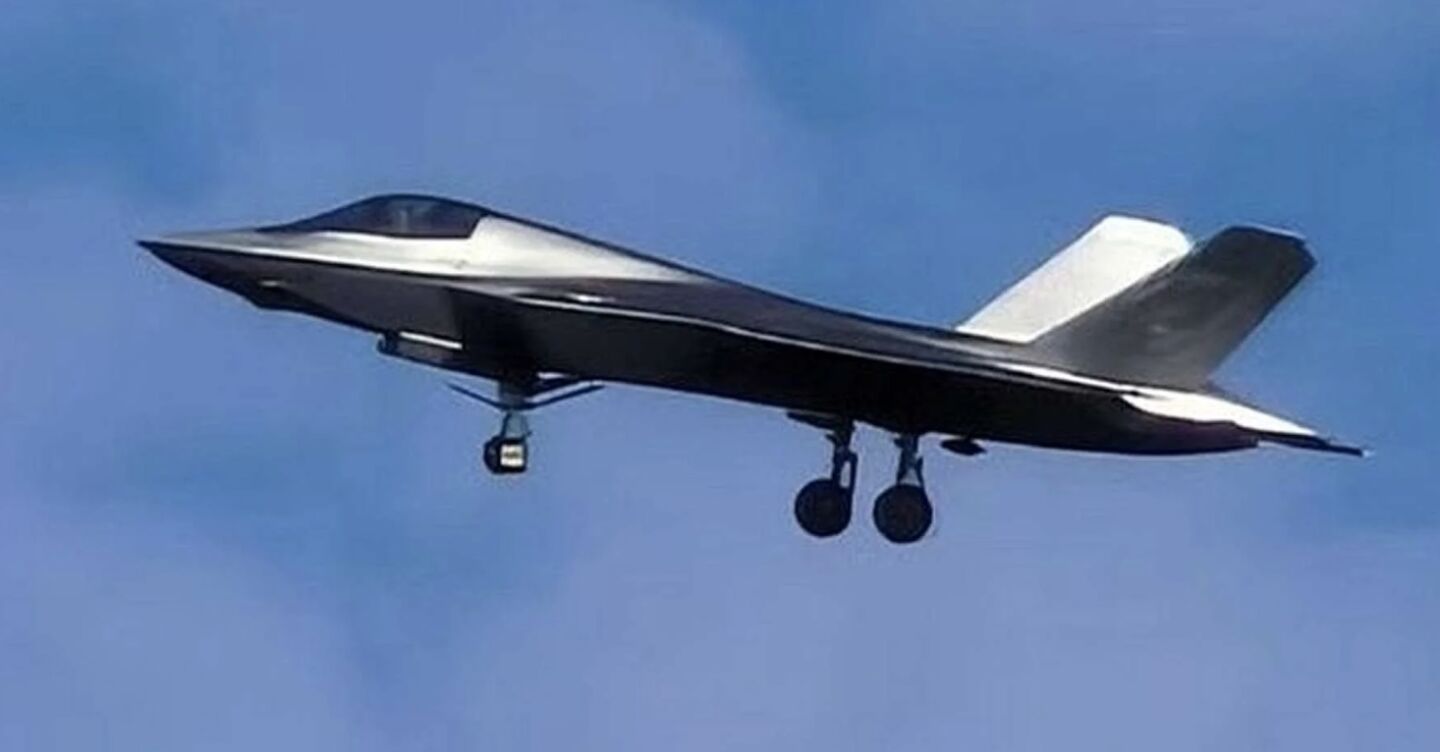
J-35 image from Weibo. Screenshot Image.
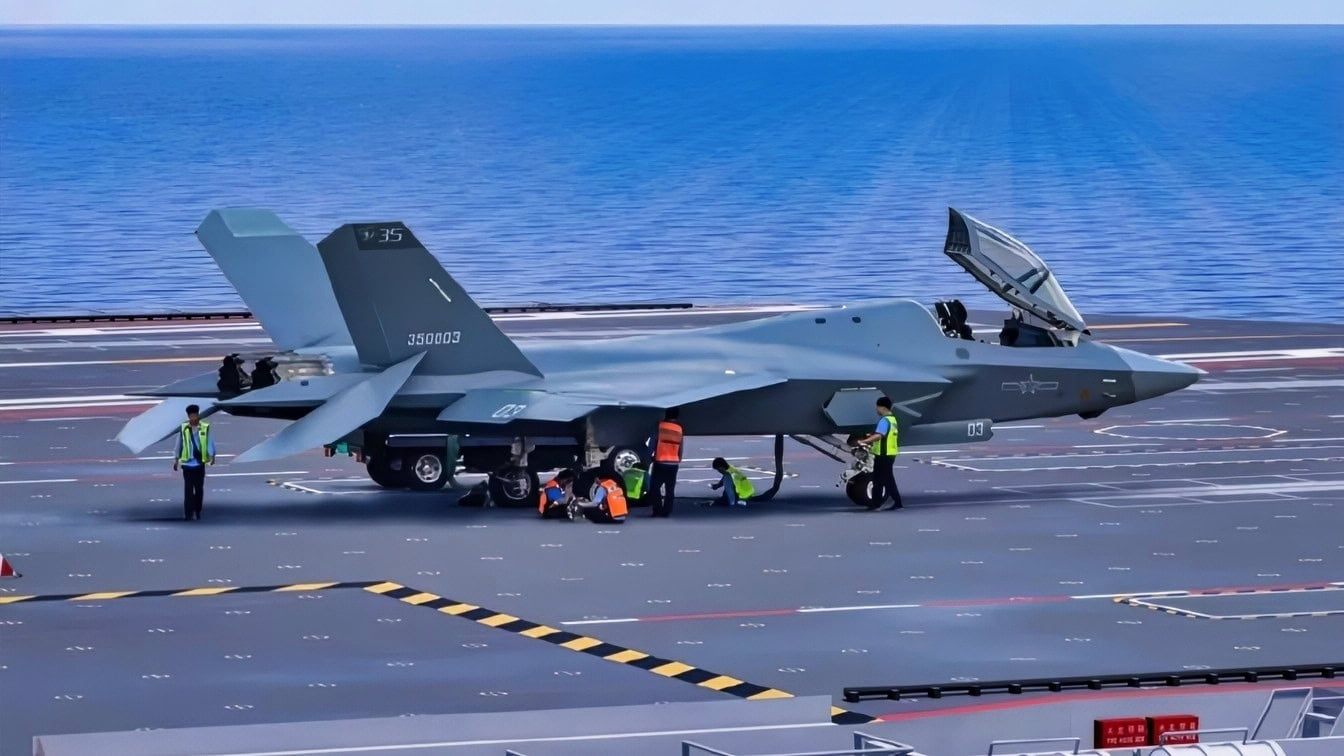
China J-35 Blue Shark Stealth Fighter
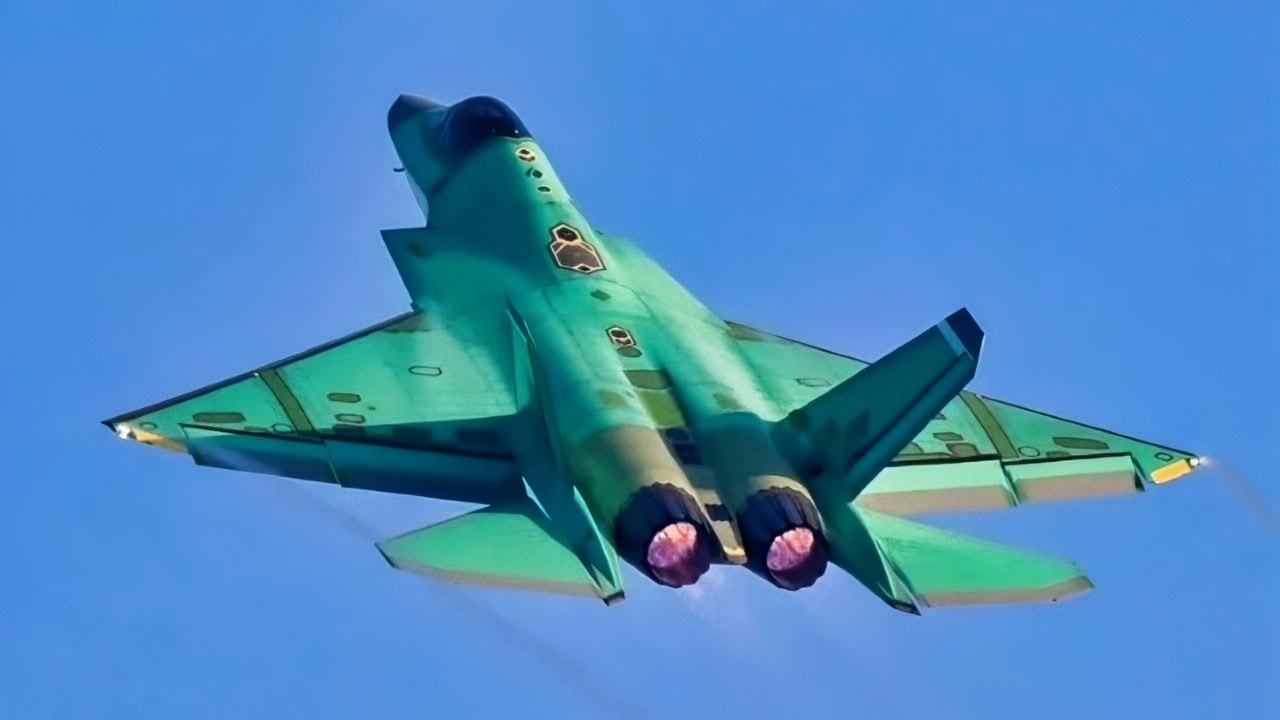
J-35A Stealth Fighter. Image Credit: Social Media Screenshot.
At the same time, Islamabad remains committed to maintaining its ties to the West. Last month, Pakistan signed a $686 upgrade deal with the U.S. to maintain its F-16 fleet.
The deal includes new datalink systems, encryption gear, and maintenance to keep Islamabad’s aircraft airworthy until the 2040s.
However, the U.S. has not missed Pakistan’s deepening ties with Beijing.
When Pakistan bought the American aircraft, the deal came with a few terms and conditions.
Since Islamabad operates Chinese aircraft with the help of Chinese personnel, the F-16s had to be kept in separate facilities, with access tightly restricted.
Additionally, Pakistan had to host a team of technical specialists at the Shahbaz and Mushaf airbases, where the F-16s are deployed.
The U.S. was hesitant to export fighter jets to Islamabad in the first place, but since Pakistan proved to be a vital partner during the Global War on Terror after the 9/11 attacks, relations between the two improved.
Will Washington Allow Pakistan to Operate Chinese Stealth Fighters?
The U.S.takes these potential security threats seriously.
In 2019, Washington blacklisted Turkey from the Joint Strike Fighter (JSF) program, preventing Ankara from purchasing the F-35, after Turkey purchased several Russian-made S-400 air defense systems.
Operating the S-400 and the American stealth fighter would have given the Russians a window into the F-35’s advanced capabilities, which Washington deemed unacceptable.
The U.S. also imposed sanctions against Turkey, which the Turks have been trying to lift since then.
Earlier this year, the Trump administration offered to remove sanctions against Ankara and restore its place in the JSF program if it agreed to sell the Russian air defense systems.
Pakistan earned Washington’s trust by agreeing to keep its F-16s separate from Chinese equipment.
However, as its fleet ages, Islamabad may look to the J-35 as a replacement, which may be a bridge too far for the U.S. Under the current deal, the U.S. has agreed to service Pakistan’s F-16s until the 2040s, allowing the U.S. and Pakistani Air Forces to maintain close ties for at least another decade.
Washington might approve of a J-35 deal with China if Pakistan keeps its Chinese and American gear separate.
However, Islamabad already provoked the ire of the Americans before, when it positioned its F-16s at an unapproved airbase during a 2019 clash with India.
Pakistan Will Acquire the J-35… Eventually
In the past, Pakistan has made contradictory claims regarding the J-35.
In 2024, Pakistani media reports claimed that the PAF ordered 40 J-35s from China.
Later, Pakistani officials said the air force had already begun training pilots to operate the J-35 and was considering buying three aircraft with PL-17 BVR missiles.
Other officials seemingly confirmed Islamabad’s intentions to procure the aircraft, with the first J-35 deliveries reportedly expected by the end of 2026.
However, when asked about the deal, Pakistan’s defense minister, Khawaja Asif, denied any procurement, saying such claims existed only in the media.
China has remained silent about any deals with Pakistan.
The risks of exporting the J-35 cut both ways.
At the height of the Cold War, the U.S. used covert action extensively to acquire Soviet aircraft from the USSR’s customers.
However, given Pakistan’s close military ties, Pakistan is unlikely to allow the U.S. access to any Chinese stealth fighters or do anything that might undermine the decades of goodwill Islamabad has built with Beijing. As things stand, Pakistan is on track to become the J-35’s first export customer.
While no official agreement has been confirmed, Pakistan’s pivot toward China and China’s efforts to export the J-35 suggest an agreement is only a matter of time. Whether the U.S. will allow such a deal remains to be seen.
About the Author: Isaac Seitz
Isaac Seitz, a Defense Columnist, graduated from Patrick Henry College’s Strategic Intelligence and National Security program. He has also studied Russian at Middlebury Language Schools and has worked as an intelligence Analyst in the private sector.