
Turnbull's AUKUS Warning Is Politically Convenient to Ignore and Industrially True

 Marcus Chen
Turnbull's AUKUS Warning Is Politically Convenient to Ignore and Industrially True
Malcolm Turnbull told an independent inquiry into the AUKUS submarine agreement on Monday that "there is a very real risk Australia gets no Virginia-class subs at all. This risk is acknowledged everywhere but in Canberra." The former prime minister called the A$368 billion pact a "bipartisan error" and an "abdication of Australian sovereignty in matters of national defence." In the same week, the Australian Submarine Agency handed Lockheed Martin a multi-year contract to build a sovereign Virginia-class combat systems integration capability — the first time a nuclear submarine combat system would be updated outside the United States. Both things are true at once: Canberra is buying a capability, and it is buying it on someone else's schedule.
The political instinct is to file Turnbull under "former leader with an axe to grind" and move on. He called faith in the deal "stark staring bonkers" in a Guardian video. The Nightly reported him describing the UK submarine industry as being in "disarray," and The Times and The Telegraph quoted him saying Britain cannot deliver the boats it promised. None of this is new — Turnbull has opposed AUKUS since 2021. What is new is that he put the structural argument on the record at a formal inquiry, and the structure does not depend on his politics.
The Certification Clause Is the Trap
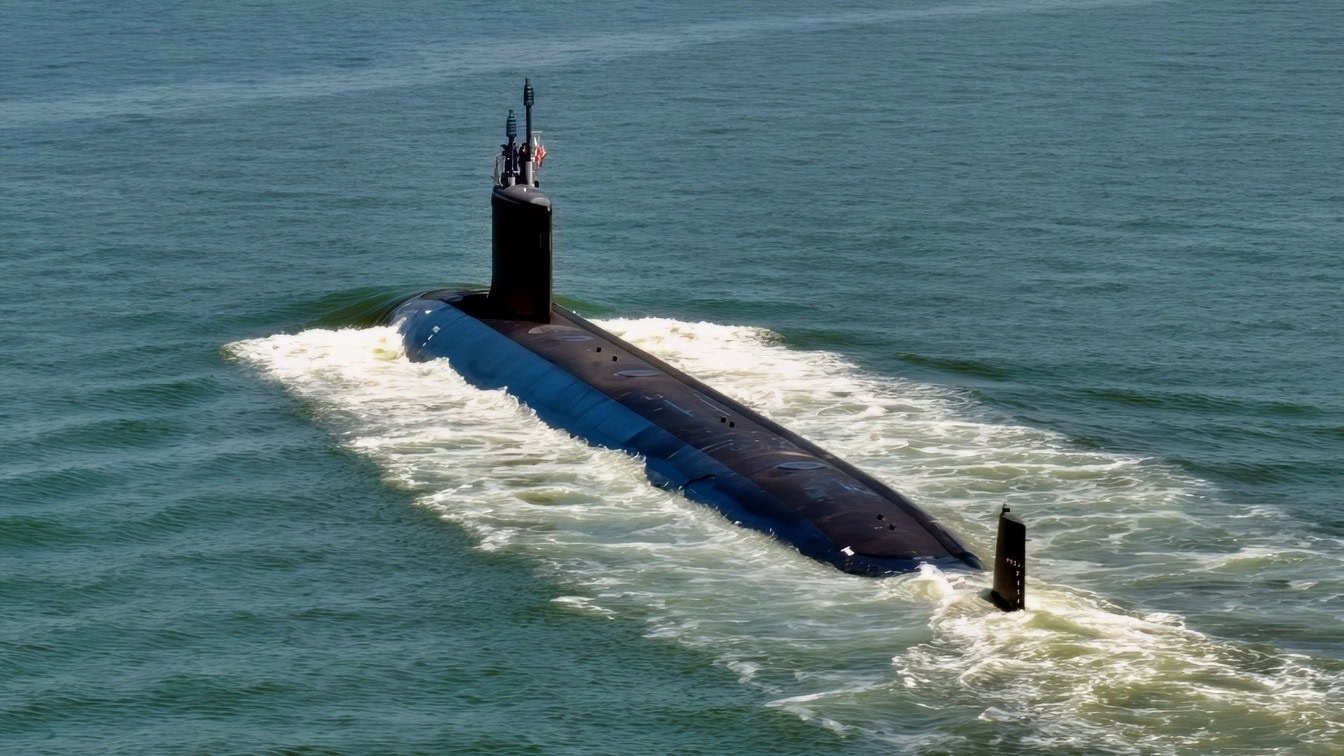
Turnbull's sharpest point was not about British shipbuilding. It was about American law. Under the arrangement, a future US president must certify that transferring Virginia-class boats to Australia will not degrade the US Navy's own force — the so-called certification clause. "In what political fantasy land is a president going to do that if they're already short?" Turnbull asked. He was careful to add that the Americans have been "utterly transparent" about the constraint. That is the whole problem: nobody is hiding anything. The deal's delivery is contingent on a certification that becomes less likely the longer US yards stay behind schedule.
The Lockheed Contract Is Real Progress and Tiny Money
The ASA's award to Lockheed Martin — reported at between A$26.5 million and A$29.3 million (roughly US$17-21 million) — is the first-ever combat systems integration work for a nuclear submarine conducted outside the US. Defense Daily, Janes and Tech Times all flagged it as a historic first on Aug 10-11. It is genuinely important: it means Australia will eventually maintain and update Virginia combat systems in-country rather than shipping everything through US channels.
But measure it against the program. A$29 million of integration capability against a A$368 billion commitment — and against the July 29 US Navy award of US$76.6 billion for nine Virginia and five Columbia hulls, a contract that funds a build rate the yards have not yet met. The Lockheed deal builds sovereignty in software and engineering. It does not build a single hull.
The Math Turnbull Is Actually Right About
Here is the calculation that matters. The US Navy builds roughly two Virginia-class boats a year — the 19FortyFive analysis and my own reporting on the Block VI contract both land there. It needs two-plus just for itself, while Columbia-class production absorbs the same two shipyards. On July 29, USS Minnesota returned to Guam as the first forward-deployed Virginia-class submarine — the Navy pulling boats closer to the fight precisely because it cannot out-build the demand. Meanwhile Osborne is getting another US$3.2 billion, Leidos Gibbs & Cox won the dry dock design, and PACOM ran the first AUKUS maintenance period in Australia on Aug 1. All of that is infrastructure. None of it changes the delivery rate.
"We cannot complain because the Americans have been utterly transparent about this." — Malcolm Turnbull, independent inquiry, Aug 10
Canberra's Answer Is Fear, Not Schedule
The government's rebuttal has been consistent: the remarks are "not accurate," as News.com.au reported, and a senior defence official warned that abandoning AUKUS leaves Australia with no submarines at all. Both claims are politically true. The second one is the more honest argument — there is no plan B that produces a nuclear submarine this century. But "there is no alternative" is not a schedule. It does not answer whether the certification is signed in 2030 or 2040, or whether the UK's SSN-AUKUS design work — which Turnbull says is in disarray — delivers on time.
The Deal Survives This Week, Not Because the Math Works
Turnbull is easy to dismiss because he is a former PM with a party score to settle. The industrial record is harder to dismiss. The US owes its own fleet nine more Virginias and five Columbias, is delivering at roughly half the rate the Navy's own plans assume, and has promised Australia boats that Congress has conditioned on a presidential certification no president wants to sign while short. The Lockheed contract is the right kind of step — sovereign integration is how a buyer stops being a customer — but at A$29 million it is a rounding error in a program priced in the hundreds of billions.
The deal will survive Turnbull's testimony. It will survive because Canberra has no plan B, and because both Washington and London still want the alliance optics. What it cannot survive is the schedule. The certification clause means the delivery question is decided in Washington, not in Canberra — and Washington's own shipyards are the ones deciding. Turnbull just said out loud what the yards have been saying for years. That is why he is being slammed as "not accurate," and that is why nobody in the program office is disputing the numbers.
Malcolm Turnbull warned that Australia risks not receiving any Virginia-class submarines due to certification issues under the AUKUS agreement during an inquiry in Canberra. He criticized the A$368 billion pact as a bipartisan error and highlighted the logistical challenges posed by the certification clause, which requires US presidential approval. The Australian Submarine Agency awarded Lockheed Martin a contract for combat systems integration, marking a significant step towards developing sovereign capabilities in Australia.
- Malcolm Turnbull warned that Australia may not receive any Virginia-class submarines due to certification issues.
- The Australian Submarine Agency awarded Lockheed Martin a contract for combat systems integration.
- Turnbull criticized the AUKUS agreement as a bipartisan error and an abdication of sovereignty.
- The certification clause requires a future US president to ensure that transferring submarines does not degrade US Navy capabilities.
- The Lockheed Martin contract is a small step towards building sovereign capabilities in Australia.