

Iran Unveiled the Qaher-313 as a Stealth Fighter. The Design Returned as a Drone – This seems like a million years ago, but yes, Iran tried to prove to the world it could build a stealth fighter like the F-22 and the F-35. It did not go well. Iran unveiled the Qaher-313 on February 2, 2013, during celebrations marking the anniversary of the Islamic Revolution. President Mahmoud Ahmadinejad and Defense Minister Ahmad Vahidi presented the black, angular aircraft as an entirely domestic combat jet with low-observable shaping, short-runway performance, and low-altitude capability.
Iran’s Stealth Fighter Flop
The display attracted attention for a different reason. The aircraft looked unusually small, with a cramped cockpit, short wings, large canards, and sharply drooped outer wing sections. Iranian state media later described the displayed airframe as a crude mock-up and said only reduced-scale models had flown.
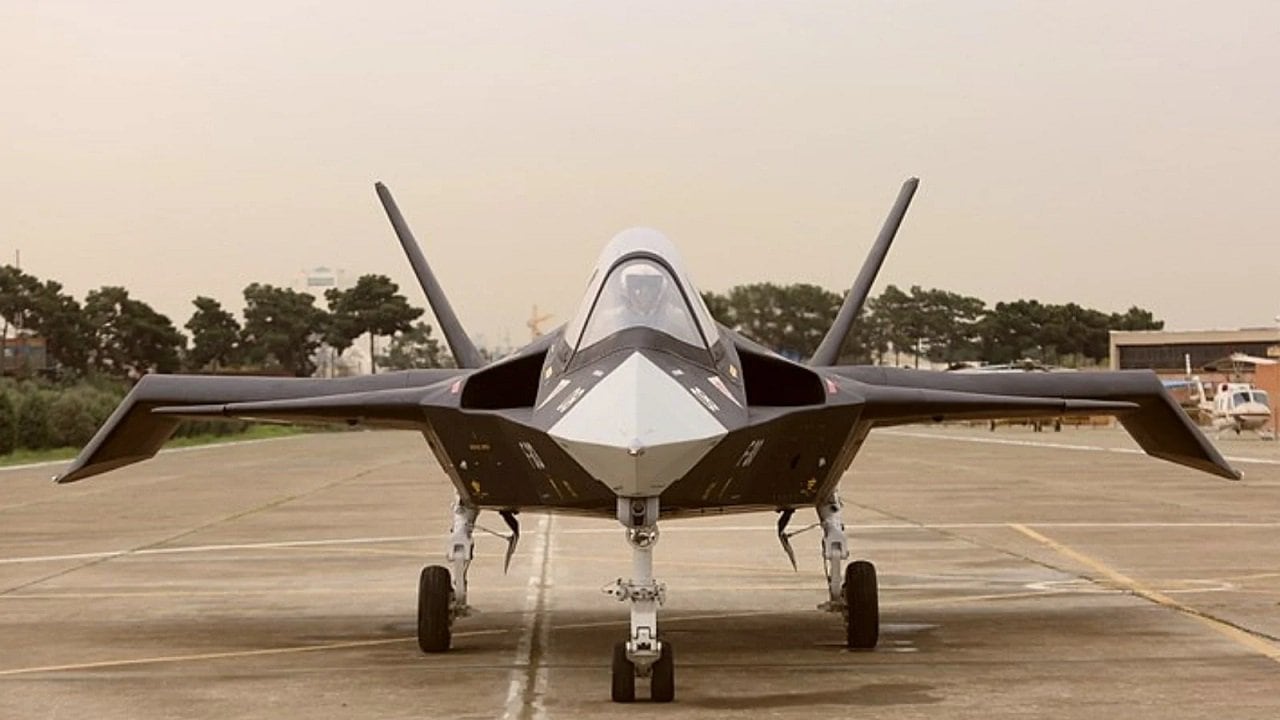
Qaher-313. Image Credit: Creative Commons.
Outside analysts identified a long list of questionable features. The cockpit used instruments associated with light civilian aircraft. The canopy resembled molded plastic; the nose offered little apparent room for radar; the intakes looked too small; and the rear fuselage lacked a convincing exhaust arrangement.
As of August 2026, no independently verified record shows a full-size, piloted Qaher-313 completing a takeoff, flight, and landing. Iran never announced a production order or an operational squadron. The design instead reappeared in smaller unmanned aircraft associated with the Islamic Revolutionary Guard Corps Navy.
The 2013 Qaher-313 Was a Display Article, Not an Operational Fighter
Iran’s Aviation Industries Organization promoted the Qaher, meaning “Conqueror,” as evidence that sanctions had not stopped domestic military aviation. A home-built stealth fighter would have marked a dramatic break from an air force still dependent on Shah-era F-4s, F-5s, and F-14s.
The physical evidence did not support the announcement. The first public analysis by The Aviationist noted the tiny radar space, basic cockpit, undersized intakes, and absent exhaust nozzle. FlightGlobal reported that aerospace specialists regarded the display as a polished model rather than a capable prototype.
Stealth requires more than angled surfaces. An operational low-observable fighter needs internal weapons carriage, signature-treated inlets and exhausts, thermal management, sensors, electronic warfare, and software linking those systems.
The 2013 Qaher showed no visible weapons bay or public evidence of an integrated combat system. Video released as evidence of flight appeared to show a radio-controlled scale model rather than a full-size takeoff and landing.

F-14 Tomcat US Navy. Image Credit: Creative Commons.
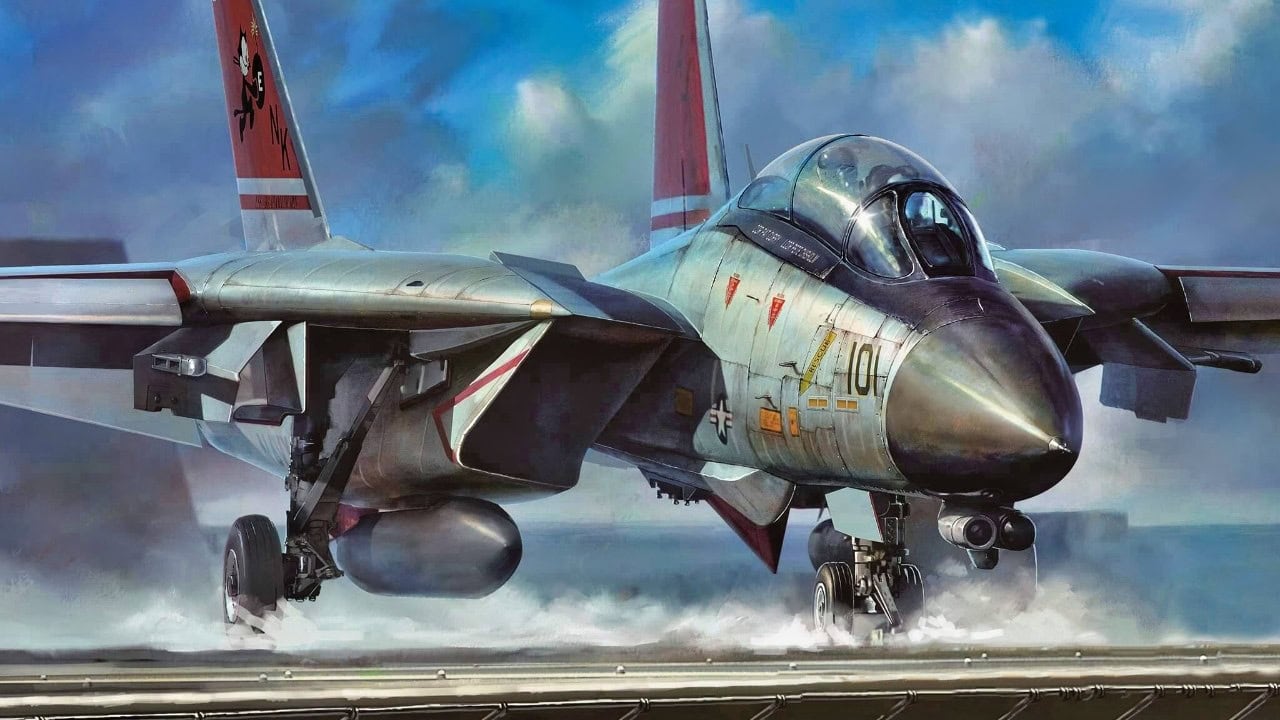
F-14 Tomcat Fighters. Image Credit: Creative Commons.
The 2017 Prototype Fixed the Most Obvious Problems
Four years later, Iran displayed a revised aircraft marked “08” and showed it taxiing under its own power. It had a larger cockpit, a conventional canopy, two exhaust nozzles, a dorsal antenna, and an electro-optical turret beneath the nose. Those changes made it more credible as an engineering demonstrator.
They did not establish flightworthiness. Defense News reported that the aircraft only taxied during the public demonstration. The intakes and wings remained small, while a low tire-pressure marking raised questions about whether the airframe was lightly equipped.
No public flight-test sequence followed. The Qaher disappeared again, reinforcing the assessment that the program never matured into the combat aircraft advertised in 2013.
A Clean-Sheet Stealth Fighter Exceeded Iran’s Demonstrated Capacity
Iran has shown real skill in keeping old aircraft operational, producing missiles, and building drones.
A modern fighter requires reliable turbofan engines, flight-control computers, radar development, weapons-separation trials, structural testing, and years of instrumented flying.
That gap helps explain why Iran continued relying on imported and pre-revolution aircraft while the Qaher remained on the ground.
The episode also fits Iran’s broader pattern of modifying older designs rather than fielding a clean-sheet high-performance jet in useful numbers.
Iran Reworked the Qaher Into the JAS-313 Drone
In February 2023, Iran Aviation Industries Organization chief Afshin Khajeh Fard said the Qaher would return in unmanned form. AeroTime reported that officials described the project as technically mature while promising new variants.
The shift removed several difficult requirements. A small drone needs no ejection seat, life-support system, pilot visibility, or human-rated cockpit. Its payload, endurance ,and handling standards also differ from those of a high-performance fighter.
Iranian officials said in December 2024 that an unmanned version was undergoing flight tests. In February 2025, Qaher-derived JAS-313 drones appeared aboard the converted container ship Shahid Bagheri. Naval News reported that footage showed a small jet-powered example taking off and landing on the ship’s flight deck.
The naval drones gave the old shape a more plausible role as a reconnaissance aircraft, decoy, or limited-strike platform.
They remained far removed from the manned stealth fighter promised in 2013, a distinction examined in later reporting on the Qaher’s fighter claims and coverage of the Shahid Bagheri’s drone air wing.
The Manned Qaher-313 Never Reached a Confirmed Flight Test
The JAS-313 does not validate the aircraft presented beside Ahmadinejad. It is a smaller unmanned derivative with a different mission and lower performance demands.
Iran has not released verified sensor data, weapons trials, production totals, or evidence of routine operational service.
The Shahid Bagheri project gave the drone work a visible platform, but no public footage has shown the full-size manned Qaher-313 taking off and landing with a pilot.
About the Author: Harry J. Kazianis
Harry J. Kazianis (@Grecianformula) was the former Senior Director of National Security Affairs at the Center for the National Interest (CFTNI), a foreign policy think tank founded by Richard Nixon based in Washington, DC. Harry has over a decade of experience in think tanks and national security publishing. His ideas have been published in the NY Times, The Washington Post, The Wall Street Journal, CNN, and many other outlets worldwide. He has held positions at CSIS, the Heritage Foundation, the University of Nottingham, and several other institutions related to national security research and studies. He is the former Executive Editor of the National Interest and the Diplomat. He holds a Master’s degree focusing on international affairs from Harvard University.