
UK sends aircraft carrier to strengthen NATO defenses
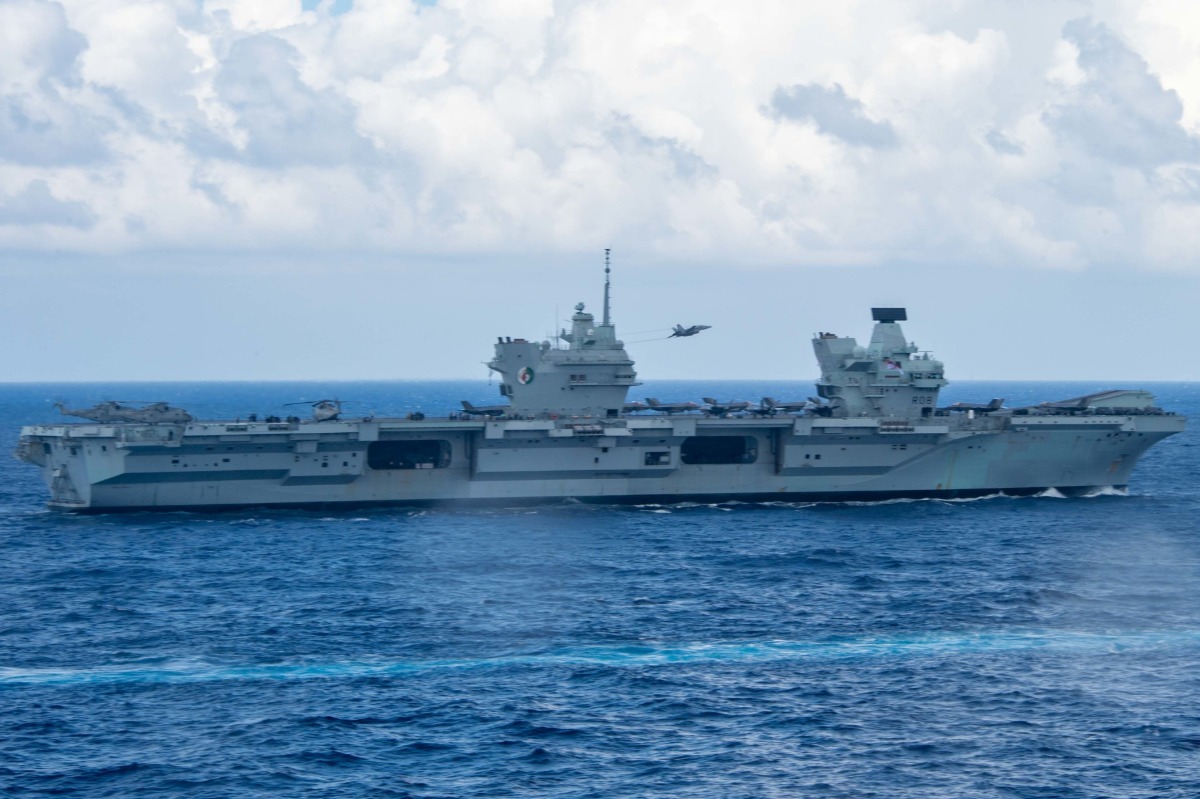 British Royal Navy aircraft carrier HMS Queen Elizabeth (R08).
HMS Queen Elizabeth is due to leave Portsmouth Naval Base at 6:20 p.m. on Saturday, September 5, carrying more than 800 sailors on a three-month deployment around British and northern European waters, according to UK Defence Journal.
The deployment is the first extended sea period for the 65,000-tonne carrier since it took on a new NATO role in July: serving as the alliance’s afloat command platform for the Allied Reaction Force (Maritime), NATO’s high-readiness naval crisis-response formation. It’s the first time either of the UK’s two Queen Elizabeth-class carriers has held that specific command role. The UK Royal Navy assumed leadership of the force on July 1, taking over from the Spanish Navy, with Rear Admiral Mark Anderson and his Portsmouth-based staff now running it for a 12-month rotation. If activated, the force is designed to assemble warships, naval aircraft and support vessels within ten days to respond to a crisis anywhere in NATO’s area of responsibility.
Over the coming three months, Queen Elizabeth will train alongside allied forces to build up the crew’s ability to run high-end naval operations and command a multinational force under pressure, according to the Royal Navy. The ship will also work through advanced training under the Royal Navy’s Fleet Operational Standards and Training organization, covering the full spectrum of modern naval warfare.
“We’ve returned from summer leave rested and ready for the next phase of our training,” said Captain Claire Thompson, commanding officer of HMS Queen Elizabeth. “Sailing this autumn is a key milestone for both our NATO commitment, as the Afloat Command Platform and also on our journey back to the Royal Navy’s ‘very high readiness’ aircraft carrier, a duty we will resume from our sister ship HMS Prince of Wales in 2027. Sailing with an embarked battle staff, integration and training is essential whilst relearning the skills required to conduct safe and effective aviation as we ensure that we are prepared to deliver operational activity at the heart of NATO should it be required.”
The autumn deployment is doing double duty. Alongside its NATO command responsibilities, Queen Elizabeth is working through the training cycle that will eventually return it to the role of UK principal carrier at very high readiness, a status HMS Prince of Wales currently holds. That handover, along with participation in major NATO exercises, is scheduled to continue through 2027, when Queen Elizabeth is due to take over from Prince of Wales as the UK’s flagship and high-readiness strike carrier.
This is not the first time a Queen Elizabeth-class carrier has worn a NATO hat. Prince of Wales served as NATO’s afloat command platform for the alliance’s rapid response force in 2022, and Queen Elizabeth itself briefly came under NATO operational control during the Neptune Strike exercise in 2023. What’s changed since is the underlying force structure: NATO replaced its old Response Force with the current three-tiered model, including the Allied Reaction Force, following the 2022 Russian invasion of Ukraine and the alliance’s 2023 Vilnius summit, and this deployment marks the first time either British carrier has held the maritime command role under that newer structure.
The Royal Navy said the deployment sits within a broader pattern of British contributions to NATO deterrence. More than 1,000 UK personnel currently serve in NATO command posts, and Britain leads the Allied Rapid Reaction Corps from its headquarters in Gloucestershire. Separately, the UK maintains an 800-strong battlegroup in Estonia, has RAF Typhoon fighters defending NATO airspace over Romania, and operates P-8 Poseidon and RC-135W Rivet Joint surveillance aircraft around the Baltic Sea.
Britain also assigns its nuclear deterrent to NATO’s defense and, under its Defence Investment Plan, intends to join the alliance’s Dual Capable Aircraft nuclear mission using F-35A fighters, a step that would put the UK in the group of NATO members that can carry nuclear weapons on aircraft rather than only via its submarine-based deterrent.
Content preview only. Full article available at source. View Full Article
HMS Queen Elizabeth (R08) of the British Royal Navy deployed from Portsmouth on September 5, 2023, carrying over 800 sailors. This marks its first extended sea period as NATO's afloat command platform for the Allied Reaction Force. The deployment aims to enhance NATO's crisis response capabilities and includes training alongside allied forces over the next three months.
- HMS Queen Elizabeth is deploying with over 800 sailors.
- The carrier will serve as NATO's afloat command platform for the Allied Reaction Force.
- This is the first extended sea period for the carrier since its new NATO role began in July.
- The UK Royal Navy assumed leadership of the Allied Reaction Force on July 1.
- The deployment is part of a broader pattern of British contributions to NATO deterrence.