
Ukraine's 16 Rafale Deal Tests Europe's Fighter Promise
 Alexandra Reeves
Ukraine's 16 Rafale Deal Tests Europe's Fighter Promise
Sixteen Rafales will not rescue Ukraine's air force by themselves. That is the uncomfortable starting point. But France's new roadmap with Kyiv matters because it shows Europe trying to build an air-power answer that is not merely another emergency transfer from somebody else's shrinking inventory.
According to Defense News, French President Emmanuel Macron said late Monday in Paris that Ukraine has agreed on a plan to acquire 16 Dassault Rafale fighter jets, accompanying weapon systems and related air-defence equipment. The announcement came after meetings of the Coalition of the Willing with Ukrainian President Volodymyr Zelenskyy, NATO Secretary General Mark Rutte, UK Prime Minister Keir Starmer and German Chancellor Friedrich Merz.
The first Rafales are not expected in Ukrainian skies until 2028 or 2029, Macron said, with pilot training due to begin in the coming months. That timeline is the point. This is not a battlefield fix for this winter. It is a wager that Ukraine will still need a modern, mixed Western fighter force after the current phase of the war has either frozen, widened or mutated into something just as dangerous.
France Is Selling More Than Aircraft
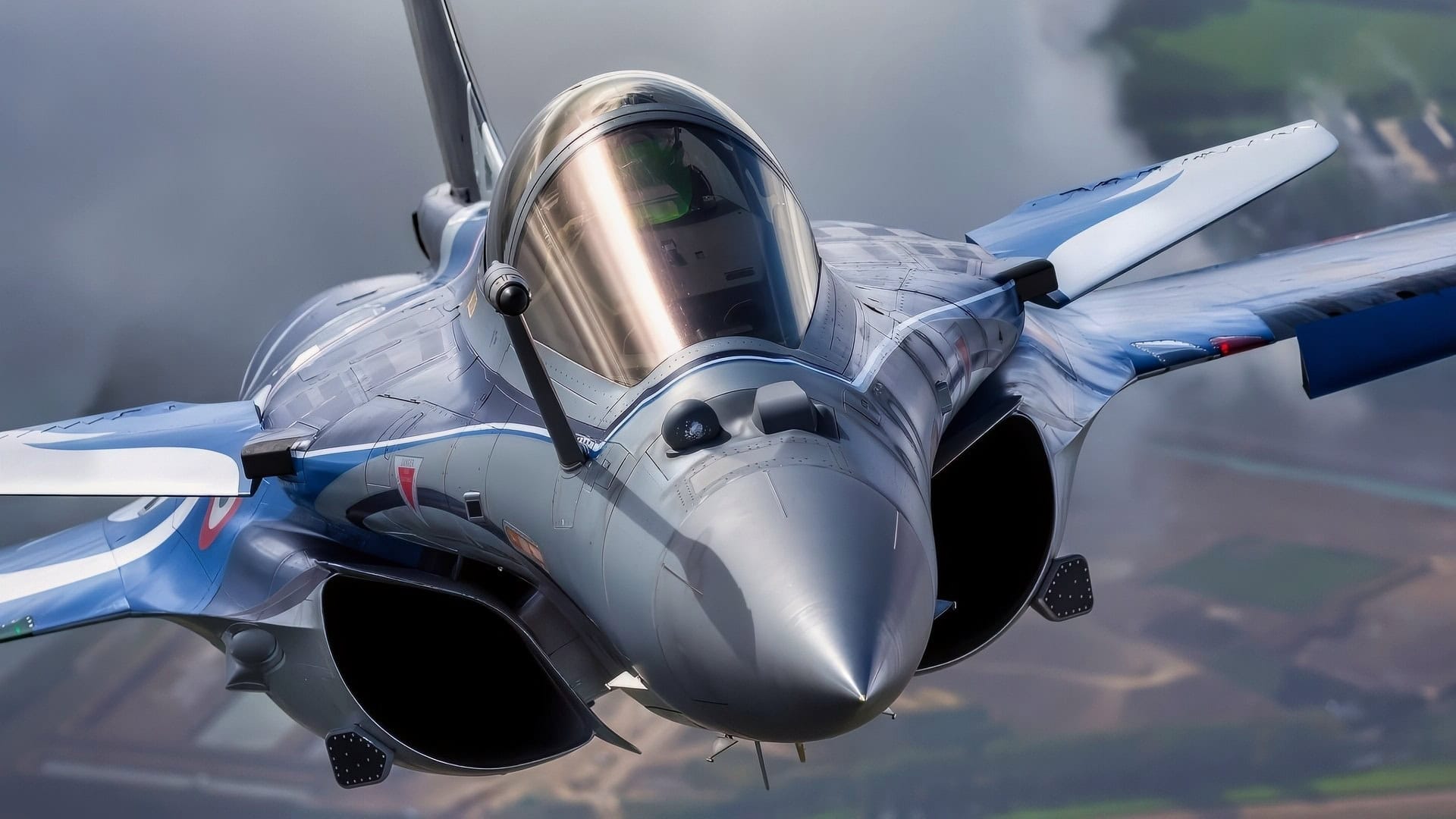
The headline number is 16 aircraft, but the package is broader. Defense News reported that the French-Ukrainian roadmap includes a first batch of SAMP/T NG air-defence batteries, complementary systems and missiles to be delivered in the coming weeks, plus radar systems and additional missiles. Macron also said the two countries approved licensing agreements for Ukrainian production of AASM glide-bomb kits, Aster 30 air-defence interceptors and SCALP/Storm Shadow air-launched cruise missiles.
That is the real story. Rafale gets the clicks. Licensing gets the war.
Ukraine has spent four years learning that donated platforms are only as useful as the weapons pipeline behind them. F-16s can intercept Shahed drones and cruise missiles, but only if missiles, maintenance crews, spares and trained pilots keep arriving. Patriots can blunt Russia's ballistic missile campaign, but Patriot interceptors are expensive, scarce and politically rationed. France is now trying to package airframes, munitions and industrial access into one political offer.
That is smarter than another one-off donation. It is also much harder.
What Rafale Actually Adds
Rafale is not stealthy in the F-35 sense, and nobody serious should pretend otherwise. Dassault's selling point is different: the aircraft is an omnirole fighter built to shift between air defence, strike, reconnaissance and nuclear delivery in French service. Dassault says the Rafale carries 14 hard points, or 13 on the naval Rafale M, with more than nine tonnes of external load capacity. It is cleared for Meteor very-long-range air-to-air missiles, MICA air-to-air missiles, HAMMER precision weapons, SCALP stand-off missiles, Exocet anti-ship missiles, laser-guided bombs and a 30 mm internal cannon.
For Ukraine, that mix matters in three ways.
- Air defence: Rafales with Meteor and MICA could strengthen Ukraine's ability to contest Russian aircraft without relying solely on ground-based missile batteries.
- Stand-off strike: SCALP integration gives Kyiv another path to deep strikes against Russian logistics, command nodes and air bases.
- European supply chains: French weapons create a partial alternative to US-controlled munitions politics, though not a complete escape from them.
The catch is that a mixed fighter fleet creates its own burden. Ukraine is already absorbing F-16s and has agreed, according to Defense News reporting in May, to buy 20 new Gripen fighters while Sweden plans to donate 16 older models next year. Add Rafale to that and Kyiv is building three Western fighter ecosystems under wartime conditions. That sounds flexible in a press conference. It looks brutal in a maintenance hangar.
The 2028 Problem
Macron's 2028 or 2029 estimate is honest, and politically inconvenient. Ukraine needs air defence now. Russia has increased missile and drone strikes against Ukrainian cities, and NATO's own readout from the Paris meeting said Rutte urged allies and partners to keep donating air and missile defence systems while developing cooperation with Ukraine's defence industry. NATO also said allies pledged 70 billion euros in military equipment, assistance and training for Ukraine this year, and at least that amount in 2027.
Those numbers are large. They also hide a basic timing problem. Western leaders are now trying to supply three clocks at once: immediate interceptors for tonight's raids, mid-term production lines for 2027, and long-term air force reconstruction for the end of the decade. The Rafale deal sits on the third clock.
That does not make it irrelevant. It makes it a test of whether Europe can think beyond the next ammunition shortage. Since 2022, European support for Ukraine has often been impressive in aggregate and chaotic in execution. Tanks arrived late. Artillery shells arrived too slowly. Air defence was treated as a finite emergency stockpile until Russian strike patterns made that fantasy impossible. Fighter aviation risks becoming the same story with better branding.
France Wants Strategic Ownership
There is also a French angle that should not be ignored. Paris has spent years arguing that Europe needs strategic autonomy, usually to eye-rolling in Washington and quiet irritation in parts of Eastern Europe. The Rafale roadmap is France's chance to make that phrase less decorative.
If France can deliver jets, weapons, training and licensed production at scale, then it earns influence over Ukraine's future air force. If it cannot, the deal becomes another European promise trapped between industrial bottlenecks and political ceremony. Dassault has a strong export record, with Rafale customers including Egypt, India, Qatar, Greece, Croatia, the United Arab Emirates, Indonesia and Serbia. But Ukraine is not a normal export customer. It is a country at war, under missile attack, trying to rebuild airpower while using it.
Everyone in Brussels likes to say Ukraine's defence industry is now part of Europe's security architecture. Here is the thing: architecture requires load-bearing beams, not conference language. Licensing AASM, Aster 30 and SCALP production inside Ukraine would be a real beam if it survives Russian targeting, financing disputes and the usual European habit of mistaking announcements for output.
What To Watch Next
The next signals are practical, not rhetorical. Watch when Ukrainian pilots begin Rafale training, whether France identifies funding for the 16 aircraft, how quickly SAMP/T NG batteries and missiles arrive, and whether the licensing deals produce actual Ukrainian production capacity rather than a future aspiration. Also watch how Rafale fits beside F-16 and Gripen. Three fighter types may give Kyiv political resilience, but they can also create a logistics puzzle Russia will try to exploit.
The short answer is that Ukraine needs the Rafale deal, but not because 16 jets will change the air war overnight. It needs the deal because Europe has to prove it can build Ukraine's next air force while keeping the current one alive.
If Paris can do that, this is more than a fighter sale. If it cannot, Ukraine will have gained another elegant aircraft on paper and another reminder that European strategy often arrives two years late with excellent press materials.
Ukraine has agreed to acquire 16 Rafale fighter jets and associated weapon systems from France, with pilot training set to begin soon and deliveries expected by 2028 or 2029. This deal includes SAMP/T NG air-defense batteries and aims to strengthen Ukraine's air defense capabilities amid ongoing Russian missile and drone strikes. The acquisition reflects a broader strategy for European defense cooperation and support for Ukraine's military needs.
- Ukraine has agreed to acquire 16 Rafale fighter jets from France.
- The deal includes SAMP/T NG air-defense batteries and other weapon systems.
- Pilot training for Ukrainian pilots is set to begin soon.
- Deliveries of the Rafale jets are expected by 2028 or 2029.
- The deal aims to enhance Ukraine's air defense capabilities against Russian threats.