
Ukraine's 2026 Patriot License Exposes Europe's Air Defence Math
 Alexandra Reeves
Ukraine's 2026 Patriot License Exposes Europe's Air Defence Math
A production license is not a shield. That is the uncomfortable point hiding inside this week's warmer Trump-Zelenskyy meeting in Washington.
According to Reuters reporting carried by Defense News, President Donald Trump and President Volodymyr Zelenskyy discussed plans for Ukraine to produce Patriot missile interceptors during their July 28 White House meeting. Zelenskyy later told Fox News that Trump had accepted that the United States would give Ukraine the licenses. He also met U.S. senators and Lockheed Martin officials as Kyiv pushed for anti-ballistic missile systems and interceptors.
That sounds like a breakthrough, and politically it is one. Militarily, the harder truth is that Ukraine needs interceptors now, while licensed production pays off later. The distinction matters because Russia's campaign against Ukrainian cities is not waiting for industrial policy to mature.
The Deal Solves A Political Problem First
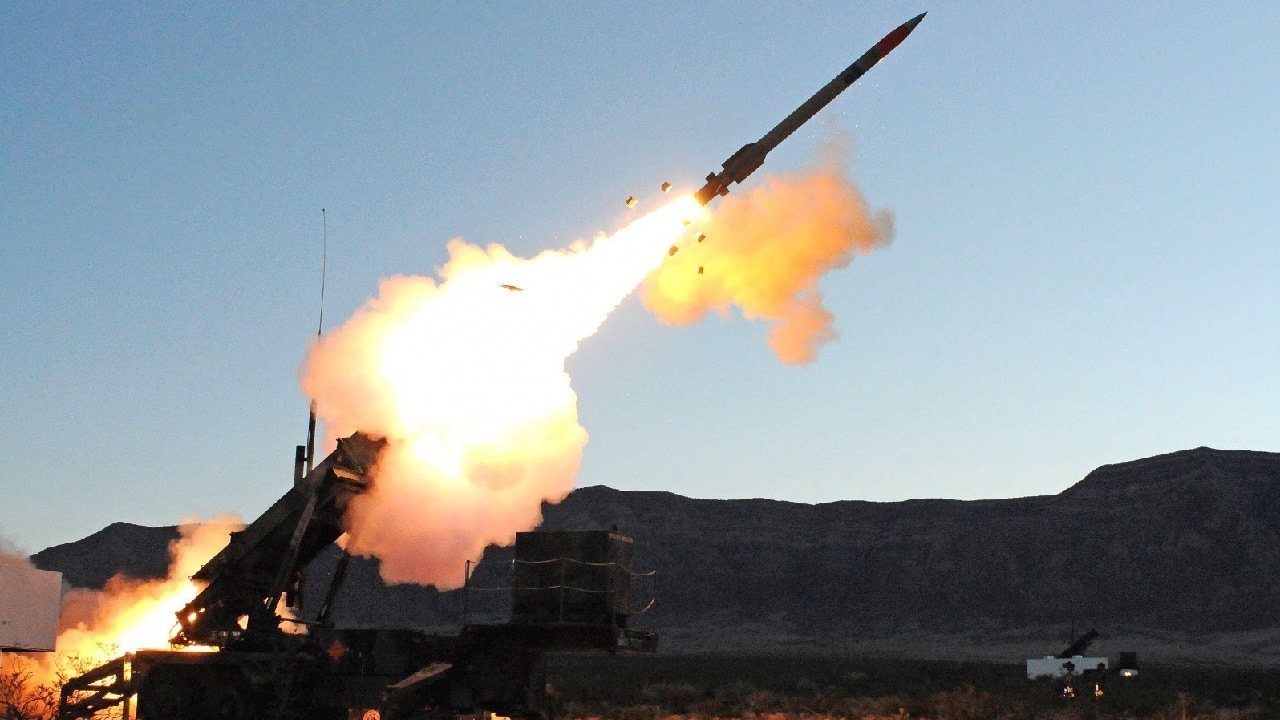
The Patriot issue has always been about more than hardware. It is about trust, export control, alliance scarcity and who gets priority when the same interceptor is needed in Europe, the Middle East and the Indo-Pacific.
Zelenskyy framed the Washington meetings around ballistic missile defence. After speaking with senators, he said Ukraine has drones capable of destroying Iranian- and Russian-built drones, but needs more weapons against ballistic missiles. His blunt formulation was that the real problem is anti-ballistic systems and anti-ballistic missiles.
That is exactly right. Ukraine has built a remarkably adaptive air-defence mix against Shahed-type drones and cruise missiles. Ballistic missiles are a different problem. They arrive faster, leave less reaction time and punish any shortage in high-end interceptors. Patriot remains the central Western answer because, in Ukrainian service, it has repeatedly been treated as the system Kyiv trusts most against ballistic threats.
RTX describes Patriot as an integrated air and missile defence system built around radars, command-and-control technology and multiple interceptor types. The company says the system is used by 19 nations and is designed to counter tactical ballistic missiles, cruise missiles, drones and advanced aircraft. Lockheed Martin's PAC-3 family, especially PAC-3 MSE, is the prized element because it uses hit-to-kill interception against the hardest targets.
Here is the thing: giving Ukraine permission to produce that technology is a major vote of confidence. It also admits something Washington and Europe have spent two years avoiding. Donations alone cannot keep up with Russia's missile war.
The Industrial Math Is Brutal
Defense News reported earlier this month that a Ukrainian Patriot production license would be a right currently extended by the United States to only a handful of allies, and that a Ukrainian-built interceptor could still be years away from defending a city. The same report noted that Japan is the only other country now building Patriots under a U.S. license, while Germany, the Netherlands and Spain are trying to stand up a European production line.
The bottlenecks are not abstract. Defense News cited Foreign Policy Research Institute analysis saying each interceptor takes roughly 24 months to build, while the solid rocket motor can take 30 months. A single Boeing plant in Huntsville, Alabama, makes the seeker for each PAC-3, and that plant produced between 650 and 700 seekers last year. Lockheed Martin delivered 620 top PAC-3 interceptors last year, with a framework aiming to raise output toward 2,000 annually by 2030.
Those numbers explain why Kyiv wants licenses, co-production and alternative systems all at once. They also explain why the license should not be oversold. If the paperwork were finished tomorrow, Ukraine would still face factory construction, supply-chain certification, training, security protocols and the awkward question of whether the most sensitive components would actually be made inside a country under regular missile attack.
In other words, the license is not today's answer. It is a bet that this war, or at least Russia's missile threat, will still matter on a 2030 timeline.
Europe Cannot Outsource This Gap
The Washington visit landed beside another uncomfortable signal. Defense News reported on July 29 that the Pentagon has formally launched a review of U.S. force posture in Europe, following repeated Trump administration demands that European allies assume greater responsibility for NATO's conventional defence. Under Secretary of Defense for Policy Elbridge Colby said the review is meant to move NATO quickly and irreversibly toward Europe taking primary responsibility for its conventional defence.
That makes the Patriot license more than a Ukraine story. It is also a European story. If the United States is reassessing its European footprint while Ukraine is trying to localise production of the one Western system it most needs against ballistic missiles, then Europe is being told the same thing twice: stop assuming American stockpiles are a permanent strategic reserve for everyone else's emergencies.
Everyone in Washington likes to say Europe should do more. The lazy version of that argument is about defence spending percentages. The serious version is about whether Europe can produce enough interceptors, motors, seekers, radars and launchers to keep cities alive during a long missile war. Percentages do not shoot down Iskanders.
Germany's interest in Patriot licensing and the Dutch-German-Spanish production effort matter for exactly this reason. So does Ukraine's pursuit of the French-Italian SAMP/T and its own cheaper FREYA concept, which Zelenskyy has described as a domestic answer built with European components. None of these options is magic. Together, they are an admission that the old model, where Ukraine waits for spare missiles from allies with their own threat perceptions, has hit its ceiling.
Russia Will Read The Delay
Moscow will not miss the timing problem. Russia does not need to defeat Patriot as a technology if it can exploit the production gap around it. Saturation attacks, mixed drone-and-missile packages and pressure on Ukrainian energy infrastructure all become more attractive when Kyiv must husband expensive interceptors.
The most important phrase in the Reuters account was not the diplomatic language about reviving talks. It was Zelenskyy's warning that Ukraine needs anti-ballistic missiles. Diplomacy may restart; missiles will continue. Russian negotiators understand leverage, and pressure on Ukrainian cities is one of the few forms of leverage Moscow can still generate reliably.
The license therefore sends two signals at once. To Kyiv, it says Washington is willing to move Ukraine closer to the inner circle of high-end missile defence producers. To Moscow, it says the West still needs years to turn political promises into industrial mass.
What To Watch Next
The next test is not whether another optimistic statement appears after a meeting. Watch for three things instead: a signed licensing framework, named production sites and component-level commitments for seekers, rocket motors and guidance systems. Without those, the license remains a political headline attached to an industrial blank space.
Ukraine is right to chase the deal. Europe is wrong if it treats the deal as evidence that the Patriot problem is now solved. The best case is that Ukraine becomes part of a broader transatlantic missile-defence production base before the end of the decade. The worst case is that everyone congratulates themselves on a license while Russia spends the next two winters testing how thin the interceptor cupboard really is.
The uncomfortable conclusion is simple: Ukraine may have won access to the right technology, but access is not capacity. Until capacity arrives, Europe's air-defence problem is still being measured one Russian missile salvo at a time.
Ukraine discussed plans to produce Patriot missile interceptors during a meeting in Washington on July 28, 2023, emphasizing the urgent need for anti-ballistic missile systems. President Zelenskyy highlighted that while the production license is a political breakthrough, immediate military needs remain critical due to ongoing Russian missile threats. The U.S. is also reviewing its military posture in Europe, indicating a shift in defense responsibilities within NATO.
- Ukraine is set to produce Patriot missile interceptors under a U.S. license.
- Zelenskyy emphasized the urgent need for anti-ballistic missile systems during meetings in Washington.
- The production of interceptors will take years, while immediate needs are pressing due to ongoing Russian missile attacks.
- The U.S. is reassessing its military posture in Europe, impacting NATO's defense responsibilities.
- Ukraine's pursuit of missile defense capabilities reflects a shift in reliance from Western allies.