
Ukrainian Drone Deal with Saudi Arabia, Qatar, and the UAE for Ten Years Changes Gulf Defense 2026
 Ahmed Al-Rashid
The Ukrainian Drone Deal with Saudi Arabia, Qatar, and the UAE for Ten Years Changes Gulf Defense 2026
On June 11, 2026, drones and Iranian missiles returned to the headlines after new attacks on American bases in Bahrain and other Gulf locations, but the most important military news is not the number of projectiles launched this time. The important thing is that the Gulf has begun, albeit late, to ask a more serious question: How can a low-cost, rapidly learning defense layer be built between long-range radar and the Patriot missile that should not be spent on every flying target?
Here, the agreement between Ukraine and Saudi Arabia, Qatar, and the UAE, which Ukrainians describe within the framework of the Drone Deal, becomes more than just a fleeting diplomatic collaboration. We are witnessing a Gulf attempt to purchase combat expertise that is not usually sold at exhibitions, expertise born under the pressure of thousands of Shahed and Geran attacks designed by Russia and Iran on Ukrainian cities and infrastructure.
What Was Actually Signed
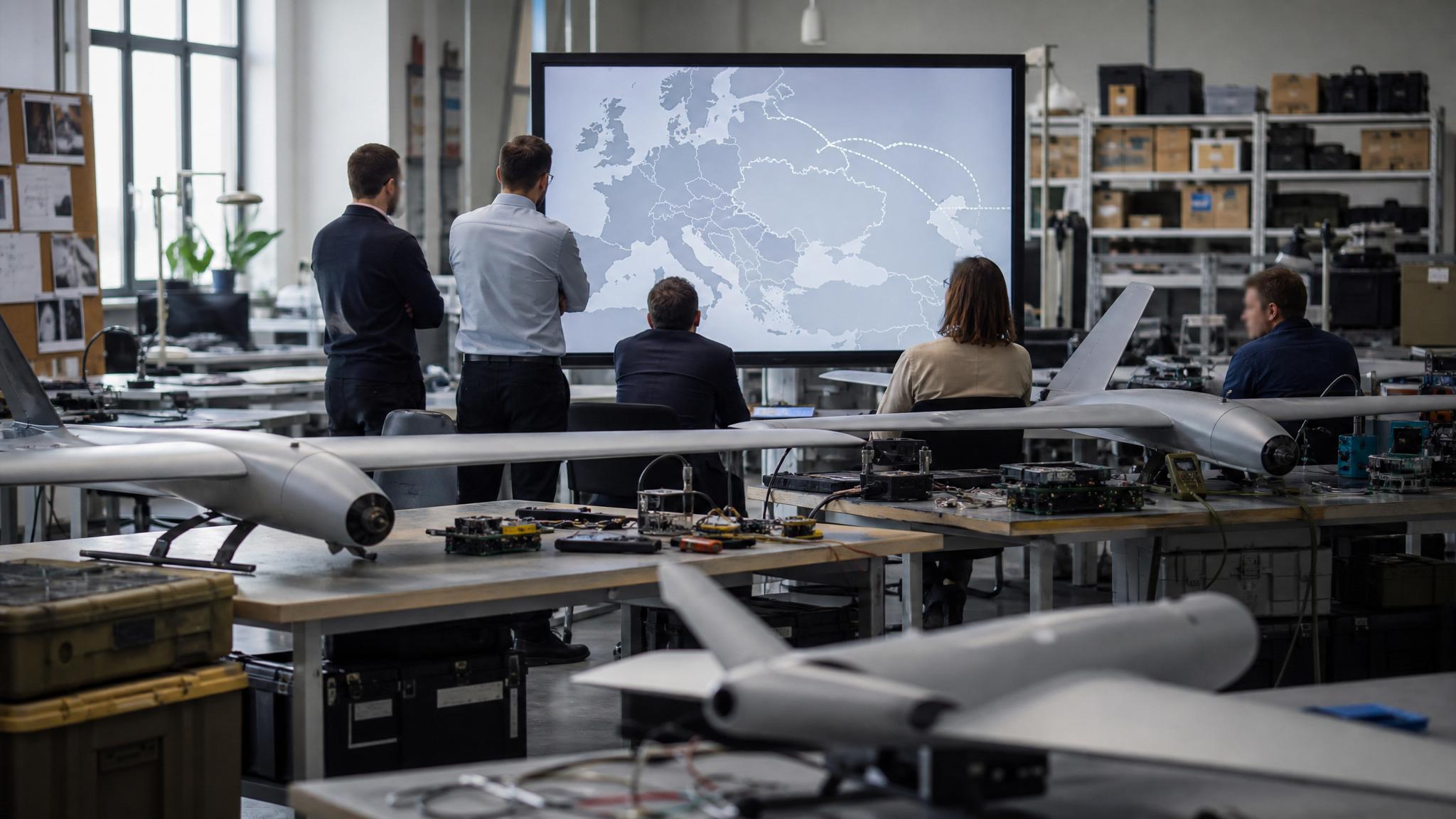
According to the Ukrainian presidency, Kyiv signed a defense cooperation arrangement with the Saudi Ministry of Defense on March 27, paving the way for future contracts, technical cooperation, and defense investments. In Doha, a ten-year government agreement was signed between the General Staffs of Ukraine and Qatar, which includes joint industrial projects, the establishment of joint production, and technological partnerships between companies. As for the UAE, a political agreement on cooperation in security and defense was announced, with working groups continuing to finalize the details.
Later, President Volodymyr Zelensky stated that Ukraine had reached ten-year contracts with three main countries: Saudi Arabia, the UAE, and Qatar, and that there is interest from eleven additional countries in the Middle East, Gulf, and Caucasus. This is not a mere protocol formulation. When a wartime head of state talks about fixed annual funding, production lines inside and outside Ukraine, and the development of joint technologies, he is talking about an industry, not a courtesy visit.
Why the Gulf Cares About Ukrainian Expertise
Militarily, the Gulf's weakness is not in a lack of modern equipment. Saudi Arabia, the UAE, Qatar, Kuwait, and Bahrain possess or host advanced radars, Patriot batteries, THAAD layers in some countries, and aircraft capable of interception. The problem is that this system was primarily designed for a valuable and dangerous target: a ballistic missile, a fighter jet, or a cruise missile. However, the slow, cheap, low-signature Shahed drone, which sometimes comes in swarms, imposes a war of attrition that cannot be solved by a credit card alone.
Any officer who has served in the region knows that protecting an American airbase is one thing, and protecting a power station on the outskirts of an industrial city, a pipeline, a port dock, a civilian airport, and a petrochemical complex at the same time is another. There are not enough Patriot batteries for all of that, nor are there PAC-3 MSE missiles cheap enough to be used against every drone that costs a tiny fraction of the interception cost.
This is why the Gulf is drawn to Ukraine. Ukraine did not defeat drones because it bought a magical system; rather, it built a rapid adaptation cycle: early warning, signal intelligence, local data linking, mobile fire teams, jamming, camouflage, intercepting drones with drones, and continuous software adjustments after each wave of attack. These are things that seem simple in presentations, but in war, they are measured in minutes, not committees.
The Real Capability Is Not Just in the Drone
It would be a mistake to read the Drone Deal as merely a deal to purchase intercepting drones. The cheap intercepting drone is important, whether it is called Sting or any other model developed by Ukrainian companies, but it is just the last link in the chain. If the command does not know where the target is coming from, how to distinguish between a drone and a civilian target or false jamming, and how to relay the information to a nearby unit within seconds, then having a full stock of small interceptors will not help.
The Ukrainian value here lies in integrating the cheap with the existing. The Gulf will not abandon Patriot, THAAD, FS-LIDS, Coyote, or Sky Warden. On the contrary, it will need them more. But the Ukrainian layer can relieve pressure on the American and European layers, leaving the expensive missiles for the targets that deserve them, and pushing intercepting drones, electronic means, and mobile teams to confront the cheaper and more numerous targets.
In my estimation, this shift, if implemented seriously, will change the cost balance more than it changes the fire balance. Iran and its allied militias bet that Gulf defense wins tactically but loses financially. Every successful interception with an expensive missile could be a small economic failure. Ukraine offers the Gulf a way to reduce this failure.
Saudi Arabia, the UAE, and Qatar Do Not Want the Same Thing
However, the three countries should not be placed in the same basket. Saudi Arabia wants to cover a very wide area, from oil facilities in the east to the capital and the Red Sea corridors. Its primary need is to distribute a defensive layer over a merciless geography. Qatar is smaller in size, but it hosts a sensitive military and political infrastructure and needs to protect a dense point rather than a wide national network. The UAE, due to its trade, ports, and connection to global transport, is thinking about protecting an open economic contract, from Abu Dhabi to Dubai and Fujairah.
This difference will determine the shape of the contracts. Saudi Arabia may lean towards extensive local production and training many units. Qatar may focus on integration with command and control around specific bases and facilities. The UAE may seek a faster solution that is more open to multiple companies, especially since it is accustomed to building complex defense supply chains through EDGE and Western and Asian partners.
The Old Problem Returns in a New Garb
But the question that Gulf defense ministers do not like to hear remains the same: Will Gulf capitals buy expertise or appearance? In recent years, the region has purchased many systems, but sometimes it has neglected training, maintenance, the authority of the field commander, and the culture of acknowledging failure after every incident. Ukraine can sell a program, a production line, and trainers, but it cannot alone instill the habit of rapid learning within a military institution that does not want to appear wrong in front of politicians.
Practically, the success of the ten-year agreements will be measured by three things that do not appear in official photos: the number of Gulf units that will train with Ukrainians in field training, not just protocol; the speed of implementing modifications to software and tactics after each attack; and the percentage of components that will actually be produced locally, not just on paper. If these elements remain weak, the Drone Deal will turn into a new chapter in a long book titled "Buying Technology Without an Institution Capable of Digesting It."
Open Sources
- Ukrainian Presidency, Results of Zelensky's Visits to Saudi Arabia, the UAE, Qatar, and Jordan, March 29, 2026.
- Ukrinform, Announcement of the Ten-Year Contracts with Saudi Arabia, the UAE, and Qatar and Interest from 11 Additional Countries, April 19, 2026.
- Breaking Defense, Details of the Agreements with Qatar and Saudi Arabia and Assessments from Experts on Countering Shahed and Geran, March 30, 2026.
- Forecast International Defense Security Monitor, Expansion of the C-UAS Market in the Middle East and Orders for FS-LIDS, Coyote, and Sky Warden, March 2026.
- Institute for the Study of War, Update on June 11, 2026, Regarding the New Wave of Iranian Attacks in the Region.
Conclusion
The Ukrainian agreement with Saudi Arabia, Qatar, and the UAE is not a substitute for the American umbrella, nor a declaration of Gulf defense independence. It is a late acknowledgment that modern air defense is no longer just hierarchical from top to bottom. It has become a network of many layers, some very expensive and some very cheap, and some only work if the military institution allows itself to learn quickly from a cheaper and more pressing adversary.
In the old military adage, we say that weapons do not fight alone. In the Gulf today, the phrase must be slightly modified: expensive weapons do not fight long if left alone against cheap drones that learn every week.
Ukraine signed a ten-year defense cooperation agreement with Saudi Arabia, Qatar, and the UAE on March 27, 2026, focusing on drone technology and defense capabilities. The agreements include joint industrial projects and defense investments, with interest from eleven additional countries in the region. This collaboration aims to enhance the Gulf states' defense against drone threats, integrating Ukrainian expertise into their military systems.
- Ukraine signed a ten-year defense cooperation agreement with Saudi Arabia, Qatar, and the UAE.
- The agreements include joint industrial projects and defense investments.
- There is interest from eleven additional countries in the Middle East and Caucasus.
- The agreements aim to enhance low-cost defense capabilities against drone threats.
- The Gulf states are looking to integrate Ukrainian expertise into their defense systems.