
U.S. Air Force debuts T-19A Kestrel aircraft
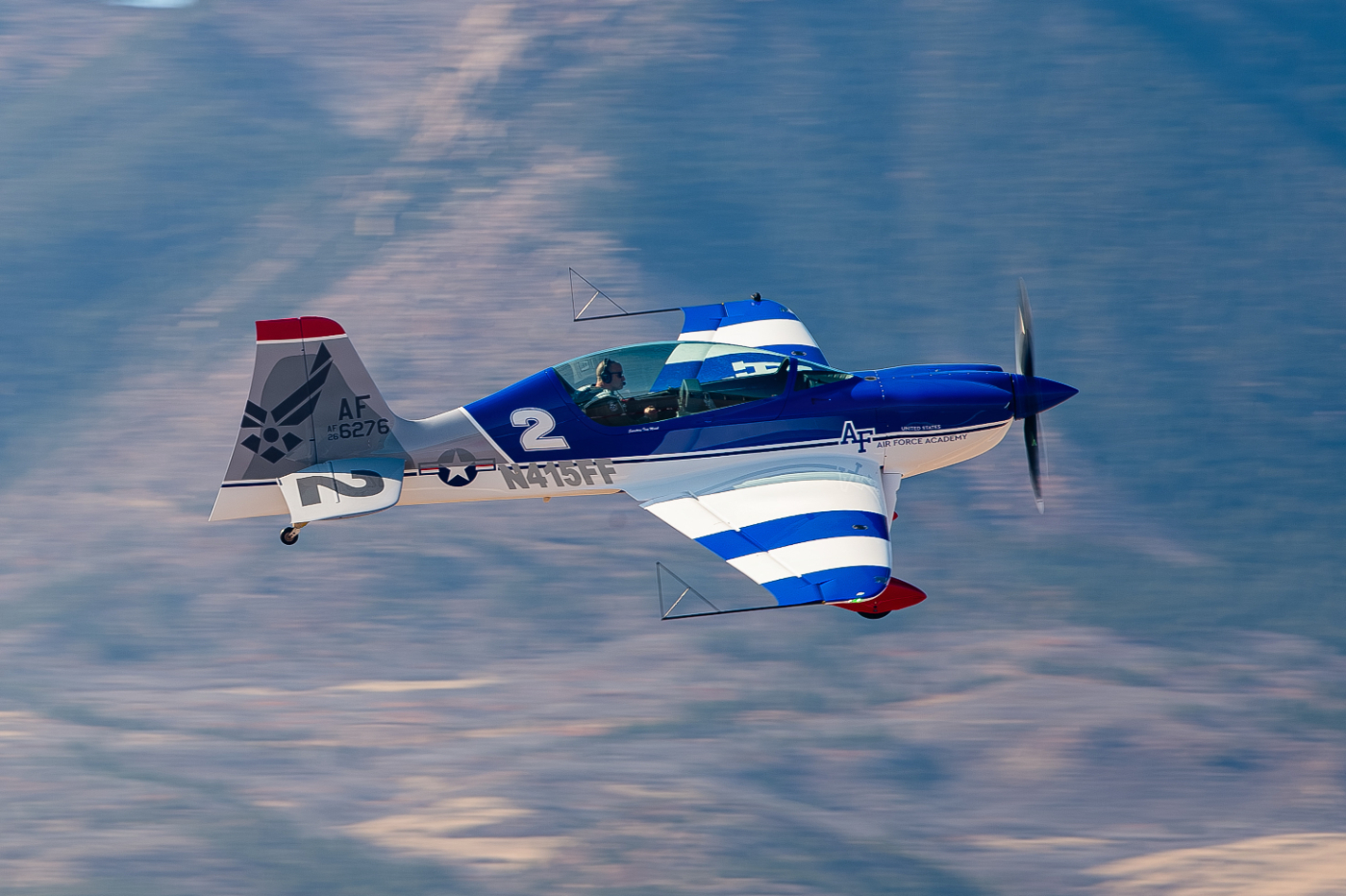
Four T-19A Kestrel aerobatic planes flew over the U.S. Air Force Academy’s noon meal formation in Colorado on Nov. 12, the first public appearance of the service’s newest aircraft, according to an Air Force release.
The Kestrel is the Academy’s first powered aerobatic aircraft, and it “recently completed its final military certification flights,” the release said. Air Force Chief of Staff Gen. Ken Wilsbach rode in one of the cockpits during the flyover, The Gazette reported.
“Going from an idea to four aircraft built and delivered in 10 months is unprecedented and a testament to the vision, dedication, and teamwork of everyone who made this possible,” Wilsbach said.
The T-19A is a military version of the GB1 GameBird, a two-seat, single-engine aerobatic plane built from carbon fiber, The War Zone reported. The four aircraft were donated to the Academy, officials told Air & Space Forces Magazine. The release didn’t name the donor or say what the planes are worth.
The plan is to give cadets more flight time and aerobatic experience “prior to entering the Air Force or Undergraduate Pilot Training,” per the release. Working with civilian aerobatic pilots and curriculum developers, the Academy wants to build “a nationally competitive aerobatic and demonstration team.”
“These aircraft will give cadets an opportunity to further develop their airmanship and will ultimately establish a competitive flying team to inspire future Airmen,” Wilsbach said.
Cadets won’t be at the controls of the team right away. Lt. Gen. Paul Moga, the Academy superintendent, picked six active-duty pilots from the Academy staff and the 306th Flying Training Group as the first cadre. They’ll write the aerobatic training curriculum and serve as the main demonstration pilots at recruiting events and air shows.
Later, the team plans to compete in International Aerobatic Club events. A select group of cadets will be chosen and mentored in the T-19A each year, moving “from basic proficiency to advanced aerobatic performance,” the release said. It didn’t say when the first cadets will start flying the plane.
“This aircraft will provide an opportunity to train our cadets in ways that were previously not possible,” Moga said.
Air Force Secretary Troy Meink said the aircraft “reflect the speed and innovation that strengthens the Department of the Air Force,” and that cadets will take a bigger role in training and demonstrations as the program matures.
A group of cadets suggested the Kestrel name, after the small falcon known for its agility and sharp eyesight.
All T-19A flights will operate from the Academy’s Davis Airfield. Because the team will fly low-altitude, high-performance aerobatics, the Academy said it will use a safety management system built for that kind of flying and follow whichever rules are stricter, Federal Aviation Administration regulations or Air Force safety instructions.
Content preview only. Full article available at source. View Full Article
Four T-19A Kestrel aircraft debuted with a flyover at the U.S. Air Force Academy in Colorado on November 12. This marks the first public appearance of the Academy's first powered aerobatic aircraft, which recently completed its military certification flights. The aircraft will enhance cadet training and contribute to the establishment of a competitive aerobatic team.
- The T-19A Kestrel is the Academy's first powered aerobatic aircraft.
- Four aircraft were donated to the Academy for training purposes.
- The aircraft recently completed final military certification flights.
- Cadets will eventually be trained to fly the T-19A Kestrel.
- The aircraft will operate from the Academy's Davis Airfield.