
U.S. Air Force pays $64 million for secretive balloon project
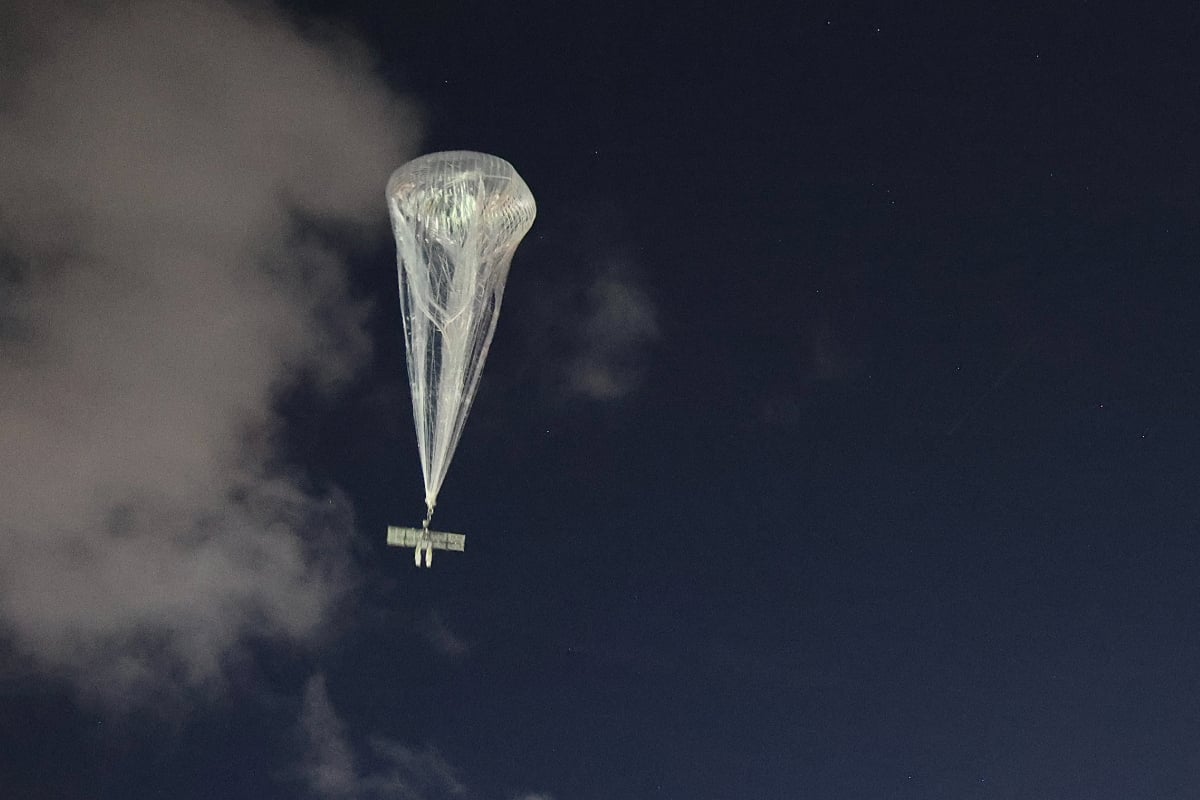
The U.S. Air Force has awarded balloon maker Aerostar a $64.4 million contract to quickly build a prototype for an urgent high-altitude balloon requirement under a project called Swamp Gas.
The contract covers development of a “minimum viable product” prototype, meaning an early working version with just enough capability to be tested and used, to support what the Pentagon called a “High-Altitude Balloon Operational Urgency.” Operational urgency is the term the military uses for a need from the field that has to be met faster than normal acquisition allows.
The notice does not say what the balloon is meant to do, which U.S. military command or unit asked for it, what it will carry or where it could be used. Work will be done in Arlington, Virginia, and is scheduled to finish by March 23, 2028.
Aerostar Technical Solutions received the contract without competition. Nearly all of the money was committed at once: $57.7 million in fiscal 2025 research and development funds and $6.3 million in fiscal 2026 funds, about $64 million of the $64.4 million total. The Air Force Life Cycle Management Center at Wright-Patterson Air Force Base, Ohio, is managing the contract.
The project name has an unusual history. In 1966, U.S. Air Force consultant J. Allen Hynek suggested that “swamp gas” could explain a wave of UFO sightings in Michigan, an explanation that became a lasting punchline in the UFO world. The Air Force did not say why it chose the name.
Aerostar builds stratospheric balloons that fly far above commercial airliners. Its larger Thunderhead balloon operates between about 16,800 and 22,900 m (55,000 and 75,000 feet), can stay aloft for 60 days or more and can carry up to about 90 kg (200 pounds) of equipment, according to the company. It also makes a smaller balloon, Lightning, designed to carry a single payload and be launched by a small team without a runway.
The company has worked with the Pentagon on balloons for years. In 2021, the Defense Innovation Unit hired Aerostar to demonstrate how stratospheric balloons could carry communications relays and sensors for U.S. forces. More recently, Aerostar has paired its balloons with the solar-powered Apollo-R drone built by Icarus, with the balloon lifting the drone into the stratosphere before it flies on its own. Aerostar executive Russ Van Der Werff told The War Zone in July that its balloons carry radio links with ranges beyond 160 km (100 miles) and that a Thunderhead could act as a “mothership” for several drones.
The U.S. Army has tested balloon-carried drones in at least three exercises this year, most recently launching micro high-altitude balloons, one carrying an Apollo-R, on Japan’s Hokkaido island on Sept. 18 during Exercise Orient Shield 26. Earlier launches took place off Morocco during African Lion 26 and on Guam during Valiant Shield 2026.
High-altitude balloons drew wide public attention in February 2023, when a U.S. Air Force F-22 shot down a Chinese balloon off South Carolina after it drifted across the United States. Supporters of the technology argue that balloons are cheaper than satellites and aircraft such as the Global Hawk and can linger over an area for weeks.
Content preview only. Full article available at source. View Full Article
The U.S. Air Force awarded a $64.4 million contract to Aerostar for the rapid development of a high-altitude balloon prototype under the project named Swamp Gas. The contract, which is set to be completed by March 23, 2028, aims to address an urgent operational requirement, although specific details about the balloon's intended use remain undisclosed. The project will be managed from Arlington, Virginia.
- U.S. Air Force awarded a $64.4 million contract to Aerostar for a balloon prototype.
- The project is called Swamp Gas and is classified as an urgent operational requirement.
- The contract is managed by the Air Force Life Cycle Management Center in Ohio.
- Work is scheduled to be completed by March 23, 2028.
- Aerostar has a history of working with the Pentagon on balloon technology.