
U.S. Air Force stacks its next nuclear missile for first time
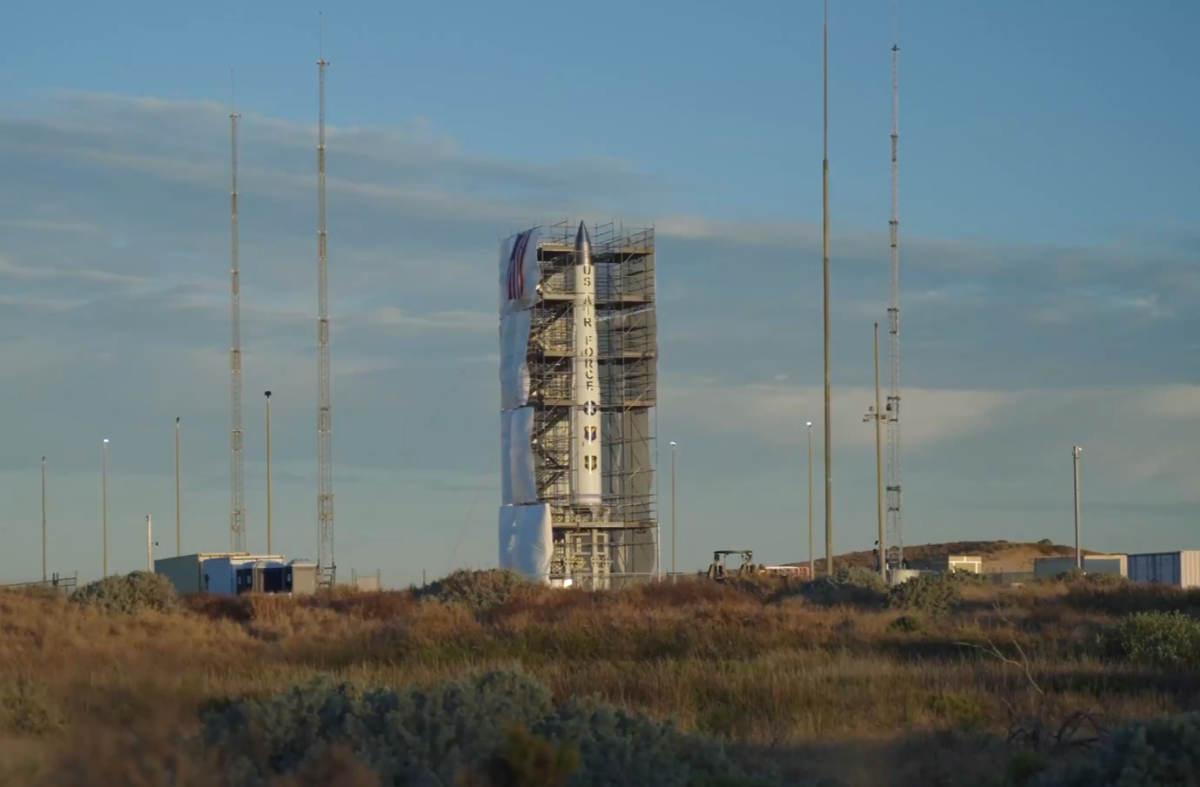
The U.S. Air Force and Northrop Grumman have fully assembled an inert version of the Sentinel intercontinental ballistic missile at Vandenberg Space Force Base in California, the company announced Sept. 14, 2026. The vertical assembly is a step toward flight testing the missile in 2027.
Engineers stacked all of the missile’s stages, propulsion elements, and its protective shroud into a single configuration on the test pad, according to Northrop Grumman. The operation was designed to prove that the process for safely assembling a complete Sentinel missile actually works in practice, not just on paper.
Getting the inert missile onto the pad took a four-month effort. Northrop Grumman moved missile components from facilities around the country to Vandenberg, then used specialized transport equipment and mobile cranes to stack the sections and later take them apart again. The company said the exercise, including verification of how each section’s interfaces connect, showed the team is ready to move toward an actual flight test.
Alongside the assembly, Northrop Grumman and the U.S. Air Force’s 719th Test Squadron completed the program’s first flight test Critical Design Review. The review confirmed that Sentinel’s design and hardware testing meet the Air Force’s requirements for performance, safety, and schedule ahead of the planned 2027 flight test.
“This vertical assembly demonstrates the momentum toward test launching Sentinel in 2027 and having missiles on alert by the early 2030s, ensuring the United States’ ground-based nuclear capabilities remain strong and reliable for decades to come,” said Amanda Davis, vice president and general manager of strategic deterrent systems at Northrop Grumman.
Sentinel, formally designated the LGM-35A, is meant to replace the Minuteman III missiles that have formed the ground-based leg of the U.S. nuclear triad since the early 1970s. The Air Force’s plan calls for fielding 659 missiles and modernizing 450 launch silos and associated facilities, a scope that goes well beyond simply swapping out the missile itself.
Northrop Grumman won the original engineering and manufacturing contract in 2020, valued at $13.3 billion. By January 2024, cost growth on the program had triggered a critical breach under the Nunn-McCurdy Act, the law that requires the Pentagon to report major acquisition cost overruns to Congress.
A Pentagon review that July found the overrun had grown to 81 percent above the original baseline, pushing the total program cost estimate to roughly $140.9 billion. Defense officials certified the program to continue but ordered it restructured and pushed the expected fielding timeline back by at least three years.
Sept. 14’s assembly and design review mark the program’s most concrete hardware milestone since that restructuring. Northrop Grumman has not said how many additional assembly cycles or test events are planned between now and the 2027 flight test, and the Air Force has not released an updated cost or schedule baseline beyond the 2024 figures.
Content preview only. Full article available at source. View Full Article
The U.S. Air Force and Northrop Grumman assembled an inert version of the Sentinel intercontinental ballistic missile at Vandenberg Space Force Base on September 14, 2026. This assembly is a significant milestone towards the planned flight test in 2027, as the program aims to replace the aging Minuteman III missiles. The project has faced cost overruns, with the total estimated cost now at approximately $140.9 billion.
- The U.S. Air Force and Northrop Grumman assembled an inert Sentinel missile at Vandenberg Space Force Base.
- The assembly is a step toward flight testing planned for 2027.
- The program aims to replace the Minuteman III missiles with 659 new missiles.
- Cost overruns have increased the program's estimated cost to approximately $140.9 billion.
- The first flight test Critical Design Review was completed, confirming design and hardware meet requirements.