

Summary and Key Points: In 1997, the Royal Navy set out to build aircraft carriers that could fight far from friendly bases. HMS Queen Elizabeth and HMS Prince of Wales were built across 6 shipyards and 90 companies with 10,000 workers, suffered a burst fire main, a misaligned propeller shaft, and months of repairs, and now sail with 47 of about 80 F-35Bs needed, 4 Tide-class oilers, and escorts and supply ships borrowed from the US and NATO.
The Royal Navy’s Queen Elizabeth-Class Problem
In 1997, the UK government endeavored to build a new class of “supercarrier” that could do the following:
Operate attack aircraft overseas when foreign bases were unavailable in the early stages of a conflict.
Have the required space and equipment to sustain these aircraft when foreign bases cannot meet these specialized requirements.
Perform as an effective and intimidating deterrent when sent to areas of conflict.
What they got instead was two Queen Elizabeth-class aircraft carriers which seem incapable of doing any of these things.
HMS Queen Elizabeth and Prince of Wales are the largest warships the UK has ever built, with a displacement of more than 65,000 tons and a length of 932 feet.
They were designed to carry up to 36 F-35B Lightning II aircraft using a ramp-type launch system rather than steam or electromechanical catapults.
The UK Seemed To Have Forgotten Everything It Once Knew About Shipbuilding In The Queen Elizabeth-class
The UK was once the world’s preeminent shipbuilder before WWII. Every year she built more tankers and cargo vessels than the rest of the world combined.
By 1939, her dedicated naval shipyards had built a fleet of 15 battleships and battle cruisers, 7 aircraft carriers, 66 cruisers, nearly 200 destroyers, and 60 submarines, manned by 200,000 sailors, making the Royal Navy the largest in the world.
By the end of the 20th Century, the UK seemed to have forgotten everything it once knew about building warships.
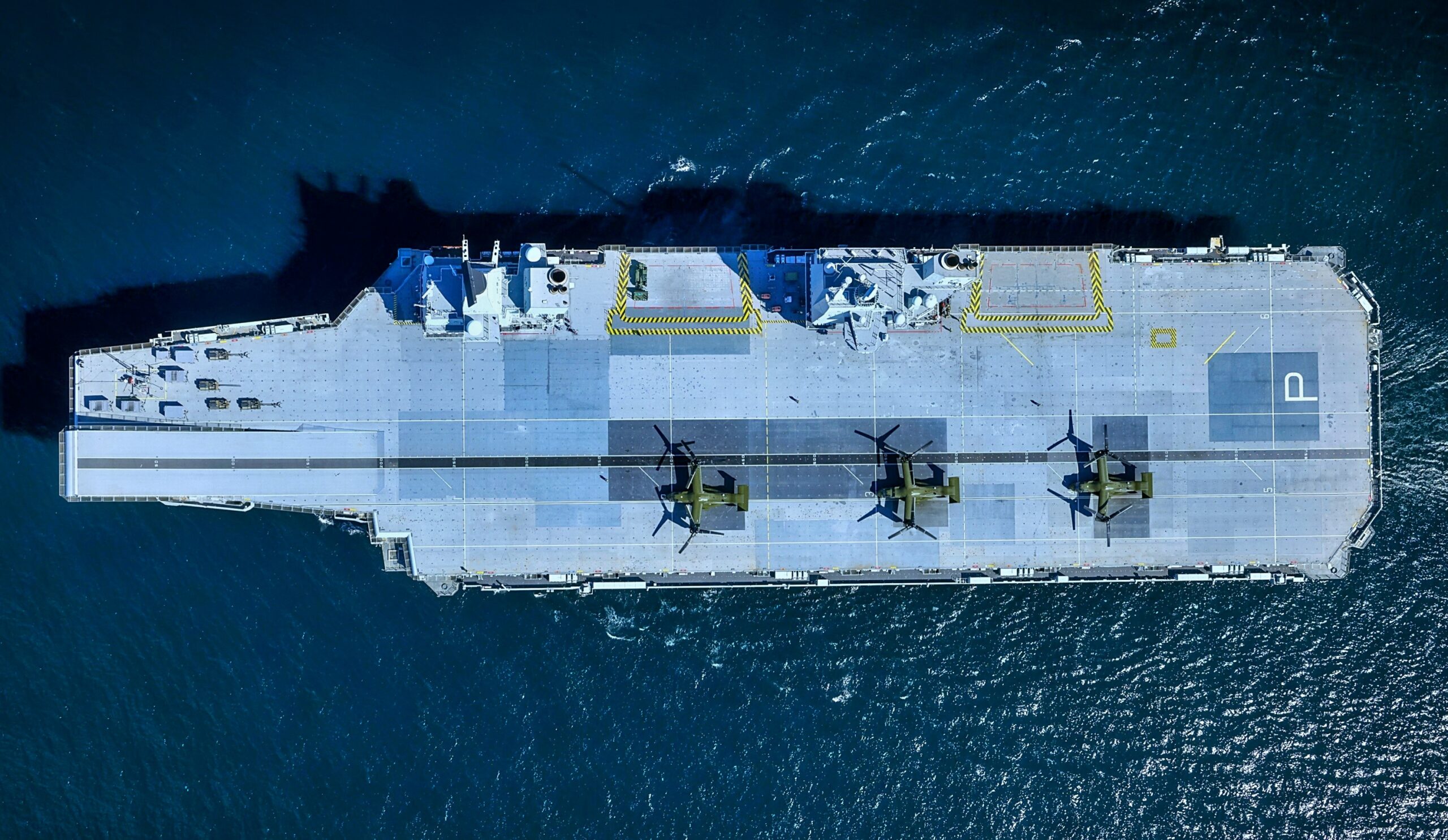
HMS Prince of Wales Aircraft Carrier. Image Credit: Creative Commons.
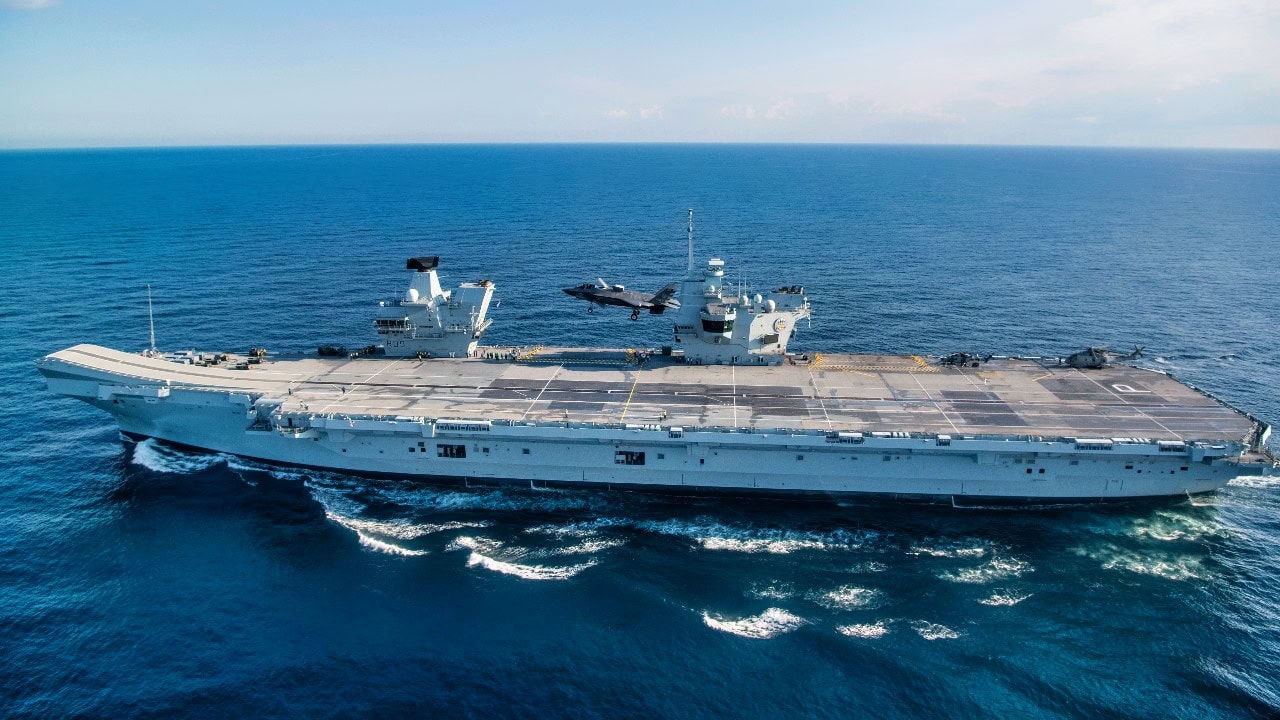
HMS Prince of Wales Aircraft Carrier.
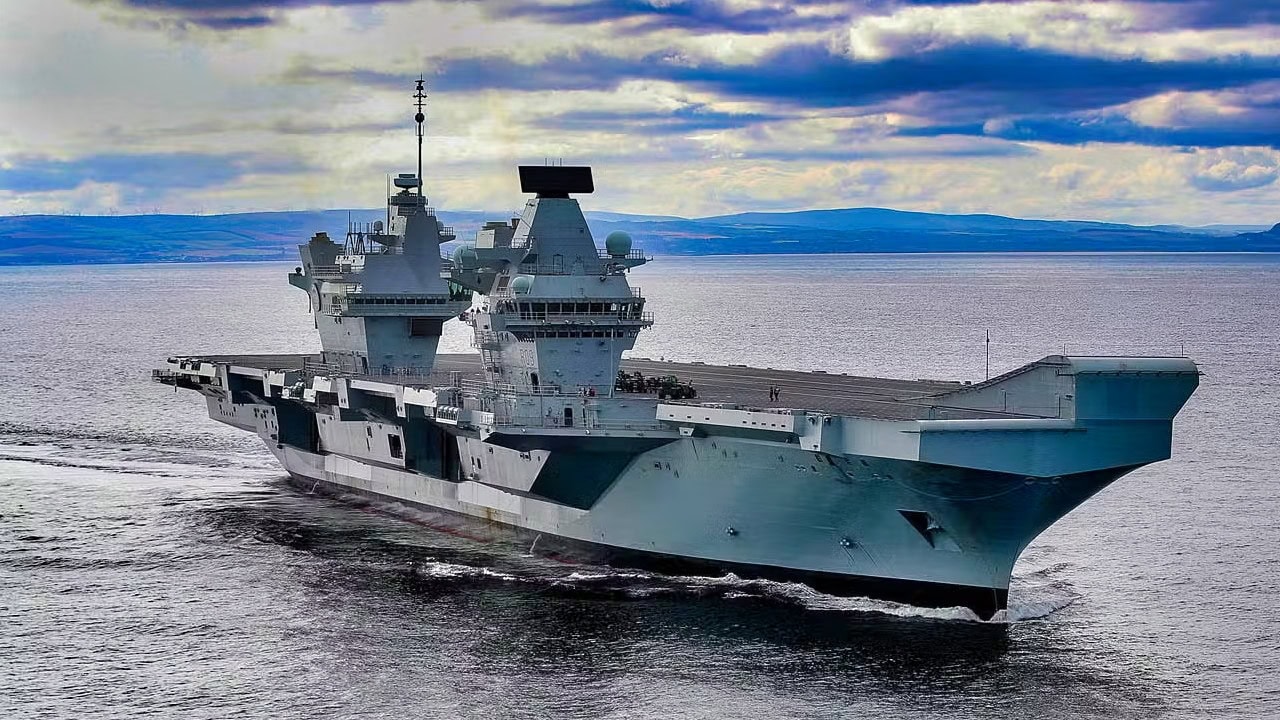
HMS Prince of Wales Aircraft Carrier.
The UK Treated The Two Carriers Of The Queen Elizabeth-class As A Jobs Program
Rather than build these ships in a single shipyard for manufacturing efficiency and quality control, the UK treated the two carriers as job programs and spread the work among 6 shipyards and 90 companies employing 10,000 workers, all of which had to barge their sections to a final assembly point.
This might not be a problem for building bulk carriers or tankers, where 70=80% of the interior volume is made up of storage tanks for oil, cargo, or water ballast, but it did prove to be a problem for complex warship builds like the Queen Elizabeth-class carriers.
Costs exploded, and years of delay almost doubled their price.
HMS Queen Elizabeth and HMS Prince of Wales were commissioned in 2017 and 2019, respectively.
Both somehow passed their sea trials despite serious engineering and systems problems, including breakdowns, floods, fire, canceled deployments, and months tied to piers or in drydocks for extensive repairs.
Serious Design And Manufacturing Problems That Sea Trials Missed In The Queen Elizabeth-class
The first carrier afflicted was Prince of Wales in August 2020 when a high-pressure fire main burst, flooding an engineering space with seawater and submerging electrical panels.
At the time, the Prince of Wales was tied to the pier at its base in Portsmouth, UK. So, a fire main meant to fight fires aboard the ship caused millions of pounds in damage that took 6 months to repair.
Then, in 2022, Prince of Wales suffered a total propulsion failure when a propeller shaft coupling failed.
Prince of Wales was two days out of port, heading to the US.
She had to be towed back to Portsmouth for 9 more months of repairs, including replacement of one of her propeller shafts.
It was discovered that the fault lay in a misaligned shaft during some phase of her construction at 6 different shipyards before final assembly.
An inspection of Queen Elizabeth cleared her of the same fault during construction and gave her a clean bill of health.
The Royal Navy didn’t seem to trust the finding. During a pre-deployment inspection of her propellers in 2024, they found that same propeller shaft coupling was likely to fail while she served as flagship for a major NATO exercise, and she was withdrawn for 4 months for repairs.
Prince of Wales hastily departed as her replacement.
Looking back at the intent behind their construction as ships capable of projecting power for the UK far from friendly bases, both ships appear to have failed not only in design but also in supporting elements.
The UK Must Borrow Planes and Pilots From The US Marine Corps To Put Their Queen Elizabeth-class Carriers To Sea
Aircraft carriers are put to sea with an air group, escorting vessels, and sustainment ships and oilers.
Without any of these, you don’t really have an aircraft carrier capable of conducting sustainment operations far from port.
The UK needs about 80 F-35Bs to supply both carriers with a full complement of aircraft and a training squadron.
Thus far, they have obtained only 47, and to fill out just a single air group, they use US Marine Corps F-35Bs and pilots.
In effect, they have to borrow aircraft, pilots, and personnel from the US to operate a single carrier.
The UK Lacks The Tankers To Keep The Queen Elizabeth-class Refueled Far From Home
The UK suffers from a lack of oilers and sustainment vessels.
The UK has four Tide-class oilers to keep the two carriers at sea, but it’s not enough for sustained operations.
This is enough for operations in home waters or the Mediterranean, but not enough for long operations in the Pacific or Indian oceans.
As you increase the distance an aircraft carrier is from port, you also increase the time and distance a tanker must cover to refuel it.
Tankers operate in a relay system: while one returns empty, another is on its way out.
Get far enough away, and you need to feed additional tankers to the relay to keep up.
4 tankers would be enough to supply one UK carrier in the Pacific, but not two.
The Royal Navy is also chronically short of dry stores ships to supply the carriers with food, parts, and other supplies.
To compensate, the UK must rely on the US or other NATO navies to send their supply ships to keep them at sea.
The UK Doesn’t Have Escorts To Protect One Queen Elizabeth-class Carrier
Finally, the UK lacks escorting vessels to protect the two Queen Elizabeth carriers at sea.
The Royal Navy has only 5 frigates on its rolls, with only 2 able to go to sea at any given time.
The UK seems to have forgotten that an aircraft carrier is a major strategic asset that has a major impact if lost in a theater-wide conflict.
A US aircraft carrier goes to sea with a bare minimum of 3 escorting cruisers and destroyers (much more capable than a frigate) and at least 1 nuclear-powered attack submarine.
Currently, the Royal Navy cannot properly escort a single aircraft carrier, let alone two.
A US Carrier air group also includes airborne early warning aircraft operating 200 nm from the carrier to give warning of incoming missiles or aircraft.
The Royal Navy is trying to use short-range helicopters to provide this capability at lower altitudes, lower speeds, and with one-third the flight-time endurance.
The Queen Elizabeth-class Falls Far Short Of Its Promises
Currently, HMS Queen Elizabeth is in Gibraltar as part of a 3-month deployment in the home waters and Northern Europe as the command platform for NATO’s Allied Reaction Force.
The operational shortcomings of the UK’s aircraft carriers tie them closely to bases ashore for fueling and protective escort by ships from other NATO navies.
This falls far short of the original idea of these carriers operating independently far away in distant oceans to project power.
Prince of Wales is currently en route to the North Atlantic, escorted by a single Royal Navy frigate, to participate in NATO exercises, again with a temporary escort screen provided by other NATO navies.
The Collision Of Strategic, Economic and Logistical Realities And the Queen Elizabeth-class
Obviously, the UK’s vision of a new global-spanning Royal Navy capable of power projection has clashed sharply with modern logistics and economic realities it was not prepared to face.
Rather than creating a formidable pair of supercarriers as deterrents to aggression, the Queen Elizabeth class represents a failed domestic shipbuilding strategy that put political job creation over sound engineering, construction, and quality control.
The ships are hobbled by mechanical failures, fire, flooding, chronic aircraft shortages, strategic vulnerability due to a lack of escorts, and sustainment vessels that keep them close to home.
They remind you of that likable neighbor with a big home-improvement idea that has to borrow most of what he needs to do the job from you.
About the Author: Sean Spoonts
Sean Spoonts is the former Editor-In-Chief of SOFREP.com. He is a military analyst, writer, and commentator whose work has appeared in Newsweek, CNS News, Ukrinform, and various military/veteran media networks and professional publications, including the Military Intelligence Professional Bulletin. He is a U.S. Navy veteran, having served as an Aviation Anti-Submarine Warfare Operator and Search and Rescue Helicopter Aircrewman.