
U.S. Army seeks commercial controllers for drones, ground robots
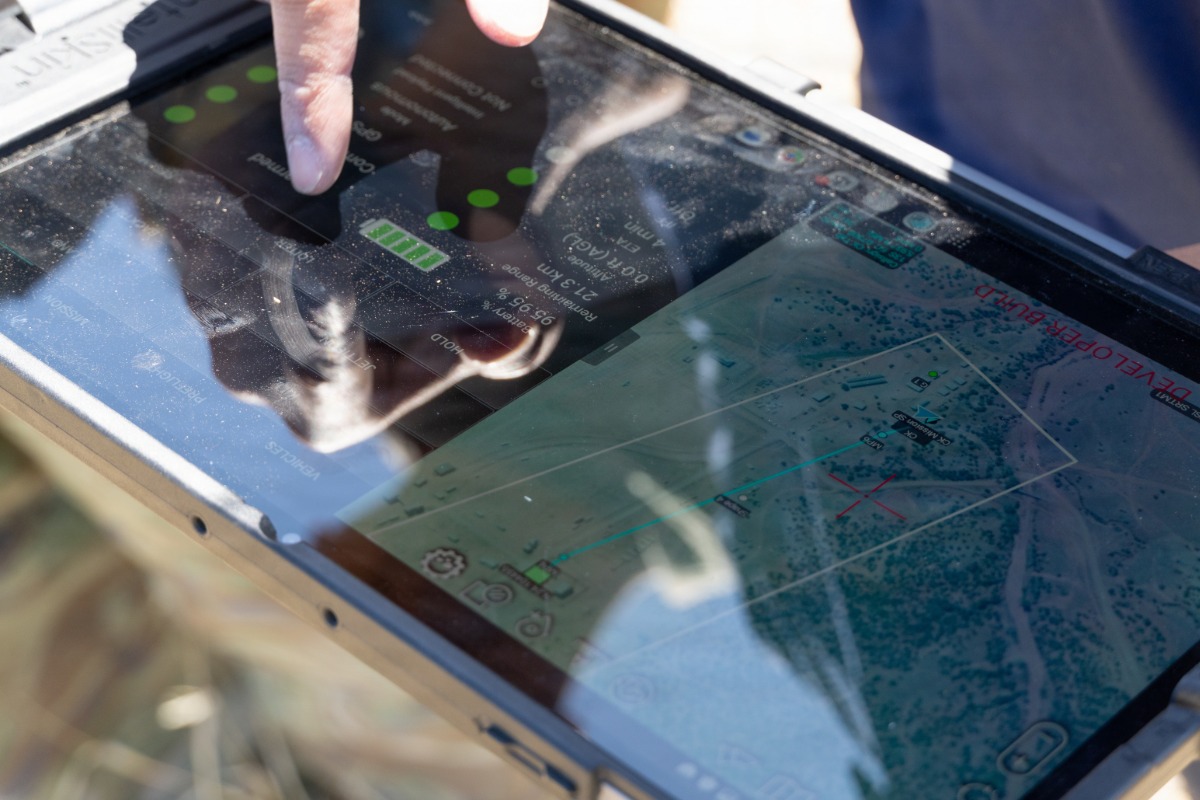
The U.S. Army has opened a call for commercial vendors of controllers and human-machine interfaces for small drones, launched effects and ground robots, seeking systems that can plug directly into a new Army command-and-control network, according to a solicitation posted Aug. 13, 2026.
The notice was issued by U.S. Army Contracting Command-Redstone Arsenal on behalf of the Capability Program Executive for Aviation. It falls under the Army’s broader Uncrewed Aircraft System Marketplace Commercial Solutions Opening, W58RGZ-26-S-C001, using contracting authority granted under 10 U.S.C. § 3458. The listing carries Product Service Code 1550 for unmanned aircraft and NAICS code 336411 for aircraft manufacturing.
The call does not seek to buy drones, launched effects or ground vehicles themselves. It seeks controllers and human-machine interfaces for Group 1-3 UAS, Launched Effects and Unmanned Ground Vehicles, for a Command and Control Software Development Kit Integration event run by the Army’s Program Manager for Uncrewed Aircraft Systems. Vendors whose systems pass the evaluation will be invited to test their equipment against the Army’s network and receive feedback from soldiers.
The Army’s problem statement says its current portfolio of disparate, stove-piped control systems prevents soldiers from operating multiple robotic and autonomous systems as an integrated team, creating operational gaps an adversary could exploit. The attached Statement of Objectives lists six control capabilities the Army wants from a unified C2 architecture: asymmetric, distributed, intelligent, intermodal, policy-based and resilient control.
Vendors must build to a Modular Open Systems Approach and, where applicable, align to the Future Airborne Capability Environment technical standard, according to the solicitation. The Army is also seeking Government Purpose Rights, at minimum, for data and software tied to external interfaces such as controllers, platforms and the C2 architecture itself, along with commercial license rights broad enough to let government personnel maintain, repair and train on the equipment.
Eligibility requirements are extensive. Offerors must certify that no critical flight components come from covered foreign countries, including China, under Section 848 of the fiscal 2020 defense authorization act, and must be ready to produce a bill of materials to prove it. Companies also need an active System for Award Management registration, a Commercial and Government Entity code, certification through the Defense Logistics Agency’s Joint Certification Program, a current NIST SP 800-171 cybersecurity assessment posted to the Supplier Performance Risk System, and registration in the government’s invoicing system.
Offerors first submit a five-page white paper covering their product, technical maturity and integration plan, formatted to specific Army page-count and font rules. Papers rated Fully Compliant or Partially Compliant can move to a live C2 SDK Integration Event, where the Army will run flight or test-card demonstrations, coordinate spectrum access, and require vendors to sign a software use, distribution and non-disclosure agreement before receiving its C2 software development kit, an example of which the solicitation names as WARHEX. Systems rated Successful are eligible for onboarding to the UAS Marketplace and the government’s C2 software development environment. Systems rated Unsuccessful may continue testing if time remains, or wait for a future event.
Initial submissions are due Aug. 26, 2026, 21 days after the notice posted, to be prioritized for the first evaluation cycle. The call is otherwise open on a continuous, rolling basis, and SAM.gov lists the opportunity as inactive starting Aug. 27, 2031. This call covers only controllers and HMIs. The Army intends to hold C2 SDK Integration events quarterly and plans future calls covering Group 1-3 UAS, launched effects and UGV systems on their own.
The integration effort supports Next Generation Command and Control, the Army’s initiative to replace fragmented, function-specific command systems with a single data architecture across echelons. The Army declared NGC2 ready to scale in July 2026 following trials with the 4th Infantry Division and 25th Infantry Division at Project Convergence-Capstone 6, and it has since selected Anduril Industries to lead the program’s common data layer baseline, working alongside Palantir and Raft on the underlying data-sharing tools.
The UAS Marketplace itself launched March 24, 2026, at Redstone Arsenal as a digital storefront built with Amazon Web Services and the Army Enterprise Cloud Management Agency, intended to let Army units, government partners and allied nations order vetted commercial drone systems.
Content preview only. Full article available at source. View Full Article
The U.S. Army issued a solicitation on August 13, 2026, for commercial vendors to provide controllers and human-machine interfaces for drones and ground robots at Redstone Arsenal. This initiative aims to integrate these systems into a new command-and-control network to enhance operational capabilities. Vendors must meet extensive eligibility requirements and will be evaluated for their systems' compatibility with Army standards.
- The U.S. Army issued a solicitation for commercial vendors for controllers and interfaces for drones and ground robots.
- The solicitation was posted on August 13, 2026, by U.S. Army Contracting Command-Redstone Arsenal.
- The Army aims to integrate these systems into a new command-and-control network.
- Eligibility requirements include certifications and compliance with cybersecurity standards.
- The integration effort supports the Army's initiative to replace fragmented command systems.