
US Deploys 36 F-15EX Fighters to Japan in 2026 and Changes the Airpower Math
 Marcus Chen
US Deploys 36 F-15EX Fighters to Japan in 2026 and Changes the Airpower Math
Two F-15EX Eagle IIs landed at Kadena Air Base on November 15. The United States plans to station 36 of them in Okinawa, replacing a fleet of 48 aging F-15C/Ds. That is not a simple aircraft swap. It is Washington putting a heavy missile truck, modern electronic warfare, and a large radar signature back on the most exposed airfield in the Western Pacific.
The Arrival Fixes a Four-Year Fighter Gap
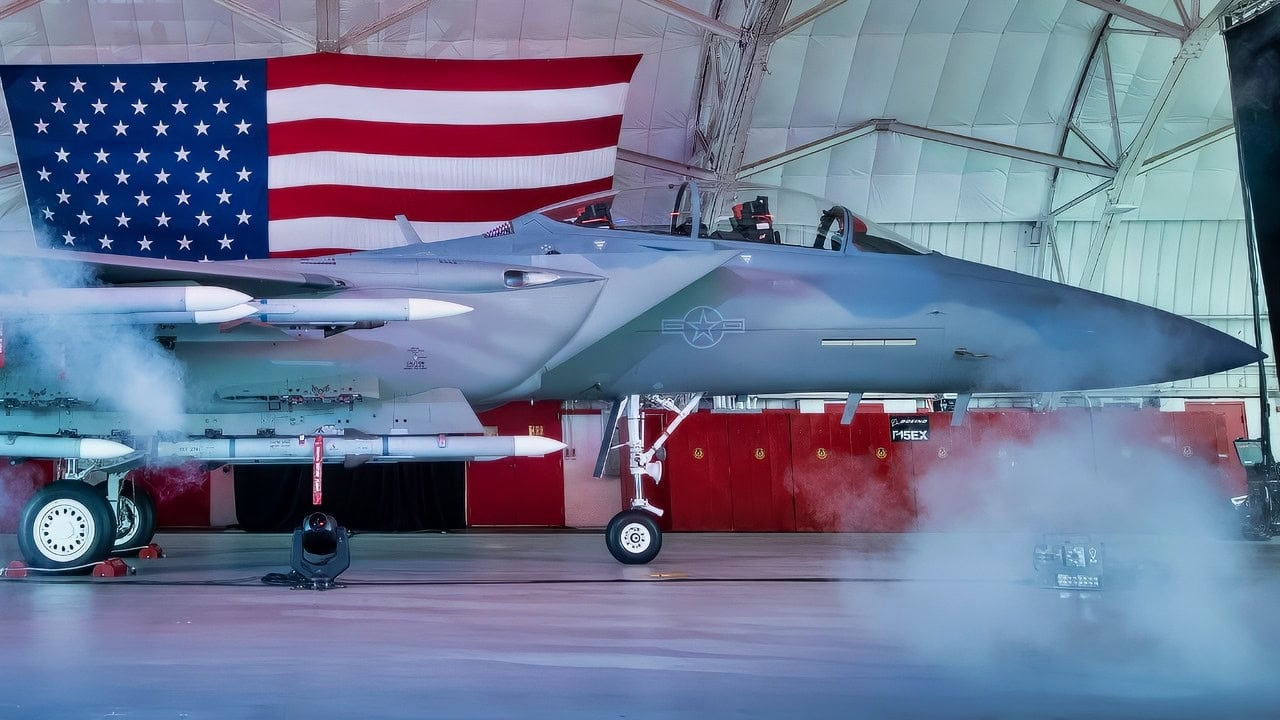
Kadena began withdrawing its F-15C/D fleet in November 2022. Since then, the Air Force has relied on temporary rotations, including F-15s from the 122nd Expeditionary Fighter Squadron, to keep a fighter presence on Okinawa. The official announcement from the 18th Wing describes the first permanently assigned F-15EXs as the next phase of modernization. The important word is permanently. Rotational aircraft create presence; assigned squadrons create a force that can build maintenance routines, stock parts, train with Japan, and generate sorties without waiting for the next deployment order.
The plan is to equip the 67th and 44th Fighter Squadrons with 36 Eagle IIs. That is fewer airframes than the 48 F-15C/Ds they replace, but counting tails misses the point. The old fleet was built around airframes delivered decades ago and burdened by structural inspections, obsolete parts, and repair time. A smaller force that can actually fly is more useful than a larger force that spends its war in the maintenance hangar.
What the F-15EX Brings to Okinawa
- Payload: up to 29,500 pounds, according to Boeing.
- Air-to-air capacity: up to 12 AIM-120 AMRAAMs or an equivalent mix of large weapons.
- Speed and altitude: approximately Mach 2.5 and 50,000 feet.
- Survivability and sensing: an advanced AESA radar, the Eagle Passive Active Warning and Survivability System, and open mission systems designed for software upgrades.
Those numbers matter because Kadena is not receiving a pure dogfighter. The F-15EX can carry more long-range air-to-air weapons than an F-35, while the F-35 supplies the low-observable sensing and targeting that the Eagle lacks. In a contested fight, the useful model is not F-15EX versus F-35. It is F-35s finding and classifying targets, then F-15EXs launching a larger salvo from farther away.
That division of labor also explains why the aircraft belongs at Kadena. Okinawa sits close enough to the Taiwan and East China Sea approaches to produce useful sortie rates, but close enough to Chinese missiles that the base itself becomes a targeting problem. The Eagle II improves the weapons side of the equation. It does not remove the runway, fuel, shelter, and command-and-control vulnerabilities.
China Will Count Weapons, Not Ceremonies
Beijing will notice that the aircraft are arriving as Chinese naval and coast guard forces continue operating around Taiwan and across the Western Pacific. But the F-15EX does not automatically restore air superiority. Kadena must generate sorties after the first missile attack, preserve aircraft under drone and cruise-missile pressure, and keep its radar and data links connected when Chinese electronic warfare begins.
That creates a simple readiness test. How many of the planned 36 jets are mission-capable? How many can launch in the first 24 hours? How quickly can maintainers turn an aircraft after a long-range weapons mission? How many spare engines, radar modules, and electronic-warfare line-replaceable units are stored on Okinawa? The Air Force has announced the platform. It has not yet demonstrated the sustained combat rhythm that makes the platform relevant.
There is also a geography problem. F-15EXs at Kadena can cover the airspace around the Ryukyu chain and support operations toward Taiwan, but every mile toward the mainland increases tanker demand and exposure to surface-to-air missiles. The aircraft's range and payload are valuable only when tankers, airborne early warning aircraft, decoys, and dispersal bases are available. A fighter force is a system. The jet is the most visible part and rarely the limiting part.
The Real Test Is Integration With Japan
The new fighters arrive alongside Japan's own expanding air-defense responsibilities. The Japan Air Self-Defense Force must share tracks, coordinate airspace, protect bases, and decide how much of its own force can be committed beyond the immediate defense of Japanese territory. The F-15EX's open architecture and modern communications can help, but interoperability is trained into existence. It does not come with the delivery paperwork.
Washington should therefore treat the first year at Kadena as a combat-generation experiment. Exercises should include damaged runways, distributed maintenance, lost satellite communications, and mixed formations with Japanese fighters and U.S. F-35s. The objective should be measurable: sortie generation under attack, missile reload time, aircraft recovery after a simulated base strike, and the ability to pass a target-quality track between services.
Kadena does not need a better brochure. It needs a fighter force that can still launch after the base has been hit.
Conclusion
The first permanent F-15EX arrival is a meaningful improvement for U.S. airpower in Japan, but it is not a magic shield for Okinawa or Taiwan. Thirty-six modern Eagles can add a serious long-range weapons battery to the Pacific fight and complement stealth aircraft in ways the old F-15C/D fleet could not. Yet the advantage exists only if the Air Force can protect the base, sustain the aircraft, and connect them to Japanese and U.S. sensors.
The arithmetic has improved. The war plan still has to prove it.
Sources
- U.S. Air Force, Kadena welcomes first permanently assigned F-15EX Eagle II aircraft, November 15, 2026
- Task & Purpose, Permanent F-15EXs finally arrive at Kadena Air Base, November 15, 2026
- Boeing, F-15EX Eagle II specifications and capabilities
- U.S. Department of the Air Force, F-15EX acquisition report
The U.S. Air Force deployed 36 F-15EX Eagle II fighters to Kadena Air Base in Okinawa on November 15, 2026, replacing an older fleet of F-15C/Ds. This deployment enhances U.S. airpower capabilities in the Western Pacific, allowing for improved long-range strike potential and integration with Japanese air defense systems. The F-15EXs are expected to support operations in the region, particularly concerning tensions around Taiwan.
- 36 F-15EX fighters are being deployed to Okinawa to replace 48 F-15C/Ds.
- The first two F-15EXs landed at Kadena Air Base on November 15, 2026.
- The F-15EX offers advanced capabilities including a payload of up to 29,500 pounds and air-to-air capacity for 12 AIM-120 AMRAAMs.
- The deployment aims to enhance U.S. airpower in the Western Pacific region.
- Integration with Japan's air defense is a key focus for the new fighters.