
US F-35s Enter India’s 2026 Air Exercise to Test China’s Airpower Edge
 S.W
S.WUS F-35s Enter India’s 2026 Air Exercise to Test China’s Airpower Edge
Eight countries will put aircraft into the sky over western India on September 26, but the most important participant is not the largest force. It is the U.S. Air Force F-35, flying tactical missions with Indian fighters from an Indian airbase for the first time. That makes Tarang Shakti more than another multinational photo opportunity. It is a live interoperability test at the edge of a theater where China is expanding its fifth-generation fleet.
The First Indian F-35 Tactical Detachment
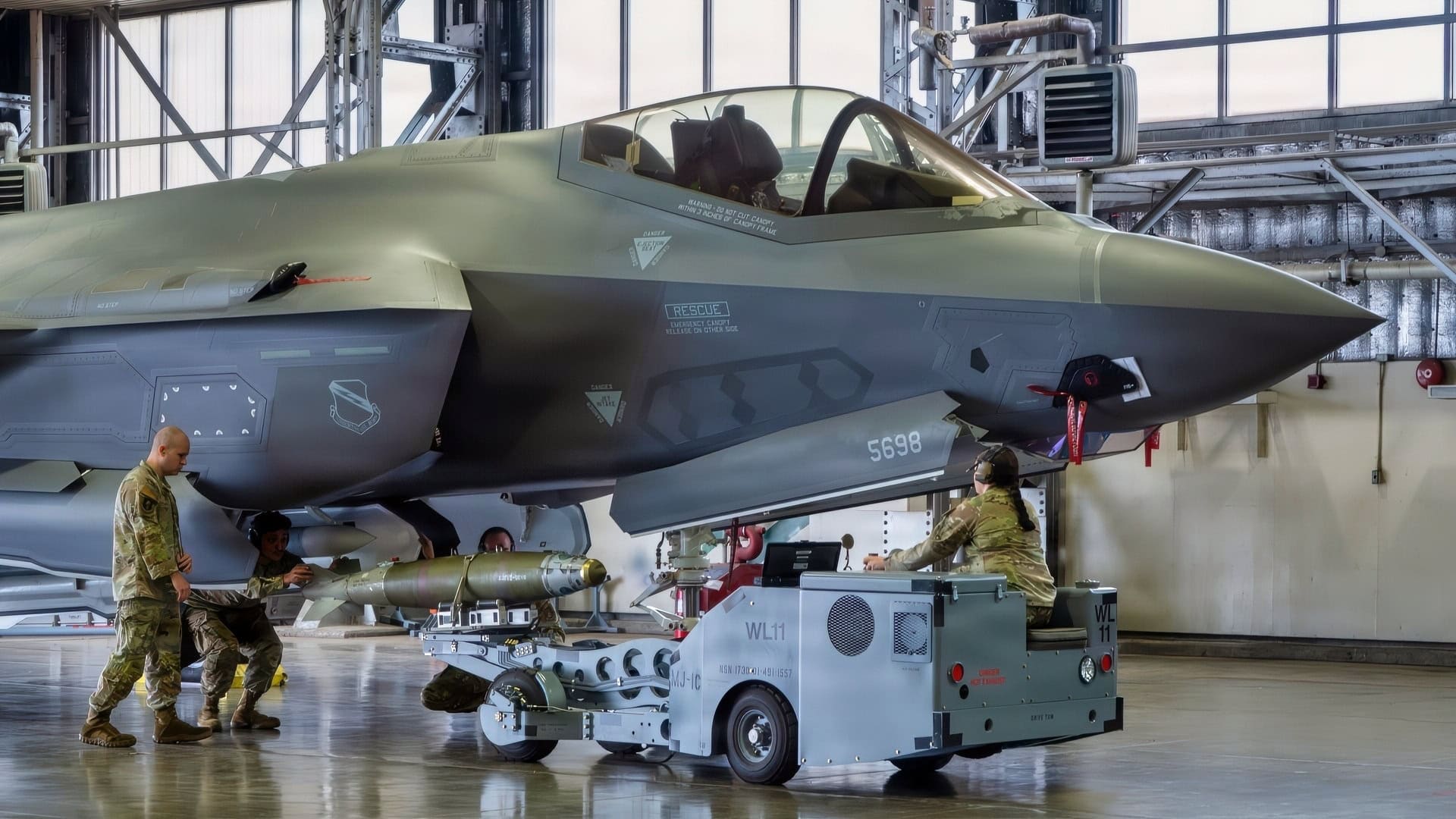
Defense News reported that the exercise will be based at Jodhpur in Rajasthan, roughly 200 kilometers from the Pakistan border, and will run through October 12. India is sending Rafales, Su-30MKIs, Tejas fighters and Mirage 2000s. France will bring Rafales, the United Arab Emirates F-16s, and Germany, Australia, Bangladesh, Sri Lanka and Greece will contribute aircraft or other air assets. Thirty-two additional countries are attending as observers.
The distinction matters. The F-35 has appeared at Indian defense exhibitions and Indian fighters have operated alongside American F-35s during exercises in Australia. This is different: the aircraft will now work with Indian crews and formations from Indian soil. Indian pilots can observe how a low-observable aircraft shares sensor information, manages emissions and assigns targets inside a networked package. They also get a practical look at what stealth does not solve: tanker demand, maintenance, weapons handling and the need to protect the airfield.
What the F-35 Actually Adds
The F-35A is not simply a faster replacement for the Su-30MKI. Lockheed Martin lists a maximum speed of about Mach 1.6, an internal weapons bay, advanced electronic warfare and a sensor suite designed to fuse data from the aircraft and outside networks. The U.S. Air Force describes the aircraft as a strike fighter whose advantage is the combination of low observability, sensing and connectivity. In a coalition, that combination can make the F-35 a forward sensor and battle manager even when another aircraft carries the larger weapon load.
But one exercise cannot transfer the full U.S. operating system to India. India flies a mixed fleet with different datalinks, weapons, maintenance chains and pilot training standards. A Rafale, Tejas or Su-30MKI can receive useful information from an F-35 only if the communications architecture and rules of engagement allow it. Otherwise the stealth jet becomes an expensive scout whose information remains trapped in an American network.
“We do not conduct Tarang Shakti to demonstrate what we already know. We conduct it to discover what we still need to learn,” Indian Vice Chief of the Air Staff Air Marshal Ashutosh Dixit said, according to Defense News.
The China Problem Behind the Training Scenario
New Delhi does not need to buy the F-35 to learn from it. India’s immediate problem is understanding how a fifth-generation force changes the air battle. China is rapidly expanding its J-20 inventory and building the supporting architecture—long-range sensors, electronic attack, airborne early warning and precision missiles—that makes stealth aircraft dangerous. The relevant comparison is therefore not F-35 versus one Indian fighter. It is a connected Chinese kill chain versus an Indian force that still has to integrate several generations of aircraft.
That is why the location and timing are significant. Jodhpur is close enough to the Pakistan frontier to make the training operationally grounded, while the exercise’s multinational structure exposes India to French, American, Emirati, Australian and Japanese methods. Japan has just completed a bilateral drill with India in which its F-2A fighters operated in India for the first time. Taken together, the events show New Delhi widening its practical air partnerships without signing up to a formal alliance.
Interoperability Is Not the Same as Alignment
Washington and New Delhi have reasons to keep the relationship moving. The F-35 appearance signals confidence despite disputes over trade and India’s purchases of Russian oil. For the United States, India is a valuable operating partner in the Indo-Pacific, but not a treaty ally committed to every contingency. For India, access to American tactics is useful while preserving freedom to buy French, Russian and domestic systems.
That ambiguity is a feature, not a flaw, until a crisis begins. In a Taiwan contingency, the United States may want Indian political or logistical support. India may instead prioritize the Himalayan border, the Indian Ocean and Pakistan. A successful exercise can improve the mechanics of cooperation without resolving the political question of when cooperation would actually occur.
The Test That Matters After October 12
The useful output from Tarang Shakti will not be the number of sorties or the quality of the airshow footage. It will be whether Indian and American crews can build repeatable procedures for sensor sharing, deconfliction, refueling and combat search and rescue. It will also be whether India can turn lessons from the 2025 India-Pakistan air conflict into changes in training and force structure.
China will watch the same exercise and draw its own conclusions. If the F-35 can operate as a trusted node inside a mixed Indian formation, the drill will have real military value. If it remains an isolated American capability surrounded by incompatible networks, Tarang Shakti will demonstrate access without producing combat power. The aircraft is already advanced. The harder question is whether India and the United States can make their systems behave like one force when the exercise ends.
Sources
U.S. Air Force F-35s participated in India's Tarang Shakti air exercise in Jodhpur, Rajasthan, from September 26 to October 12, 2026. The exercise involved eight countries and aimed to test interoperability between U.S. and Indian forces against the backdrop of China's expanding airpower. Indian aircraft, including Rafales and Su-30MKIs, operated alongside the F-35s, with a focus on sharing sensor information and combat tactics.
- U.S. F-35s are participating in India's Tarang Shakti air exercise for the first time.
- The exercise is taking place in Jodhpur, Rajasthan, from September 26 to October 12, 2026.
- India is deploying various aircraft including Rafales and Su-30MKIs alongside U.S. F-35s.
- The exercise aims to test interoperability against China's expanding air capabilities.
- Thirty-two additional countries are attending as observers.