
US-Japan F-15 and F-22 Conduct Tactical Training in the East China Sea in 2026, Demonstrating Okinawa's Air Defense Readiness
 Tanaka Takashi
Japan-U.S. F-15 and F-22 Conduct Tactical Training in the East China Sea in 2026, Demonstrating Okinawa's Air Defense Readiness
On July 9, two F-15s from the Japan Air Self-Defense Force's 9th Air Wing conducted tactical training with two F-22s from the U.S. military over the East China Sea, northwest of Okinawa. The materials released by the Joint Staff Office on the 10th are brief. However, the statement included, "We do not accept unilateral changes to the status quo through force," is quite strong for a mere explanation of routine training.
The Significance of Training with Only Four Aircraft
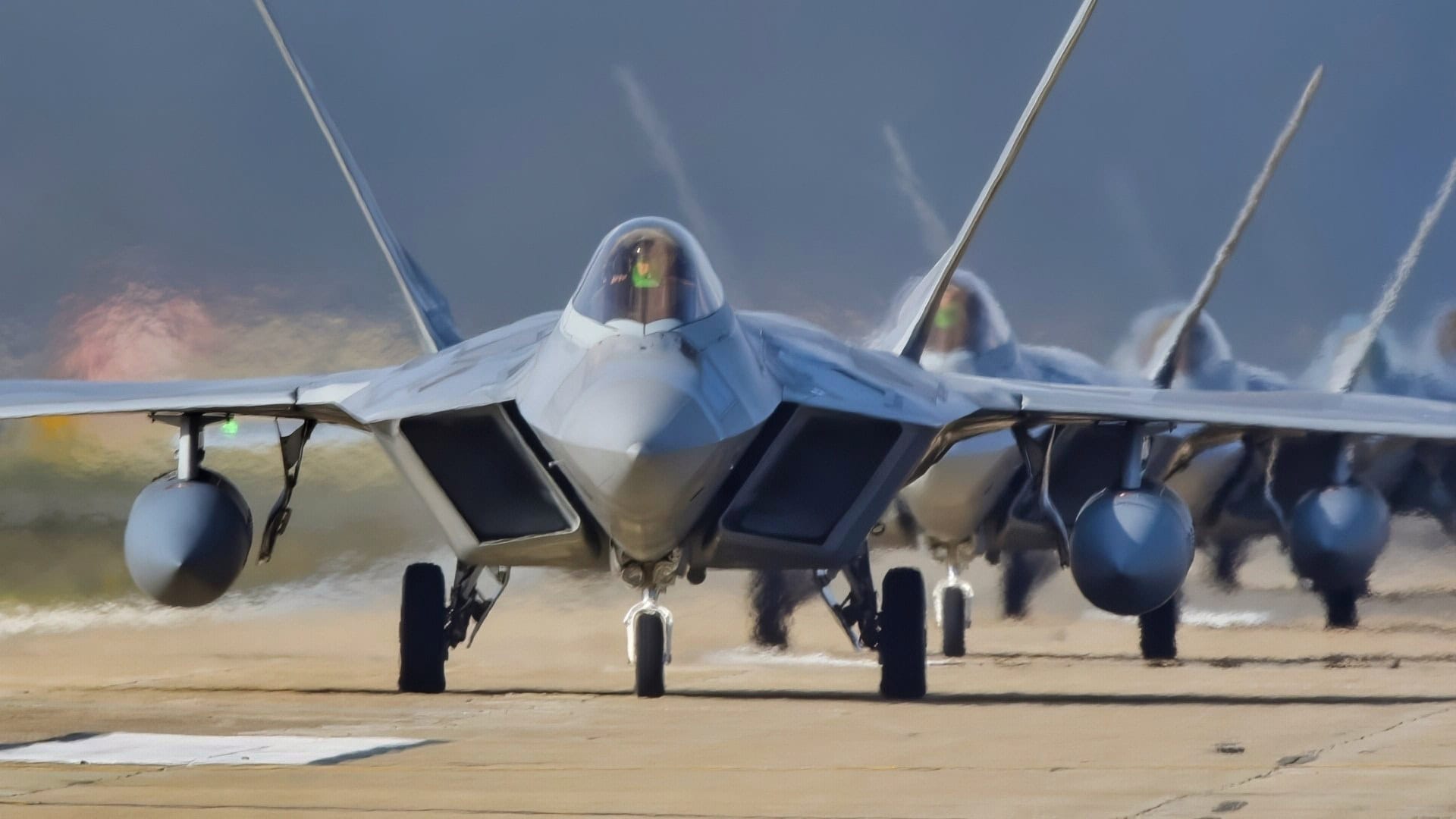
Only four aircraft participated in total. However, the small number should not be taken lightly. The location is "the airspace over the East China Sea northwest of Okinawa," which is directly in front of the southwestern air defense centered around Naha. It can be envisioned that the F-15s from the 9th Air Wing are responsible for airspace awareness and interception procedures in the front, while the F-22s utilize low observability and sensor fusion for early detection, electronic superiority, and approaching a virtual enemy.
According to the U.S. Air Force's published materials, the F-22 is an air superiority fighter that combines stealth, supercruise, and integrated avionics, capable of carrying six AIM-120s and two AIM-9s in an air-to-air configuration. Its speed is classified at Mach 2, and its practical advantage lies not just in speed but in the ability to identify and make engagement decisions before being detected by the enemy. The mixed training of F-15s and F-22s is a process of confirming who observes, who engages, and who secures escape routes between traditional air defense fighters and fifth-generation aircraft.
Connection to the Transition to F-15EX at Kadena
This training is not unrelated to the preparations for the transition to the F-15EX at Kadena Air Base. On June 29, the F-15EX Eagle II returned to Kadena, and the 18th Wing explained that it is verifying maintenance, supply, and tactical procedures in anticipation of future permanent deployment. In other words, the U.S. military is not only filling the gap left by the old F-15C/D but is also restructuring the ground posture to continue operating high-performance large air superiority aircraft in Okinawa.
From the perspective of the Japan Air Self-Defense Force, the F-15 remains the mainstay in the southwestern region. The issue lies not with the aircraft itself, but with how quickly information can be shared with the F-22, the future F-15EX, and even the E-2D and ground radar. Engagements in the East China Sea evolve in minutes. If the link is delayed, the early detection capabilities of fifth-generation aircraft will not translate into the firepower of the entire alliance.
Practical Signals of Deterrence Against China
The Joint Staff Office explained that this training reflects the severity of the security environment around Japan. While avoiding naming specific adversaries, it is clear who the readers should assume. In the East China Sea, activities of Chinese military aircraft, naval vessels, and the advancement of unmanned systems overlap, blurring the lines between peacetime surveillance and wartime air defense.
In my view, the key point of this event is not a political expression of "Japan and the U.S. demonstrating strong will." Rather, it lies in the readiness to deploy two F-15s and two F-22s in small units to the airspace in a short time and successfully conduct joint tactical training. Large-scale exercises require long preparation periods and are easier for adversaries to anticipate. Small-scale, frequent training brings the daily air defense posture closer to alliance operations.
Remaining Weaknesses
However, challenges remain. The number of F-22s is limited, and they cannot be stationed heavily in Okinawa at all times. Even as the transition to the F-15EX at Kadena progresses, if data connectivity with Japan's F-15s, base protection, ammunition resupply, and runway recovery capabilities do not accompany it, air superiority will remain just a number on paper. What is truly at stake in the East China Sea is not the performance of the four aircraft, but how quickly the next four can be deployed after the first four are sent out.
On July 9, 2026, the Japan Air Self-Defense Force's 9th Air Wing and the U.S. Air Force conducted tactical training with two F-15s and two F-22s over the East China Sea near Okinawa. This exercise showcased their readiness for air defense operations amid rising tensions in the region, particularly concerning Chinese military activities. The training is also connected to preparations for the transition to F-15EX aircraft at Kadena Air Base.
- Japan and U.S. conducted tactical training with F-15 and F-22 aircraft.
- Training took place over the East China Sea near Okinawa.
- The exercise demonstrated readiness for air defense operations.
- The training is linked to the transition to F-15EX at Kadena Air Base.
- The exercise signals a response to increasing military activities by China.