
U.S. military trains on palletized SUADS anti-drone system
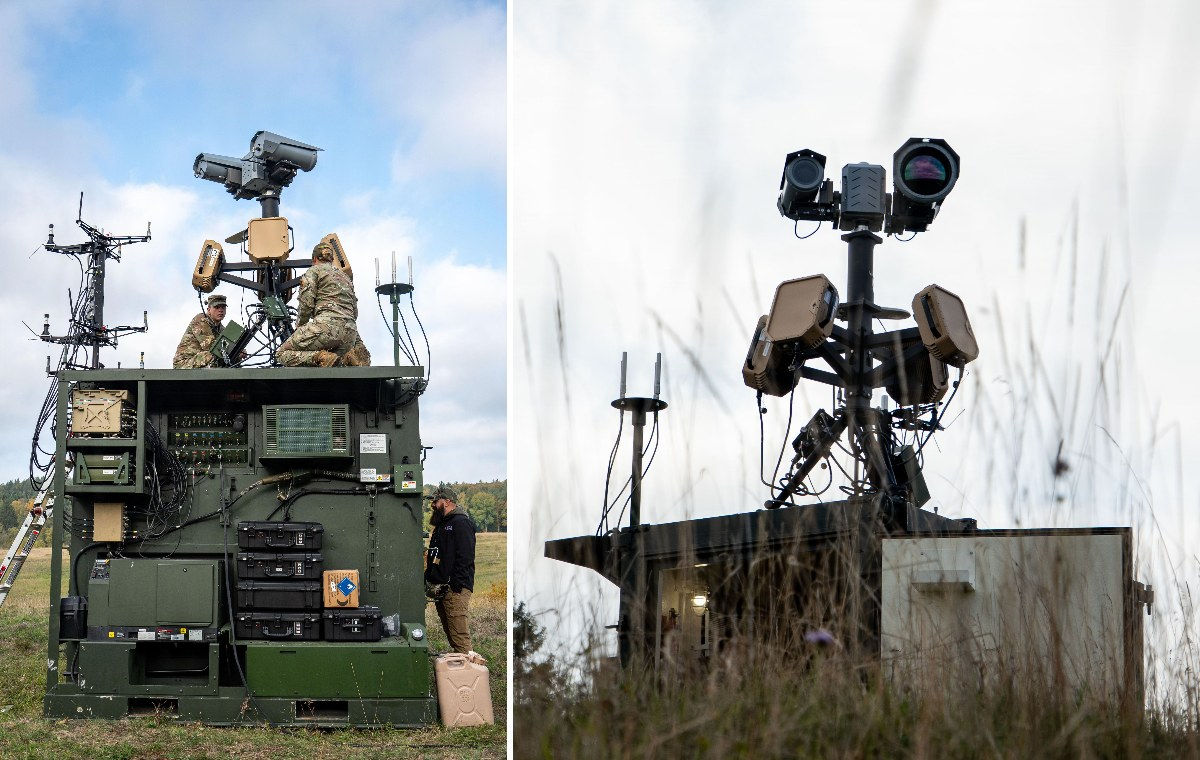
U.S. Army soldiers and U.S. Air Force airmen at Grafenwoehr Training Area in Germany are training on the Rapidly Deployable Small-Unmanned Air Defense System, or RD-SUADS, a palletized counter-drone system built by Trust Automation of San Luis Obispo, California, as they test how training across services can sharpen the response to drone threats, U.S. Army Europe and Africa said on social media.
Photos released with the post show the troops working with the system, which the counter-drone news account Counter Unmanned Systems identified as RD-SUADS. The Army did not say which units are taking part, how long the training will run or whether the system will be fielded with units in Europe. Grafenwoehr hosted a similar effort in February, when U.S. Air Forces in Europe and Air Forces Africa ran its Joint Multi-Domain Counter Unmanned Aircraft Systems Operator Course with soldiers, airmen and Marines to assess opening the course to more services.
RD-SUADS is the air-transportable member of Trust Automation’s Small-Unmanned Air Defense System family, designed to detect, track, identify and defeat small drones at bases and deployed sites. The company built it to be shipped and set up quickly without relying on local power.
“Promoting combat agility, this C‑sUAS is a self-contained, self-powered system that fits within a 463L pallet, enabling easy transport via military aircraft. Equipped with an integrated diesel generator with standalone operational capacity for four days between refueling. Additionally, the shore power interface allows sites with power infrastructure operate the system utilizing standard DoD generator connections and base power connections,” Trust Automation said.
The 463L pallet is the standard cargo pallet used by U.S. military transport aircraft such as the C-130 and C-17, so the system can be loaded and flown in with the same handling equipment as other air cargo. The SUADS family also includes a fixed-site tower version for permanent bases and an expeditionary version sized to travel as checked baggage and fit in larger SUVs. The U.S. Department of War’s Joint Interagency Task Force 401 lists the systems in its 2026 counter-small drone quick reference guide, noting they can host several electronic warfare capabilities to defeat small drones without firing a shot.
Radar is a central sensor. In April, Echodyne said its EchoShield radar had been chosen as the primary radar for SUADS, with RD-SUADS carrying up to four of the units, after the U.S. Air Force awarded Trust Automation a $490 million contract to develop, prototype and produce counter-drone systems through 2030. That contract is an indefinite-delivery, indefinite-quantity deal, meaning the U.S. Air Force can order systems in varying numbers and configurations over its life, and Echodyne’s radar now feeds all three SUADS versions.
The system has already been tested with the U.S. Army. Trust Automation said in October that SUADS completed a U.S. Army operational assessment during a rotation at the National Training Center at Fort Irwin, California, where it detected and engaged drones at roughly 2 to 6 km (1.2 to 3.7 miles), with coverage reaching about 7 km (4.3 miles) in favorable conditions. In that configuration, the system combined radar and electro-optical and infrared sensors with the NINJA and DroneBuster electronic attack systems.
Content preview only. Full article available at source. View Full Article
U.S. Army soldiers and U.S. Air Force airmen are training on the Rapidly Deployable Small-Unmanned Air Defense System (RD-SUADS) at Grafenwoehr Training Area in Germany. This training aims to enhance responses to drone threats using the palletized counter-drone system. The RD-SUADS is designed for rapid deployment and can operate independently for four days. It integrates advanced radar and electronic warfare capabilities to engage small drones.
- U.S. Army and Air Force are training on the RD-SUADS system at Grafenwoehr Training Area in Germany.
- The RD-SUADS is designed to detect, track, identify, and defeat small drones.
- The system is air-transportable and can be set up quickly without local power.
- Echodyne's EchoShield radar is the primary radar for the SUADS systems.
- Trust Automation received a $490 million contract to develop counter-drone systems through 2030.