

$13 Billion Target: Why Aircraft Carriers Still Matter in the Missile Age
Every generation, new weapons emerge that challenge the aircraft carrier, causing some to declare the floating airfields obsolete. Submarines, missiles, satellites, and hypersonics have all raised questions about the aircraft carrier’s survivability. Yet the carrier remains central to US naval strategy, actively deployed worldwide.
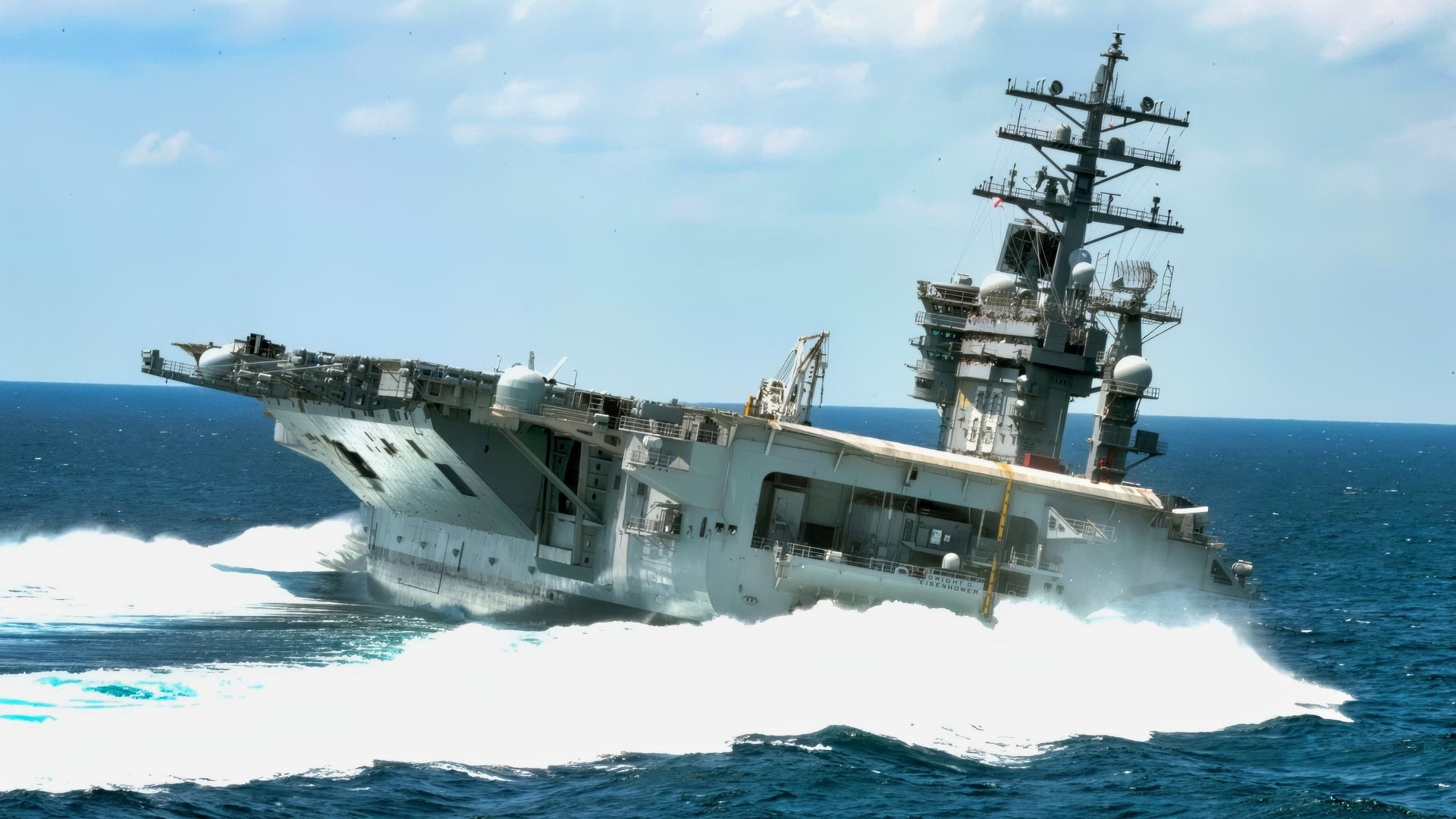
ATLANTIC OCEAN (June 14, 2011) The Nimitz-class aircraft carrier USS Dwight
D. Eisenhower (CVN 69) conducts rudder turns during sea trials. Dwight
D. Eisenhower completed a nine-month planned incremental availability at Norfolk Naval Ship Yard on June 10 and is scheduled to resume underway operations this summer. (U.S. Navy photo by Mass Communication Specialist 1st Class Christopher Stoltz/Released)
The question really isn’t whether aircraft carriers are outdated, but whether the strategic environment has changed. The question is especially pressing as the US pivots from weak or mid-tier adversaries, like Libya and Iraq, towards peer competitors who can threaten carriers directly. Is deploying the aircraft carrier worth the risk and the cost in the modern threat environment?
Historical context of the carrier
Carriers replaced battleships as capital ships after World War II. The carrier’s key advantages included mobility, each, and flexibility, allowing states to project air power without bases. For decades, most US carrier operations were against adversaries with little ability to strike back at sea (Vietnam, Iraq, Afghanistan, Libya).
These conflicts posed minimal naval threat to the US, and this perception led to the view that carriers were one-sided instruments of power.
Critiquing the carrier
Critics have argued that carriers only work against weak states or that they are too expensive and too vulnerable. Critics point to the emergence of anti-ship ballistic missiles, long-range cruise missiles, and swarming drones.
And yes, against China or Russia, carriers would face real danger, so the critiques are rooted in accuracy. But the critiques assume that carriers can’t adapt, that they must operate the same way they always have. Warfare tends to be more dynamic than that.
Carriers still relevant
Carriers still provide persistent air power, flexible response, and escalation control. No other platform combines mobility, sortie generation, and political signaling quite like the carrier. And there is no alternative elsewhere.
Land bases are fixed and politically constrained. Bombers lack persistence. Missiles are single-use. Carriers, meanwhile, are not just strike platforms; they are command hubs, air defense nodes, and ISR platforms. Those capabilities are hard to replace with one platform—which is why carriers are still being built.
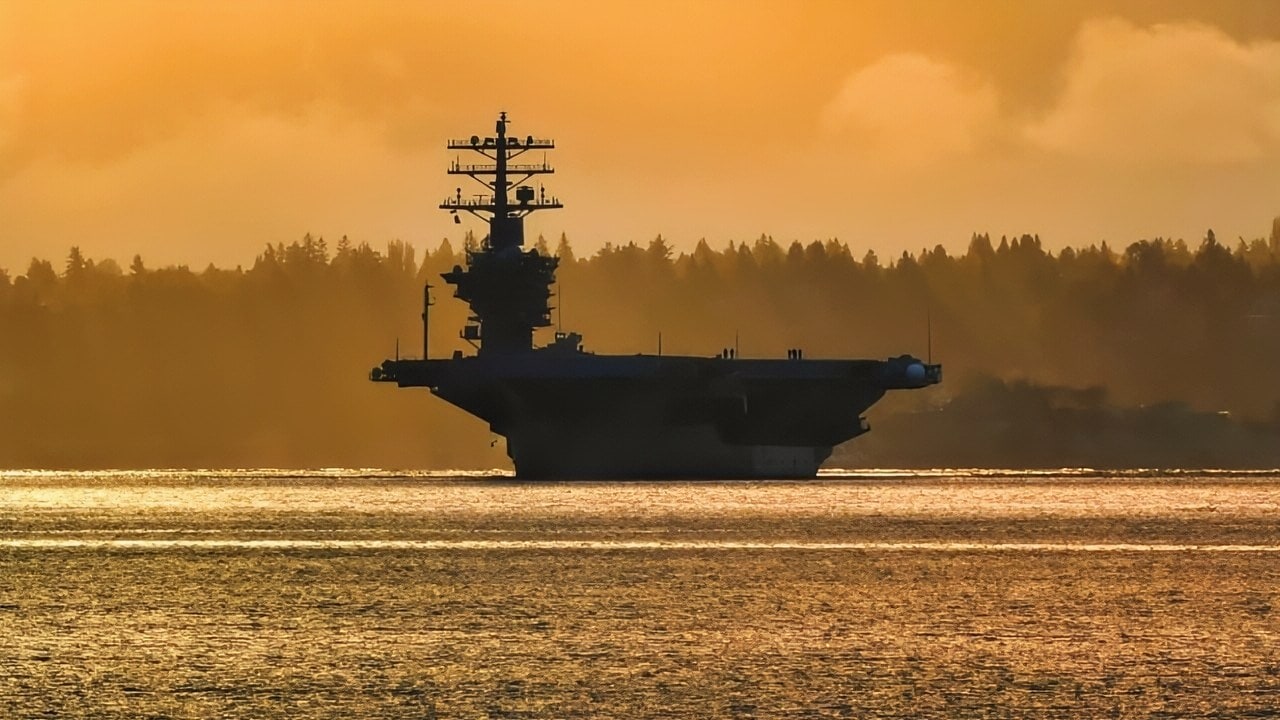
MANCHESTER, Wash. (April 28, 2017) USS Nimitz (CVN 68) transits Puget Sound, past the Seattle skyline enroute to its homeport, Naval Base Kitsap-Bremerton. The return to homeport marks the end of an underway along with its Carrier Strike Group 11, having successfully completed its final pre-deployment assessment, Composite Training Unit Exercise, April 21, and is now fully certified to deploy later this year. (U.S. Navy photo by Mass Communication Specialist 2nd Class Vaughan Dill/Released
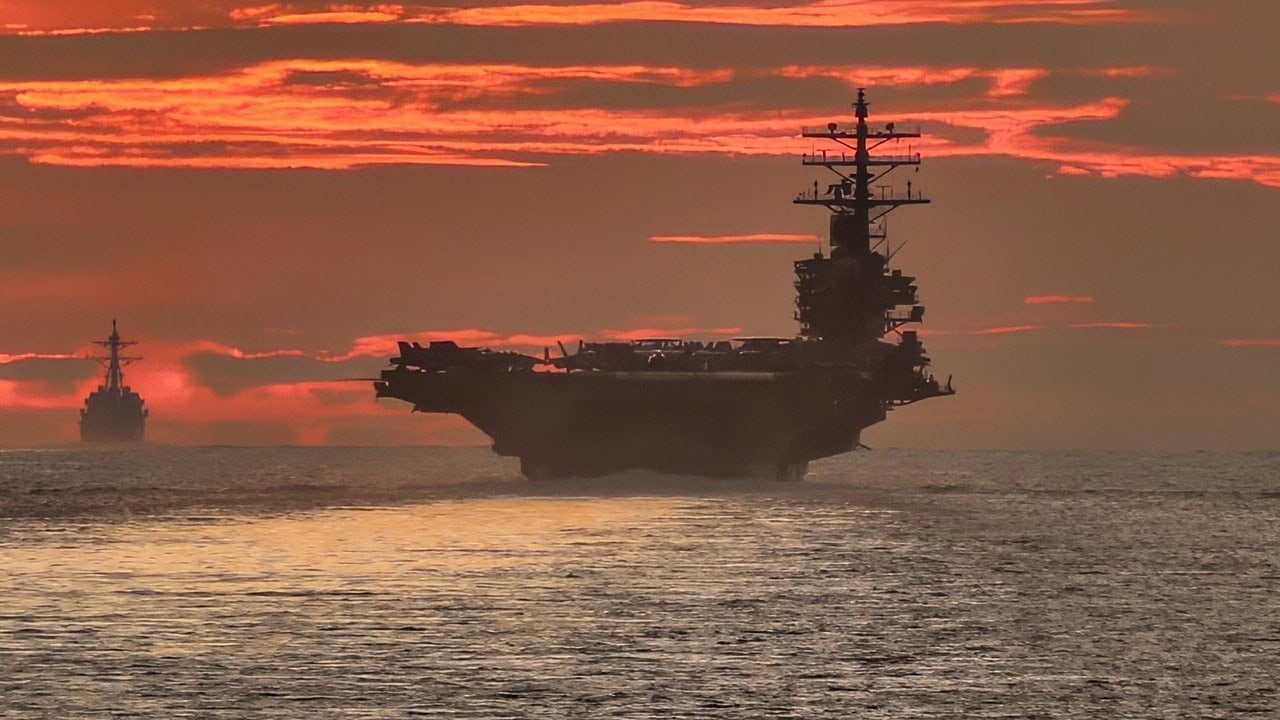
210618-N-JW440-2165 STRAIT OF MALACCA (June 18, 2021) As seen from the Ticonderoga-class guided-missile cruiser USS Shiloh (CG 67), the Navy’s only forward-deployed aircraft carrier USS Ronald Reagan (CVN 76) transits the South China Sea with the Arleigh Burke-class guided missile destroyer USS Halsey (DDG 97). The ships are part of Task Force 70/Carrier Strike Group 5, conducting underway operations in support of a free and open Indo-Pacific. (U.S. Navy Photo by Mass Communication Specialist 1st Class Rawad Madanat)
Shifting to contested space
The US is no longer fighting opponents who can’t contest the sea. ISIS or the Taliban ever posed much threat to US carriers—but Russia and China can. China’s A2/AD strategy, for example, is designed to push carriers back and raise the cost of forward presence.
This doesn’t eliminate carriers, necessarily, but it changes how close carriers can operate and what missions they can perform. It forces adaptation, such as a greater emphasis on stand-off capabilities, longer-range aircraft, and distributed operations. The carrier is adapting, essentially, from the tip of the spear into a mobile base and network hub. The threat environment has matured, become more sophisticated—but that has not rendered carriers useless.
Asymmetric risks
Modern threats are asymmetric, further complicating the carrier’s standing in the battle space. Drones, cyber attacks, and space targeting—these are relatively cheap ways to disrupt carrier operations. Ironic, given how expensive a carrier is (the Ford-class costs $13 billion per unit).
But this exorbitant price tag is exactly what makes the airline such a magnet; targeting a carrier draws attention, with the prospect of damaging a multibillion-dollar vessel that took several years to construct.
Losing a carrier would be catastrophic in both military, fiscal, and political terms. This raises the stakes every time a carrier sets sail. But high stakes don’t equal obsolescence. The answer isn’t abandoning the concept entirely; it’s in protection, redundancy, and more innovative use.
US adaptations
Changes are already underway. Longer-range air wings are being developed, with more emphasis on tanking and integration with submarines and space assets. Future carrier air wings may include more drones and loyal wingmen, with fewer short-range strike missions.
Carriers operate as part of a system, not some isolated vessel, and that entire system will flex to protect the carrier against new risks.
So, the aircraft carrier is not yet obsolete. They’re just invulnerable, which is unsettling, but a fairly standard part of deploying weapons systems. The era of uncontested carrier dominance is likely over. The era of contested, adaptive carrier operations is beginning.
The US is adapting accordingly, refining how carriers are used to remain effective and survivable in the 21st century.
About the Author: Harrison Kass
Harrison Kass is an attorney and journalist covering national security, technology, and politics. Previously, he was a political staffer and candidate, and a US Air Force pilot selectee. He holds a JD from the University of Oregon and a master’s in global journalism and international relations from NYU.