
U.S. Navy lab joins Tomahawk ramp-up with first warheads
A U.S. Navy lab in California’s Mojave Desert has filled seven Tomahawk cruise missile warheads with explosive, the first step toward becoming a second source for the weapons alongside industry, according to a Naval Air Warfare Center Weapons Division release.
The seven WDU-36/B warheads are first-article units, “the first units a new producer builds for inspection,” the release said. If they pass, they become China Lake’s first production warheads, said Zane Goedert, head of the center’s Energetics Processing Branch. The release didn’t say when the inspection will be finished.
A year ago, the energetics team “pulled a Tomahawk warhead case out of a museum,” cleaned it, and filled it with PBXN-107 explosive as a test. X-rays and imaging confirmed the fill was correct.
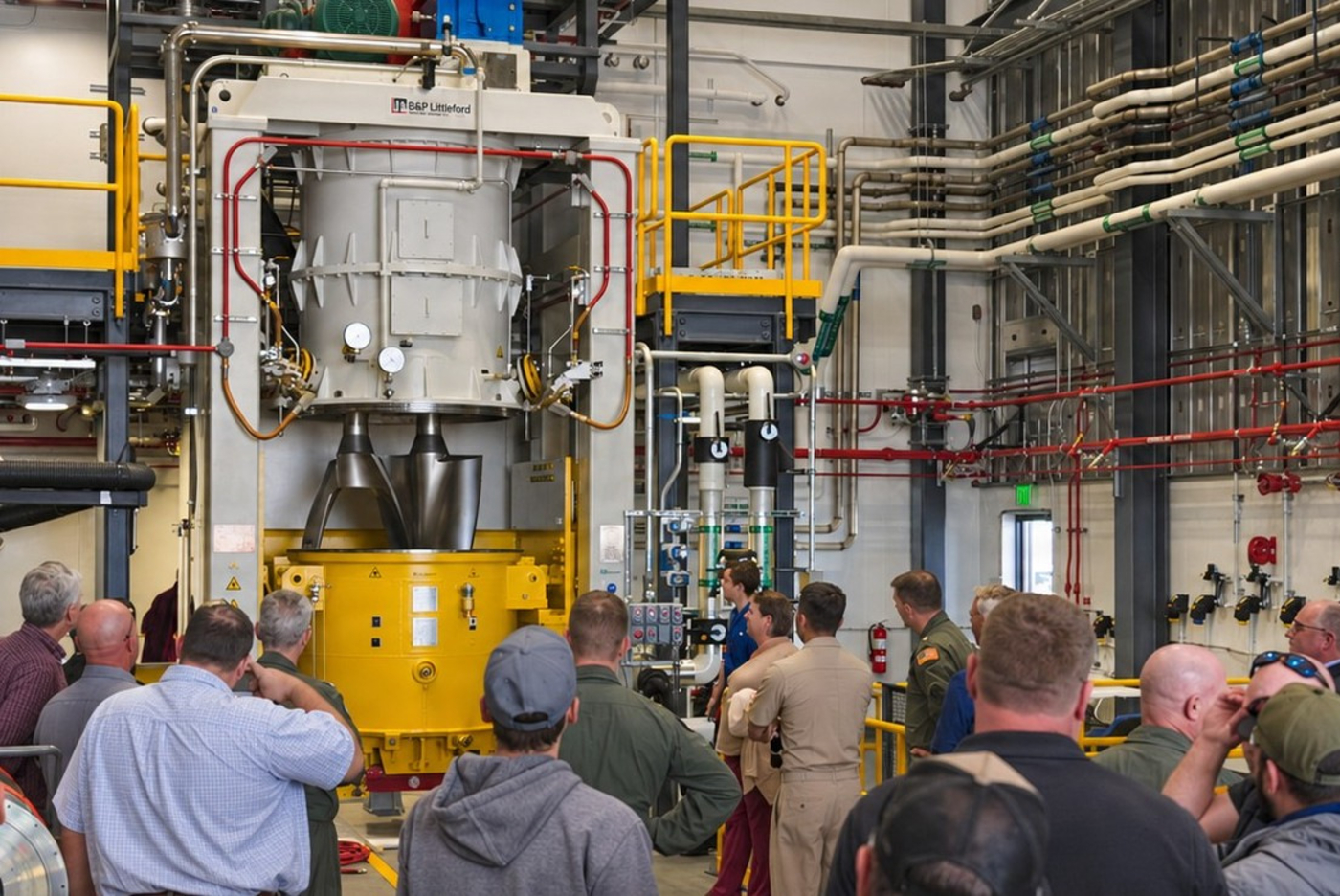
On Nov. 9, the center cut the ribbon on a new 300-gallon mixer at the China Lake Propulsion Laboratory, twice the size of the 150-gallon mixer the team used for the first seven warheads. Once it’s online around June 2027, the larger mixer will let China Lake reach full production rate. The aim is to have “warheads ready before Raytheon needs them,” per the release.
Raytheon won a $22.9 billion, seven-year contract in August to speed up Tomahawk production, with a target of more than 1,000 missiles a year.
“Having an adequate stockpile of those for a peer or near-peer adversary is critical to the nation’s defense,” said Patricia Hottowe, director of the Tomahawk Technical Project Office at China Lake.
Today, L3Harris loads Tomahawk warheads with explosive, and General Dynamics Ordnance and Tactical Systems machines the cases. In August, General Dynamics got a $41.57 million order for 559 warhead cases and fuzewells, with work running through April 2028 in Anniston, Alabama.
In September, L3Harris and the warfare center signed a multiyear partnership to make missile components. Under it, China Lake plans to produce a portion of the Tomahawk warheads, said Ryan Hunter, head of the center’s Propulsion and Energetics Division. The release didn’t say how large that portion will be.
Hunter said faster missile production calls for more warhead capacity, and Navy labs at China Lake and at Indian Head, Maryland, said they could take on the work.
Filling the warhead turned out to be the simple part. Key parts and materials can take up to a year to arrive, and during the museum-case build the team found the warhead specification “needed a major update,” according to the release. Hottowe said the team spent much of the past year rewriting that specification and the approved supplier list, mostly on top of its regular jobs.
Every future producer, Navy or industry, must build to that specification, she said. The center also bought long-lead materials ahead of time.
More than a dozen new hires are now joining the team. They’ll train under experienced technicians for about a year before working on their own, Goedert said.
Rear Adm. Eric Gardner, principal deputy for the Navy’s Portfolio Acquisition Executive Munitions, spoke at the ceremony.
“At PAE Munitions, we know that increasing weapons production takes more than contracts and funding,” Gardner said. “It takes people, infrastructure, materials, and strong partnerships across our Navy, our warfare centers and industry.”
The new mixer, built by B&P Littleford, sits in a Motor Assembly Compound rebuilt after the July 2019 Ridgecrest earthquakes destroyed three energetics compounds at China Lake. Construction on the replacements started in April 2022.
Its bowl will weigh close to 9,070 kg (20,000 pounds). Today crews mix in one building and cast in another about half a mile away. In the new layout, the bowl rolls across the room to a lift, cutting an hourlong move to 15 minutes.
That matters because the explosive starts to set once it’s mixed. Crews have anywhere from a couple of hours to eight or nine hours to pour it, depending on the mix, and the new setup gives back about 45 minutes of that window.
“Because our plant is dispersed and because we will be curing the warheads in a different area than we’re casting them, we’re able to do simultaneous processes that will get higher throughput,” Hunter said.
China Lake has filled warheads for the SLAM-ER air-launched missile since the mid-1990s. Dan Carreño, the center’s executive director, called the operation a pilot plant that will keep doing developmental work. When industry needs help, he said, it now has “the legs and the horsepower to go augment.”
Hunter said the team is ready to “stand in the gap.”
“When we successfully complete this warhead production and ultimately return it to industry, where production belongs,” Hunter said, “we’ll be ready to take on the next challenge.”
Content preview only. Full article available at source. View Full Article
The U.S. Navy lab in California's Mojave Desert filled seven Tomahawk cruise missile warheads with explosive, marking a significant step in ramping up production capabilities. A new 300-gallon mixer is set to enhance production by June 2027, ensuring readiness for Raytheon's increased demand under a $22.9 billion contract. This initiative aims to bolster the U.S. defense stockpile of Tomahawk missiles in response to potential threats.
- U.S. Navy lab filled seven Tomahawk cruise missile warheads with explosive.
- The new 300-gallon mixer will enhance production capabilities by June 2027.
- Raytheon has a $22.9 billion contract to speed up Tomahawk production.
- General Dynamics received a $41.57 million order for warhead cases.
- The operation aims to ensure warheads are ready before Raytheon needs them.