

The United States Navy’s $13 billion newest and largest aircraft carrier has entered a major maintenance period following a historic deployment that stretched nearly 11 months and included combat operations against the Islamic Republic of Iran.
During the Iran War, several mechanical issues occurred on the ship, along with a shipboard fire.
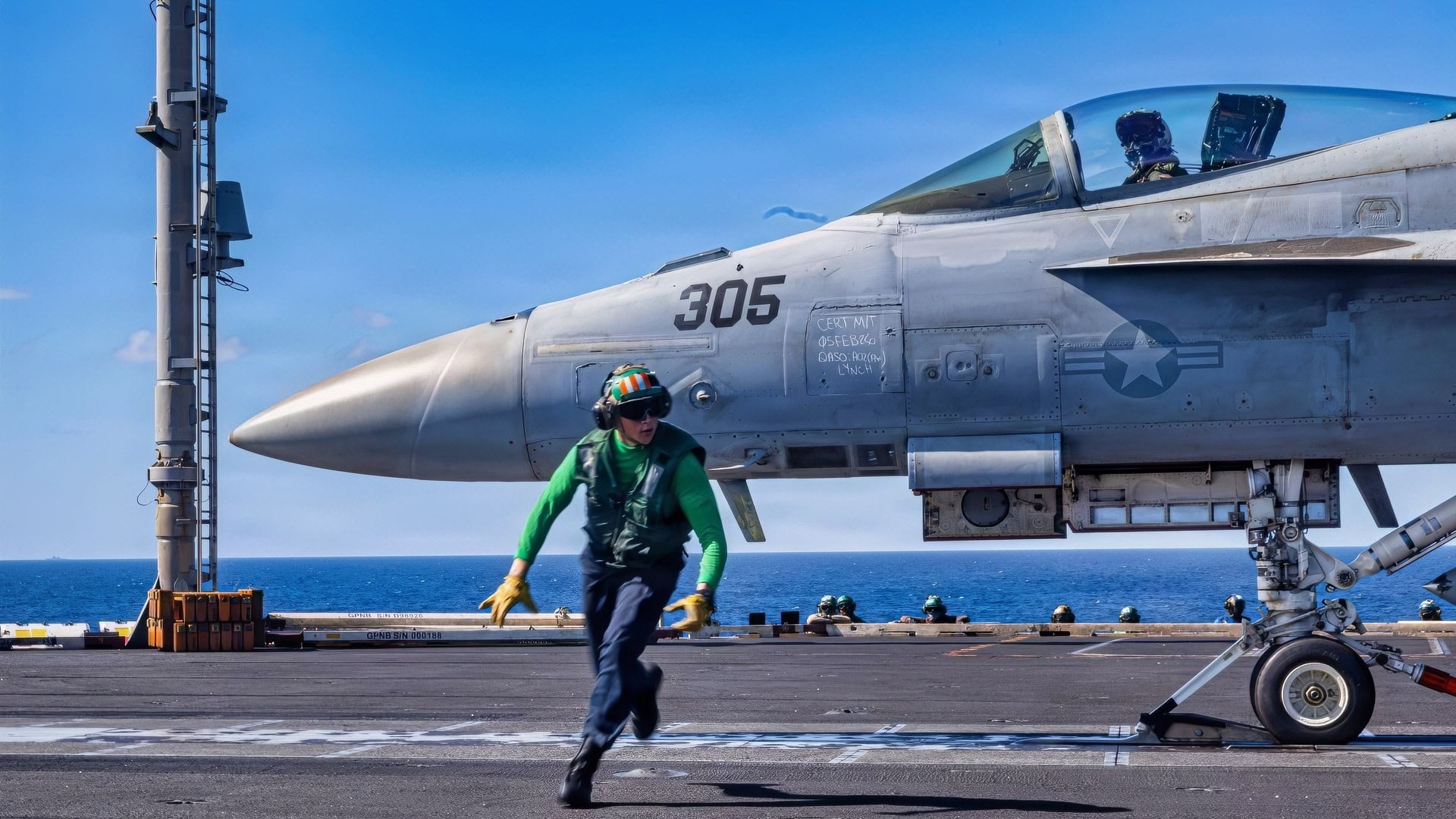
A U.S. Sailor moves behind a flight deck foul line before the launch an F/A-18E Super Hornet aircraft, attached Strike Fighter Squadron 31, from the flight deck of the world’s largest aircraft carrier, Ford-class aircraft carrier USS Gerald R. Ford (CVN 78), while underway in the Caribbean Sea, Feb. 5, 2026. U.S. military forces are deployed to the Caribbean in support of the U.S. Southern Command mission, Department of War-directed operations, and the president’s priorities to disrupt illicit drug trafficking and protect the homeland. (U.S. Navy photo)
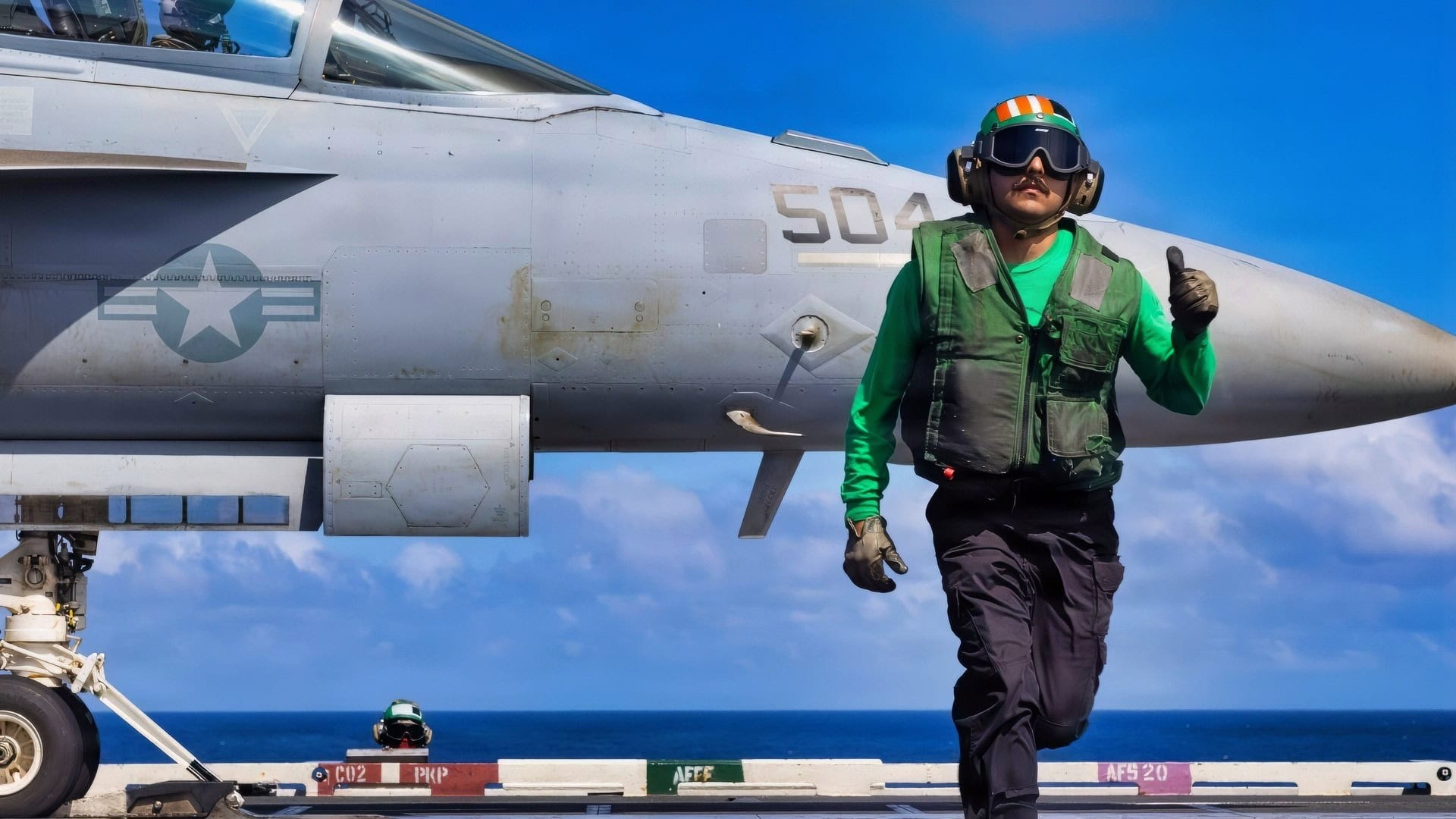
A U.S. Sailor signals the launch of an E/A-18G Growler aircraft, attached to Electronic Attack Squadron 142, from the flight deck of the world’s largest aircraft carrier, Ford-class aircraft carrier USS Gerald R. Ford (CVN 78), while underway in the Caribbean Sea, Jan. 31, 2026. U.S. military forces are deployed to the Caribbean in support of the U.S. Southern Command mission, Department of War-directed operations, and the president’s priorities to disrupt illicit drug trafficking and protect the homeland. (U.S. Navy photo)
Recently, the carrier arrived at Norfolk Naval Shipyard in Portsmouth, Virginia, marking a key step in the Navy’s ongoing efforts to maintain fleet readiness.
It will undergo scheduled repairs, inspections, and modernization work after completing the Navy’s longest aircraft carrier deployment since the Vietnam War.
First Major Public Shipyard Maintenance
The Navy highlighted that this marks the USS Gerald R. Ford’s first scheduled maintenance at a public shipyard, emphasizing its importance and the Navy’s commitment to fleet upkeep.
The Navy admits it aims to complete the maintenance ahead of schedule but faces systemic challenges due to strained naval shipyards, raising doubts about the Ford’s return within 18-24 months.
Repairing Damage from the Laundry Room Fire
One of the major repairs expected during the maintenance period stems from a serious fire that erupted aboard the carrier on March 12 while it was operating in the Mediterranean Sea, raising safety concerns about onboard hazards.
According to most reports, the fire originated in the ship’s laundry room and injured several sailors. Hundreds of crew members also suffered smoke-related injuries. Meanwhile, 100 sleeping berths sustained serious damage.
The Navy clarified that the fire did not compromise the carrier’s long-term combat readiness, but the incident drew significant media attention and raised safety concerns.
And losing the carrier to repairs, the way the Navy did at the time, forced a complete reshuffling of the Navy’s carrier force, complicating logistics.
Humiliating Plumbing Problems
The carrier also experienced significant plumbing issues during its deployment, with repeated failures involving its vacuum-powered wastewater system, affecting around 650 toilets that rely on a specialized vacuum network to transport waste throughout the ship, highlighting crew hardships.
The reason the world became transfixed by the carrier’s major plumbing woes went beyond their comedic value for many people.
It represented the excesses of the United States War Department. Here is a carrier that is considered the largest and most advanced of its kind in the world.
It went over budget and over schedule during production. Once in service, the ship couldn’t even keep its toilets running, despite all the technology, resources, time, and money that went into its construction.
Clearly, $13 billion doesn’t buy the American taxpayer what it once did.
The Navy Fights Back
Senior Navy leadership disputes suggestions that the plumbing problems reflect anything negative about the carrier’s overall design.
Chief of Naval Operations Adm. Daryl Caudle told the Senate Armed Services Committee in May that the problems were largely attributable to improper operation of the system rather than defective equipment.
In other words, it was a sailor’s error rather than anything deeper with the institution. Heaven forbid that anyone question the institution itself.
Preparing for Future Deployments
The Navy cannot admit that the USS Gerald R. Ford’s first maintenance cycle exposes two problems: the costly complexities of the Ford and the grave problems embedded within American naval shipyards, which mean the upcoming maintenance cycle will be slow.
The damage done will be downplayed (because the Navy cannot afford to admit that its new, prized ship is not worth the money).
More – China’s J-20 Stealth Fighter Is Being Built in Big Numbers
About the Author: Brandon J. Weichert
Brandon J. Weichert is the Senior National Security Editor at 19FortyFive.com. He also manages The Weichert Brief on Substack. Weichert also hosts “National Security Talk” on Rumble. He is the author of four bestselling national security books, the most recent of which is A Disaster of Our Own Making: How the West Lost Ukraine (Encounter Books). Follow him via Twitter/X @WeTheBrandon.