
USS George H.W. Bush and CSG 10 Expose the Indo-Pacific Carrier Gap
 Marcus Chen
USS George H.W. Bush and CSG 10 Expose the Indo-Pacific Carrier Gap
The USS George H.W. Bush left Thailand on October 9 after a scheduled port visit. That is routine Navy language. The less routine fact is what the carrier's itinerary says about American maritime power in the Indo-Pacific: one nuclear-powered aircraft carrier is being asked to signal presence across an ocean while regional exercises increasingly depend on land-based missiles and allied access.
A Carrier Is Powerful, but It Is Still One Hull
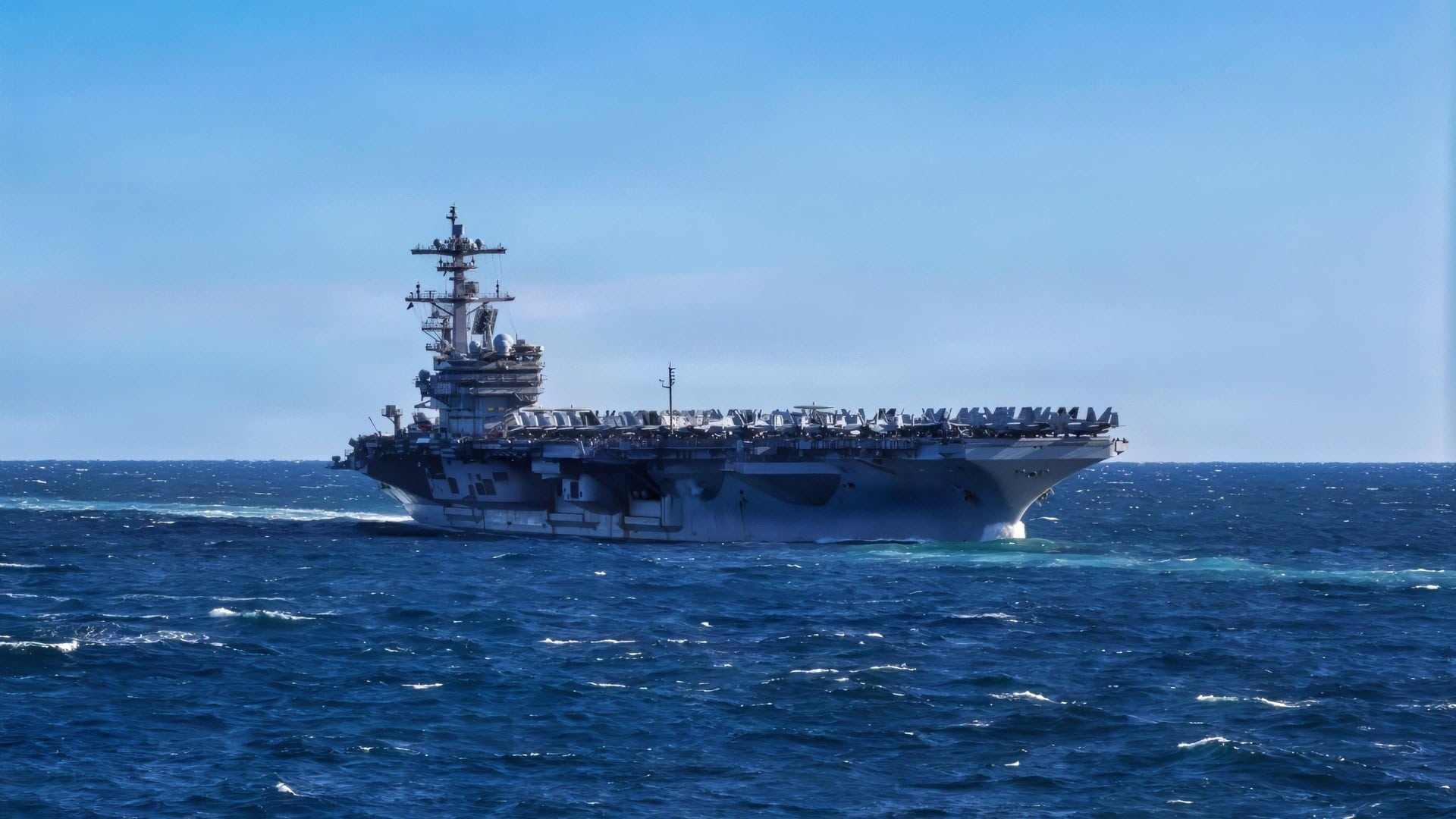
George H.W. Bush is a Nimitz-class carrier of roughly 100,000 tons, built to operate dozens of strike fighters, airborne early-warning aircraft, helicopters, and electronic-warfare platforms. With Carrier Strike Group 10, it can generate sea control, air defense, and long-range strike effects that no shore battery can reproduce by itself. It also carries the familiar political message: Washington can put an airfield anywhere its escorts can sail.
But the carrier's value is not the same as continuous coverage. A carrier strike group needs replenishment, maintenance, escorts, protected communications, and a survivable operating area. The distance from Thailand to the Taiwan Strait is more than a matter of map scale. It is fuel, sortie generation, tanker support, contested logistics, and time spent moving toward the fight. A port visit demonstrates access. It does not create a permanent combat station.
That distinction matters because the Indo-Pacific is now being organized around several simultaneous demands: deterrence around Taiwan, reassurance for the Philippines, presence in the South China Sea, and crisis response in the Indian Ocean. One carrier can visit one partner while another theater waits. That is not a criticism of the Bush. It is a force-structure problem.
Why the Shore-Based Shift Is Accelerating
Defense News reported this month that the U.S. Marine Corps will deploy the Navy-Marine Expeditionary Ship Interdiction System, or NMESIS, and the Marine Air Defense Integrated System to Yonaguni for Keen Sword. The Japanese island sits approximately 110 kilometers from Taiwan. Japan will also exercise its Type-25 surface-to-ship missile, reported with a range of up to 1,000 kilometers, alongside other ground-launched systems.
Those systems do not replace a carrier air wing. They do something different: they distribute risk. A mobile launcher can hide, relocate, and force an opponent to search across multiple islands. It can also contribute to sea denial without requiring a $13 billion capital ship to enter the same missile envelope. The U.S. Army's HIMARS and Typhon systems, if available, add another layer of land-based fires. Together, the network is less elegant than a carrier strike group but potentially harder to suppress.
That is why the coming Keen Sword exercise matters even though the USS George H.W. Bush is not its centerpiece. The drill is scheduled to involve 45,000 Japanese personnel and troops from eight other countries, according to Defense News. Its practical question is whether allied forces can sense, communicate, move missiles, defend airfields, and reload weapons across a chain of small islands. In a Taiwan contingency, those tasks will decide whether distributed forces remain combat forces after the first missile salvo.
Thailand Adds Access, Not Combat Mass
The Bush visit still has operational value. Thailand is a treaty ally and a useful access point between the Indian Ocean and the western Pacific. Port calls support relationships, maintenance planning, and the political habit of working together. They also give a carrier group a chance to demonstrate that it can move through the region without treating every partner as a temporary fuel stop.
But access is not the same as basing. Thailand does not turn a carrier visit into a forward-deployed air wing. Nor does a single port call solve the Navy's sustainment problem. The U.S. Naval Institute's October discussion of theater undersea warfare and ship maintenance makes the same basic point from another direction: in a high-end Pacific war, endurance and logistics will limit operations as much as the first exchange of missiles.
The operational question is not whether the United States can send a carrier to the Indo-Pacific. It is whether it can keep enough combat power there after the first week.
The Real Test Is Persistence
China does not need to destroy every American carrier to make the carrier model less useful. It can use shore-based missiles, submarines, aircraft, cyber operations, and maritime militia pressure to widen the standoff distance and raise the cost of every sortie. A carrier that remains outside the densest threat rings still contributes, but its aircraft spend more time flying to the target and less time on station. Tankers become more important. Weapons stocks shrink faster. Deck cycles become a logistics calculation.
The answer is not to choose between carriers and missiles. The U.S. Navy needs carriers for mobile airpower, command, and escalation control. The Marine Corps, Army, and allies need mobile land-based fires to complicate Chinese planning and protect the approaches. Submarines, unmanned systems, repair ships, fuel, and pre-positioned munitions connect the two models. Without that connective tissue, distributed operations become a collection of impressive launchers waiting for targeting data and reloads.
George H.W. Bush leaving Thailand is therefore more than a routine movement notice. It is a snapshot of the Indo-Pacific problem: American sea power remains formidable, but its coverage is episodic and expensive. The allies are building a denser island network because they understand the arithmetic. A carrier can signal everywhere, but it cannot fight everywhere at once. Unless Washington can add persistence to presence, the map will remain larger than the force.
Sources
USS George H.W. Bush departed Thailand on October 9, 2026, as part of its routine operations in the Indo-Pacific. The carrier's presence highlights the challenges of maintaining continuous military coverage in the region, where reliance on land-based systems is increasing. The upcoming Keen Sword exercise will involve 45,000 personnel from Japan and other nations, focusing on enhancing military cooperation and readiness.
- USS George H.W. Bush left Thailand on October 9, 2026.
- The carrier is part of a strategy to signal U.S. presence in the Indo-Pacific.
- The U.S. Marine Corps is deploying new systems for upcoming exercises in Japan.
- Keen Sword exercise will involve 45,000 personnel from Japan and eight other countries.
- The operational value of the Bush visit is to maintain access, not combat mass.